...

Guiado 2026: Tui a Santiago de Compostela

Vive el Espíritu del Camino en Compañía – Totalmente Guiado

Vive el Espíritu del Camino en Compañía – Totalmente Guiado

A partir de

€1324

Este recorrido explora el Camino Portugués, el representativo Camino de Santiago de Compostela.

Este Camino, el cual fue realizado por la Reina Isabel de Portugal en el siglo XIII, se dirige hacia el norte siguiente la costa Atlántica de Portugal y España. El Camino Portugués serpentea ligeramente a lo largo de sendas antiguas, pasando por bosques, pueblos, cultivos, viñedos y ciudades históricas.

Cada día durante el camino tiene garantizado un nivel alto de comodidad y gastronomía. Este nivel requiere una condición física moderada. Sin embargo, es un camino altamente satisfactorio que incluye numerosos puntos de interés cultural.

Este recorrido explora el Camino Portugués, el representativo Camino de Santiago de Compostela.

Este Camino, el cual fue realizado por la Reina Isabel de Portugal en el siglo XIII, se dirige hacia el norte siguiente la costa Atlántica de Portugal y España. El Camino Portugués serpentea ligeramente a lo largo de sendas antiguas, pasando por bosques, pueblos, cultivos, viñedos y ciudades históricas.

Cada día durante el camino tiene garantizado un nivel alto de comodidad y gastronomía. Este nivel requiere una condición física moderada. Sin embargo, es un camino altamente satisfactorio que incluye numerosos puntos de interés cultural.

Etapa 5 of 5

117.7km

9 días

Comfort

Popular time

may

A partir de

€1324

A partir de

€1324

Resumen de la ruta

Etapa 5 of 5

117.7km

9 días

Comfort

Popular time

may

Best time to go:

Ene
Feb
Mar
Abr
May
Jun
Jul
Ago
Sep
Oct
Nov
Dic
Popular Time
Good Time
Off/Low Season
Not Possible

En General

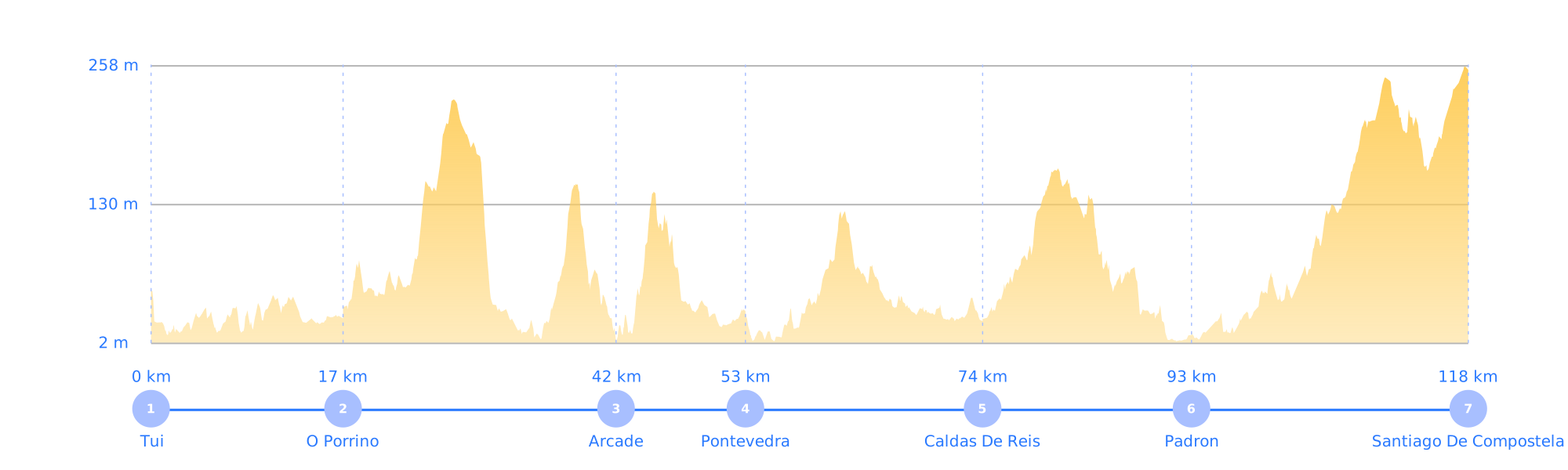
Distancia:

11.6 min | 19.6km promedio | 24.7 max

Ascenso:

211.2 min | 351.6m promedio | 526.3 max

Cardio:

2   2.8   4

Follow the Camino Preview Map Trip 1320

Ver los horarios populares para visitar esta ruta

Ene
Feb
Mar
Abr
May
Jun
Jul
Ago
Sep
Oct
Nov
Dic
Popular Time
Good Time
Off/Low Season
Not Possible

En General

Distancia:

11.6 min | 19.6km promedio | 24.7 max

Ascenso:

211.2 min | 351.6m promedio | 526.3 max

Cardio:

2   2.8   4

Follow the Camino Preview Map Trip 1320

Upcoming Tours

12 Sep - 20 Sep
Guide by TBC Only men / Only women Limited

Reflejos

Tui Cathedral

Tui Cathedral

The Cathedral of St. Mary of the Assumption of Tui, right in the centre of the town, is the starting point of this section of the Camino Portugues and shouldn’t be missed! Dating back to the 11th Century, the cathedral displays stunning Romanesque architecture with decorative Gothic elements. The Portico is believed to be one of the earliest pieces of Gothic art in Spain. A small charge for entrance is worth it to marvel at the interior and fully take in the sheer size of the Cathedral.

Padron

The last main town before reaching Santiago de Compostela on the Camino Portuguese is Padron and this is also the town where St James’ body was returned to the Iberian Peninsula from Jerusalem. A must-see in town is the Church of Santiago. There, below the altar, is the original stone O Pedrón, which is said to be the mooring post that the boat carrying St James was tied up to. Another wonderful place to visit is Monte Santiaguino – it is here that St James is said to have first preached in Spain. A short but steep walk up to Monte Santiaguino is well worth it for the tranquillity and views back over Padron.

Albarino Wine

This section of the Camino Portuguese goes through the Albarino Wine region. There are a number of theories as to how wine came to be grown in the region – some suggest it was brought here by Germans, while others say it was French Monks. No matter how it got there, the wine is now widely available throughout the region and has a unique refreshing taste. Due to the proximity of the Atlantic Ocean this wine pairs very well with many local fish dishes, so why not eat and drink like the locals!! Salud!

Tui Cathedral

Tui Cathedral

The Cathedral of St. Mary of the Assumption of Tui, right in the centre of the town, is the starting point of this section of the Camino Portugues and shouldn’t be missed! Dating back to the 11th Century, the cathedral displays stunning Romanesque architecture with decorative Gothic elements. The Portico is believed to be one of the earliest pieces of Gothic art in Spain. A small charge for entrance is worth it to marvel at the interior and fully take in the sheer size of the Cathedral.

Padron

The last main town before reaching Santiago de Compostela on the Camino Portuguese is Padron and this is also the town where St James’ body was returned to the Iberian Peninsula from Jerusalem. A must-see in town is the Church of Santiago. There, below the altar, is the original stone O Pedrón, which is said to be the mooring post that the boat carrying St James was tied up to. Another wonderful place to visit is Monte Santiaguino – it is here that St James is said to have first preached in Spain. A short but steep walk up to Monte Santiaguino is well worth it for the tranquillity and views back over Padron.

Albarino Wine

This section of the Camino Portuguese goes through the Albarino Wine region. There are a number of theories as to how wine came to be grown in the region – some suggest it was brought here by Germans, while others say it was French Monks. No matter how it got there, the wine is now widely available throughout the region and has a unique refreshing taste. Due to the proximity of the Atlantic Ocean this wine pairs very well with many local fish dishes, so why not eat and drink like the locals!! Salud!

¡Empiece a planificar ahora!

TUI

SANTIAGO DE COMPOSTELA

A partir de € 1324
Número de Personas
Person Icon
Tu contacto
Please fill the required fields

Servicios

Incluido en este paquete

Traslado de Maletas de Hotel a Hotel

Specially Hand-Picked Accommodations

Asistencia telefonica 24h

Nuestro Paquete de Bienvenida

8 desayunos y 4 cenas

Guía bilingüe experto (Una vez alcanzado el minimo de pasajeros requerido)

Añadir

Excursiones de un Día Disponibles

Noche(s) adicional(es) en el primer o último destino

No incluido: Vuelos/tren, Seguro de viaje, Bebidas/almuerzo

Itinerario

Día

1

km

TUI

Llegada y alojamiento en un hotel en el corazón de Tui. Las habitaciones tienen baño privado. Tome un paseo por las pintorescas calles de esta ciudad y, a continuación, acérquese a la Plaza de San Fernando: la silueta de la fachada oeste de la catedral del siglo XII le dejará sin aliento.

Día

2

17.2 km

TUI O PORRINO

Desde el puerto viejo de Tui el Camino se dirige hacia el casco antiguo, siguiendo el «Camino da Barca». A continuación, a través del Túnel das Monxas, la ruta entra en un tramo muy empinado y lleva al puente de San Telmo. Desde allí, viajando en un terreno menos abrupto, llegamos a la localidad de O Porriño.

Día

3

24.4 km

O PORRINO ARCADE

El terreno se vuelve más fácil al cruzar el valle de Louro. Caminando al oeste del valle, después de un suave ascenso se llega a la capilla de Santiaguiño de Antas, un lugar agradable para tomar un descanso. Entramos ahora en una amplia extensión de bosque. Rodeado de pinos, el Camino comienza su descenso a través de la aldea de Setefontes y entra en Arcade.

Día

4

11.6 km

ARCADE PONTEVEDRA

Aquí cruzara el puente románico donde fue derrotado Napoleón durante la Guerra de la Independencia. Al llegar a Pontevedra pasara a través de sus estrechas calles antes de
llegar a la iglesia del siglo XIII de Santa María. La Capela da Peregrina es también de gran interés para los peregrinos que, aunque parece redonda, tiene la forma de una concha.

Día

5

21.2 km

PONTEVEDRA CALDAS DE REIS

Pasando bosques de castaños, el Camino deja Pontevedra y corre paralelo a la vía férrea. Después de pasar por la aldea de Ponte Cabras, nos encontramos con la rectoral de Santa María de Alba, escondida entre pinos y eucaliptos. Al salir de los densos bosques de Lombo da Maceira, encontramos una estatua de Santiago Peregrino, señalando con su bastón el camino a seguir. El bonito pueblo de Tibo, con su fuente, lavadero público y cruz de piedra, nos lleva a Caldas do Rei.

Día

6

18.7 km

CALDAS DE REIS PADRON

Al salir de la ciudad tomamos un puente sobre el río Umia: este nos lleva a una fuente de aguas termales que identifica el pueblo desde la época romana. Entrando en el bosque una vez más, el Camino sigue cuesta arriba hasta la aldea de Santa Marina. Cuesta abajo, cruzamos luego el río Fontenlo. Finalmente, después de un sendero enarbolado, llegamos de nuevo al río, y luego a Padrón.
Padrón es famosa por ser la primera tierra avistada por el barco que llevaba el cuerpo de Santiago.

Día

7

24.7 km

PADRON SANTIAGO DE COMPOSTELA

El Camino pasa por muchos pueblos pequeños y aldeas antes de llegar al santuario barroco de «A Esclavitude». Situadas en una colina a la izquierda se encuentran las misteriosas ruinas del Castro Lupario mientras que, un par de kilómetros más adelante, llegamos al más antiguo crucero de Galicia. Al acercarnos a Agro dos Monteiros ya se ven las torres de la catedral. Por último, el Camino pasa por las ruinas de un castillo conocido como A Rocha Vella, antes de entrar en la ciudad del Apóstol.

Día

8

km

SANTIAGO DE COMPOSTELA

Después del desayuno, llega la despedida.
Si deseas quedarte en la zona, te recomendamos que:
– Te tomes tu tiempo y visites el magnífico centro histórico de Santiago.
– Continúes con nosotros por el salvaje Camino Fisterra (Camino Finisterre) y pases la noche en el hotel del faro.
– O tomes un autobús a Fisterra para visitar las espectaculares playas y calas de la costa oeste. Habitualmente tienen muy poco turismo, y te garantizamos que será una experiencia muy especial. Los autobuses salen de la Estación de Autobuses de Santiago a las 9 a.m. y 10 a.m., y regresan a las 4:45 p.m. y 7 p.m. El viaje lleva unas 3 horas.

Día

1

km

TUI

Llegada y alojamiento en un hotel en el corazón de Tui. Las habitaciones tienen baño privado. Tome un paseo por las pintorescas calles de esta ciudad y, a continuación, acérquese a la Plaza de San Fernando: la silueta de la fachada oeste de la catedral del siglo XII le dejará sin aliento.

Día

2

17.2 km

TUI O PORRINO

Desde el puerto viejo de Tui el Camino se dirige hacia el casco antiguo, siguiendo el «Camino da Barca». A continuación, a través del Túnel das Monxas, la ruta entra en un tramo muy empinado y lleva al puente de San Telmo. Desde allí, viajando en un terreno menos abrupto, llegamos a la localidad de O Porriño.

Día

3

24.4 km

O PORRINO ARCADE

El terreno se vuelve más fácil al cruzar el valle de Louro. Caminando al oeste del valle, después de un suave ascenso se llega a la capilla de Santiaguiño de Antas, un lugar agradable para tomar un descanso. Entramos ahora en una amplia extensión de bosque. Rodeado de pinos, el Camino comienza su descenso a través de la aldea de Setefontes y entra en Arcade.

Día

4

11.6 km

ARCADE PONTEVEDRA

Aquí cruzara el puente románico donde fue derrotado Napoleón durante la Guerra de la Independencia. Al llegar a Pontevedra pasara a través de sus estrechas calles antes de
llegar a la iglesia del siglo XIII de Santa María. La Capela da Peregrina es también de gran interés para los peregrinos que, aunque parece redonda, tiene la forma de una concha.

Día

5

21.2 km

PONTEVEDRA CALDAS DE REIS

Pasando bosques de castaños, el Camino deja Pontevedra y corre paralelo a la vía férrea. Después de pasar por la aldea de Ponte Cabras, nos encontramos con la rectoral de Santa María de Alba, escondida entre pinos y eucaliptos. Al salir de los densos bosques de Lombo da Maceira, encontramos una estatua de Santiago Peregrino, señalando con su bastón el camino a seguir. El bonito pueblo de Tibo, con su fuente, lavadero público y cruz de piedra, nos lleva a Caldas do Rei.

Día

6

18.7 km

CALDAS DE REIS PADRON

Al salir de la ciudad tomamos un puente sobre el río Umia: este nos lleva a una fuente de aguas termales que identifica el pueblo desde la época romana. Entrando en el bosque una vez más, el Camino sigue cuesta arriba hasta la aldea de Santa Marina. Cuesta abajo, cruzamos luego el río Fontenlo. Finalmente, después de un sendero enarbolado, llegamos de nuevo al río, y luego a Padrón.
Padrón es famosa por ser la primera tierra avistada por el barco que llevaba el cuerpo de Santiago.

Día

7

24.7 km

PADRON SANTIAGO DE COMPOSTELA

El Camino pasa por muchos pueblos pequeños y aldeas antes de llegar al santuario barroco de «A Esclavitude». Situadas en una colina a la izquierda se encuentran las misteriosas ruinas del Castro Lupario mientras que, un par de kilómetros más adelante, llegamos al más antiguo crucero de Galicia. Al acercarnos a Agro dos Monteiros ya se ven las torres de la catedral. Por último, el Camino pasa por las ruinas de un castillo conocido como A Rocha Vella, antes de entrar en la ciudad del Apóstol.

Día

8

km

SANTIAGO DE COMPOSTELA

Después del desayuno, llega la despedida.
Si deseas quedarte en la zona, te recomendamos que:
– Te tomes tu tiempo y visites el magnífico centro histórico de Santiago.
– Continúes con nosotros por el salvaje Camino Fisterra (Camino Finisterre) y pases la noche en el hotel del faro.
– O tomes un autobús a Fisterra para visitar las espectaculares playas y calas de la costa oeste. Habitualmente tienen muy poco turismo, y te garantizamos que será una experiencia muy especial. Los autobuses salen de la Estación de Autobuses de Santiago a las 9 a.m. y 10 a.m., y regresan a las 4:45 p.m. y 7 p.m. El viaje lleva unas 3 horas.

Cómo llegar allá

Getting to Tui, Portugal

To get to Tui, it is best to fly to Santiago de Compostela.

Fly into Santiago de Compostela

Ryanair, Aer Lingus and Iberia/BA fly direct to Santiago de Compostela from the UK and Ireland. Ryanair flies from Stansted, Iberia/BA operates from Gatwick and Aer Lingus from Dublin. Santiago de Compostela can also be reached by a number of locations around Spain and Portugal, as well as major European cities. Iberia/BA offers the best selection of flights and you can fly to and from Santiago De Compostela returning to Frankfurt, Paris, Rome, Barcelona, Bilbao, Fuerteventura, Gran Canaria, Lanzarote, Madrid, Malaga, Palma, Seville, Tenerife and Valencia. To get to Tui, you will need to get 2 public buses from the Santiago Airport or we can organise a private airport transfer. First you take a bus from the Santiago Airport to Vigo (this will take around 1 hour). Then, from Vigo Bus Station you can depart for Tui. This is a 30-minute journey and several buses run per day.

    Getting home from Santiago de Compostela, Spain

    Fly from Santiago de Compostela

    Shuttle buses from Santiago city centre to the airport (20mins), or you can request an airport transfer that will pick you up from your hotel.

      Getting to Tui, Portugal

      To get to Tui, it is best to fly to Santiago de Compostela.

      Fly into Santiago de Compostela

      Ryanair, Aer Lingus and Iberia/BA fly direct to Santiago de Compostela from the UK and Ireland. Ryanair flies from Stansted, Iberia/BA operates from Gatwick and Aer Lingus from Dublin. Santiago de Compostela can also be reached by a number of locations around Spain and Portugal, as well as major European cities. Iberia/BA offers the best selection of flights and you can fly to and from Santiago De Compostela returning to Frankfurt, Paris, Rome, Barcelona, Bilbao, Fuerteventura, Gran Canaria, Lanzarote, Madrid, Malaga, Palma, Seville, Tenerife and Valencia. To get to Tui, you will need to get 2 public buses from the Santiago Airport or we can organise a private airport transfer. First you take a bus from the Santiago Airport to Vigo (this will take around 1 hour). Then, from Vigo Bus Station you can depart for Tui. This is a 30-minute journey and several buses run per day.

        Getting home from Santiago de Compostela, Spain

        Fly from Santiago de Compostela

        Shuttle buses from Santiago city centre to the airport (20mins), or you can request an airport transfer that will pick you up from your hotel.

          Comienza a Planificar tu Aventura Ahora

          Camine por el Camino para experimentar lo que será la experiencia del Camino más grande del mundo.
          siglo hasta ahora. Abraza tu libertad para explorar y desafíate a ti mismo a recorrer el Camino.

          Buscar
          Blog
          Infórmese Ahora
          Guardado
          Iniciar sesión
          Off season
          February Off season
          March Off season
          April Good time
          July Good time
          August Good time
          October Good time
          November Off season
          December Off season