Walking the Full Camino Francés is one of the most iconic long distance journeys in the world. Stretching roughly 780 km from Saint-Jean-Pied-de-Port in France to Santiago de Compostela in Spain, the Camino Francés is the most famous route of the Camino de Santiago pilgrimage.
For centuries pilgrims have travelled this route across northern Spain, walking through medieval towns, vineyards, mountain landscapes and historic cities before reaching the cathedral in Santiago.
Today the Camino Francés remains the most popular Camino route, thanks to its well established infrastructure, rich history and diverse scenery.
In this guide we explain everything you need to know about walking the full Camino Francés, including:
• route overview
• total distance and duration
• key regions along the route
• difficulty level
• best time to walk
• practical planning tips
If you’re still deciding which Camino route to walk, we recommend downloading our Full Camino Routes Planning Guide, which compares the major long distance Camino routes.
What is the Full Camino Francés?
The Camino Francés (French Way) is the most historic and widely walked route of the Camino de Santiago network.
The traditional route begins in Saint-Jean-Pied-de-Port, a medieval town in the French Basque Country, before crossing the Pyrenees mountains into Spain and continuing west to Santiago de Compostela.
Key facts about the route:
• Distance: about 780 km
• Typical duration: 30–35 walking days
• Average daily distance: 20–25 km
• Regions crossed: Navarra, La Rioja, Castilla y León, Galicia
Because of its excellent infrastructure, the Camino Francés is often considered the best route for first time Camino pilgrims.
Accommodation, cafés and pilgrim services are widely available along the route, making it easier to organise than other Camino routes.
Where Does the Camino Francés Start?
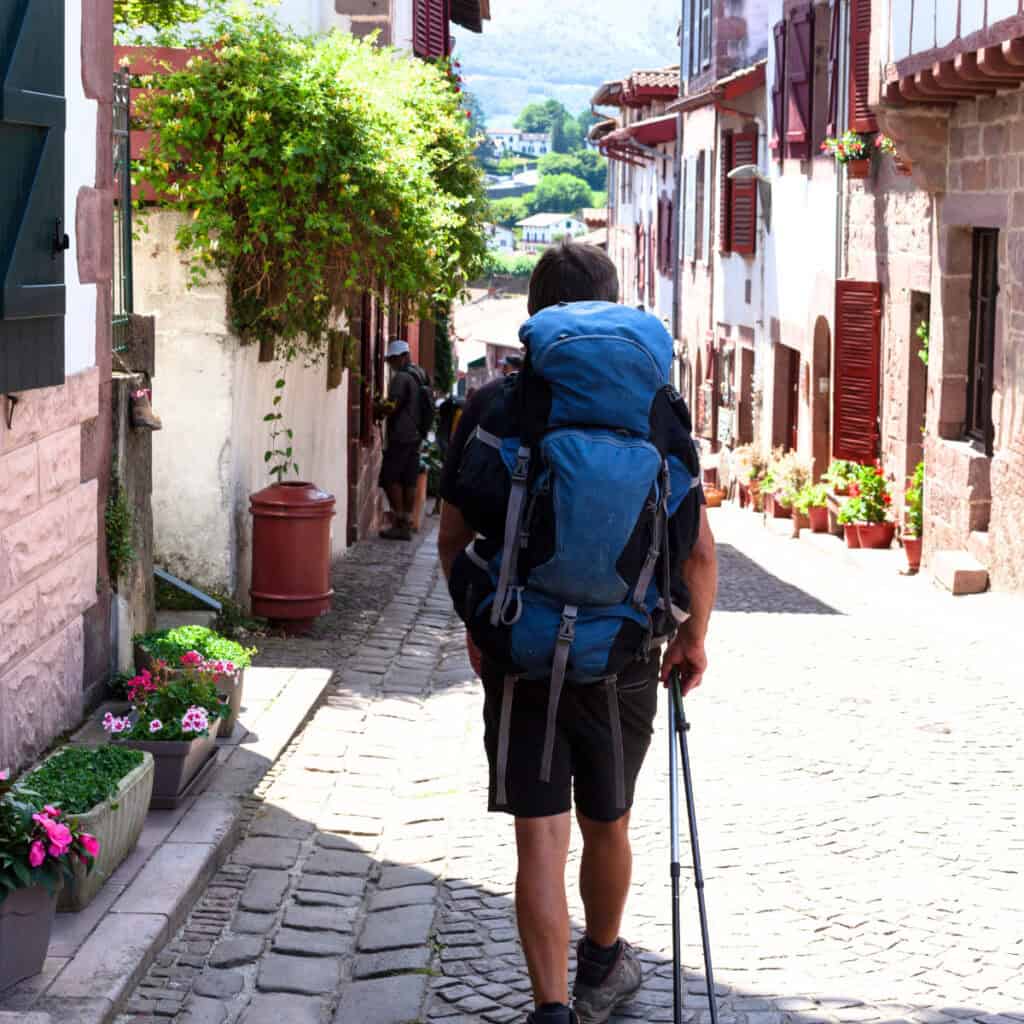
The traditional starting point of the Camino Francés is Saint-Jean-Pied-de-Port, located at the foot of the Pyrenees in southwestern France.
From here, pilgrims cross the Pyrenees to reach Roncesvalles, a monastery town in Spain. This first stage is one of the most memorable parts of the entire Camino.
Highlights of the opening stage include:
• dramatic mountain scenery
• sweeping views of the Pyrenees
• historic pilgrimage routes dating back centuries
After Roncesvalles, the Camino continues west through Pamplona, one of the first major cities along the route.
How Long Does the Full Camino Francés Take?
Most pilgrims take 4–6 weeks to complete the full Camino Francés.
Typical walking pace:
| Style | Duration |
|---|---|
| Fast pace | ~30 days |
| Standard pace | 32–35 days |
| Relaxed pace | 35–40 days |
Many walkers also take rest days in major cities such as:
• Burgos
• León
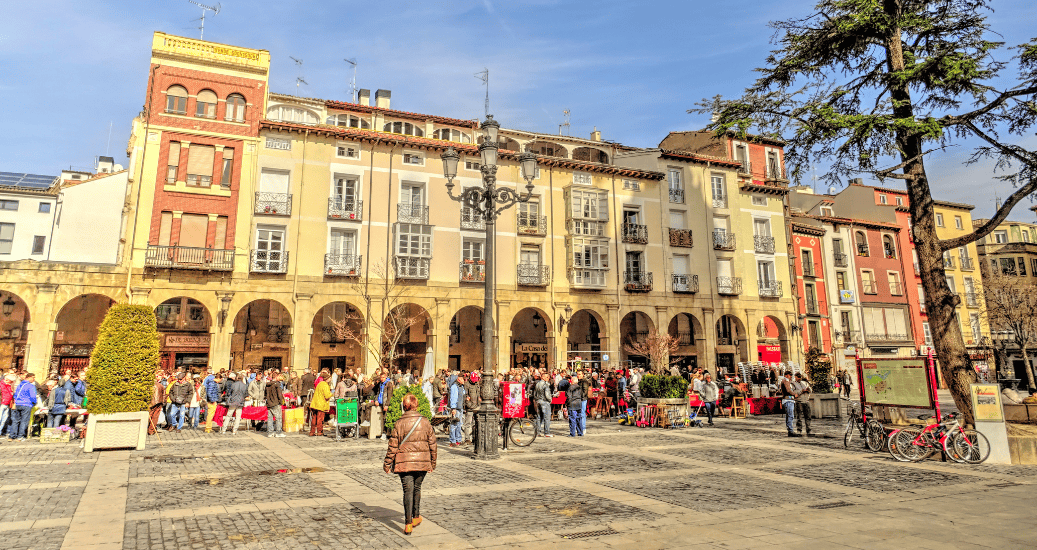
• Logroño
These cities offer beautiful historic centres and are ideal places to recover before continuing the journey.
The Regions of the Camino Francés
One of the most remarkable aspects of the Full Camino Francés is the diversity of landscapes and cultures you experience along the way. Over the course of nearly 800 kilometres, pilgrims walk across several distinct regions of northern Spain, each with its own scenery, cuisine, traditions and historical landmarks.
The Camino Francés crosses four main regions:
• Navarra
• La Rioja
• Castilla y León
• Galicia
Each region offers a very different walking experience, which is one of the reasons the Camino Francés remains the most popular Camino route.
Navarra
Navarra is the first Spanish region pilgrims encounter after crossing the Pyrenees from France. This section of the Camino is known for its dramatic landscapes, medieval villages and deep pilgrimage history.
The route begins with the famous Pyrenees crossing from Saint-Jean-Pied-de-Port to Roncesvalles, one of the most challenging yet rewarding stages of the entire Camino. The path climbs high into the mountains before descending through forests and valleys into Navarra.
As the Camino continues west, the landscape gradually becomes gentler with rolling hills, farmland and picturesque stone villages.
Key highlights in Navarra include:
• Roncesvalles – a historic monastery town that has welcomed pilgrims for centuries
• Pamplona – famous for the Running of the Bulls festival and its beautiful old town
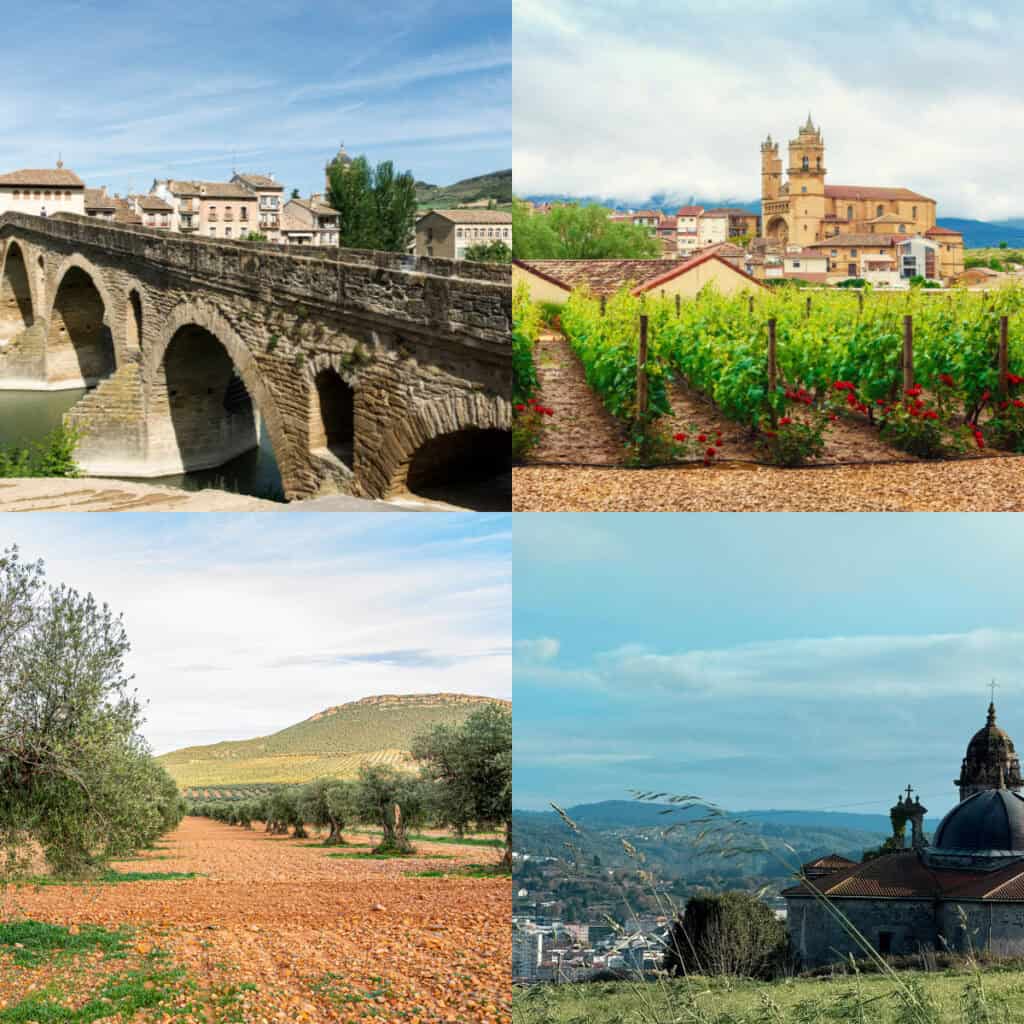
• Puente la Reina – home to one of the most iconic medieval bridges on the Camino
This region offers a strong sense of Camino tradition, with many historic churches, pilgrim hospitals and ancient walking paths still preserved today.
La Rioja
After leaving Navarra, the Camino Francés enters La Rioja, Spain’s most famous wine producing region. This part of the route is characterised by vineyards, open countryside and charming historic towns.
The walking terrain here becomes gentler compared to the Pyrenees, making it an enjoyable and scenic stretch of the journey.
The main city along this section is Logroño, the capital of La Rioja. Logroño is well known for its lively tapas culture, particularly along Calle Laurel where pilgrims often celebrate a day’s walk with traditional Rioja wine and local dishes.
Highlights of this region include:
• vast vineyards and wine estates
• historic monasteries such as San Millán de la Cogolla
• beautiful rural landscapes and small villages
La Rioja offers one of the most relaxed and culturally rich sections of the Camino, combining scenic walking with exceptional food and wine.
Castilla y León
Castilla y León is the largest region along the Camino Francés and includes the famous Meseta, a vast plateau that stretches across central northern Spain.
This section is often considered the heart of the Camino journey. The landscapes here are wide and open, with long stretches of farmland and golden wheat fields extending toward the horizon.
While the terrain is mostly flat, the long distances and minimal shade can make this part of the route physically and mentally demanding. However, many pilgrims find the quiet simplicity of the Meseta to be one of the most reflective and meaningful parts of the Camino.
Major cities along this section include:
• Burgos – home to one of Spain’s most spectacular Gothic cathedrals
• León – famous for its magnificent stained glass cathedral
• Astorga – known for its chocolate tradition and Gaudí-designed episcopal palace
Other important landmarks include Cruz de Ferro, the highest point on the Camino Francés, where pilgrims traditionally leave a stone symbolising a burden they wish to let go of.
Despite its reputation for being the longest section, Castilla y León offers some of the most historic and culturally rich stops along the entire route.
Galicia
Galicia marks the final stage of the Camino Francés and offers a dramatic change in landscape from the dry plains of Castilla y León.
After climbing through the mountains to the village of O Cebreiro, pilgrims enter a region known for its lush green hills, forest trails and traditional stone villages.
The cooler Atlantic climate brings frequent rain and mist, creating the vibrant green scenery that Galicia is famous for.
Key highlights in Galicia include:
• O Cebreiro – a historic mountain village with traditional round stone houses
• Sarria – the most popular starting point for the final 100 km of the Camino
• Portomarín – known for its relocated medieval church
• Palas de Rei and Arzúa – rural towns surrounded by farmland and forests
The final days of walking are filled with anticipation as pilgrims approach Santiago de Compostela.
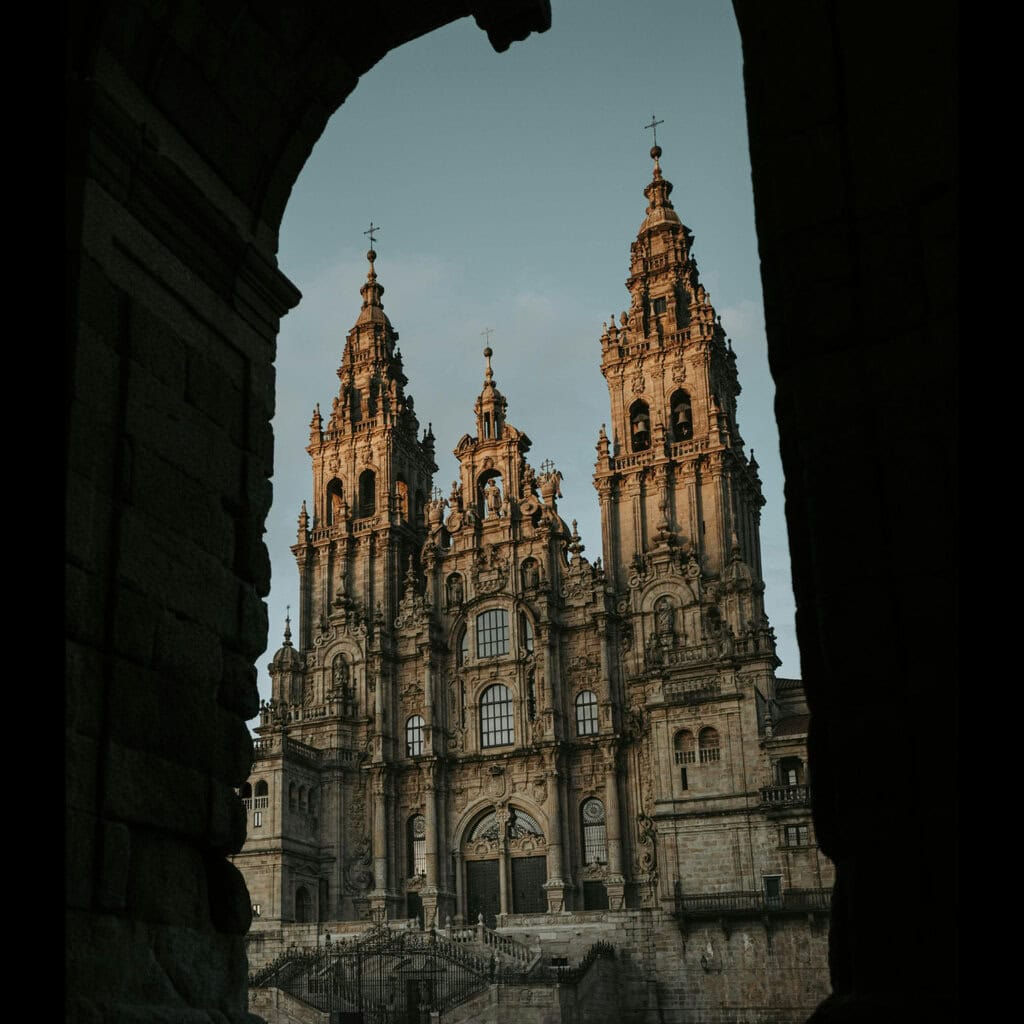
Eventually the route leads into the historic old town of Santiago, where pilgrims arrive at the Cathedral of Santiago de Compostela, completing their journey and receiving the Compostela certificate.
How Difficult is the Full Camino Francés?
The Full Camino Francés is generally considered a moderate long-distance walking challenge. While it does not require technical hiking skills, the difficulty comes from the total distance and the number of consecutive walking days.
Most pilgrims walk between 20 and 25 km per day for 30–35 days, which means the challenge is more about endurance and consistency than steep terrain.
For people with a reasonable level of fitness, the Camino Francés is very achievable and is often recommended as the best first Camino route.
The main challenges include:
• walking 20–25 km per day for several weeks
• spending 4–6 weeks on the trail
• a steep mountain stage over the Pyrenees at the start
• several rolling hill sections in Galicia near the end
• occasional long stretches between towns
However, many pilgrims are surprised by how manageable the route feels once they settle into the rhythm of walking each day.
Which Parts of the Camino Francés Are the Hardest?
While most of the route follows relatively gentle terrain, a few stages are considered more demanding.
The Pyrenees Crossing (Saint-Jean-Pied-de-Port to Roncesvalles)
The first stage crosses the Pyrenees mountains, climbing over 1,200 metres in elevation.
Why it is challenging:
• long continuous ascent
• mountain weather conditions
• steep descent into Roncesvalles
Despite the difficulty, this stage is also one of the most spectacular and memorable parts of the entire Camino.
The Meseta (Burgos to León)
The Meseta plateau is physically easier but mentally demanding.
Characteristics of this section:
• long straight walking days
• open landscapes with little shade
• fewer villages between stages
Many pilgrims actually enjoy the Meseta because of its quiet atmosphere and reflective nature.
Galicia Hills (O Cebreiro to Santiago)
The final week of the Camino includes rolling hills and forest paths in Galicia.
Challenges here include:
• frequent short climbs and descents
• wet or muddy trails in rainy weather
• increased pilgrim traffic in the final 100 km
However, this section also offers some of the most beautiful scenery of the entire route.
Best Time to Walk the Camino Francés
The best months to walk the Camino Francés are:
Spring (April – June)
• mild temperatures
• blooming landscapes
• long daylight hours
Autumn (September – October)
• cooler weather
• fewer crowds
• comfortable walking conditions
Summer can be very hot across the Meseta, while winter can bring snow to the Pyrenees.
Walking the Full Camino Francés with Follow the Camino
Planning a 30+ day walking journey can be complex.
With Follow the Camino you can walk the full route with:
• carefully selected accommodation
• luggage transfers between stages
• detailed walking notes
• local support during your journey
We’re also running a flat 10% discount till then end of March 2026, so what are you waiting for? Enquire with us now and take your first steps to planning your Full Camino Frances
FAQs: Full Camino Francés
How long does it take to walk the full Camino Francés?
Walking the full Camino Francés typically takes 30 to 35 days. Most pilgrims walk between 20 and 25 kilometres per day, covering the total distance of approximately 780 km from Saint-Jean-Pied-de-Port to Santiago de Compostela. Some walkers take additional rest days, extending the journey to around five to six weeks.
How difficult is the full Camino Francés?
The Camino Francés is considered moderate difficulty. The main challenge is walking long distances consistently rather than steep terrain. Pilgrims usually walk 20 to 25 km per day for several weeks. With basic preparation and pacing, the route is achievable for most reasonably fit walkers.
How long is the Camino Francés?
The full Camino Francés is approximately 780 kilometres (about 490 miles) long. It begins in Saint-Jean-Pied-de-Port in France and ends at the Cathedral of Santiago de Compostela in Spain.
What is the hardest part of the Camino Francés?
The most challenging stage is usually the Pyrenees crossing from Saint-Jean-Pied-de-Port to Roncesvalles, which includes a steep mountain climb. Later in the route, the rolling hills of Galicia can also feel demanding after several weeks of walking.
When is the best time to walk the Camino Francés?
The best time to walk the Camino Francés is typically April to June in spring and September to October in autumn. These months offer comfortable temperatures and pleasant walking conditions. Summer can be very hot across the Meseta, while winter may bring snow in the Pyrenees.
Can beginners walk the full Camino Francés?
Yes. The Camino Francés is often recommended as the best Camino route for beginners because it has excellent infrastructure, clear signage and frequent accommodation options. Many first-time pilgrims successfully complete the route each year.
Do you have to carry your luggage on the Camino?
No. Many pilgrims choose to use luggage transfer services, which transport bags between accommodations each day. This allows walkers to carry only a small daypack while walking.
Where do most people start the Camino Francés?
The traditional starting point is Saint-Jean-Pied-de-Port in France. However, many pilgrims begin in Sarria, which is about 100 km from Santiago, because walking the final 100 km qualifies pilgrims for the Compostela certificate.