Inside the walls of Italy’s most underrated Tuscan gem: a city frozen in Renaissance splendor.
There is a particular kind of joy reserved for cities that haven’t tried too hard to impress you. Lucca — tucked inside a ring of Renaissance walls in the heart of Tuscany — is exactly that kind of place. While Florence and Pisa draw the crowds, Lucca exhales, unhurried, filled with locals cycling across piazzas, chestnut vendors in winter, and the scent of freshly pressed olive oil drifting from every alimentari.
This is a city where the Middle Ages feel like yesterday, where you can walk on top of ancient ramparts through a canopy of trees, and where a single afternoon can contain a Romanesque cathedral, a tower with an oak forest on its roof, and the finest buccellato you’ve ever tasted.
The Essential Experiences
1. Walk (or Cycle) the Ancient Walls
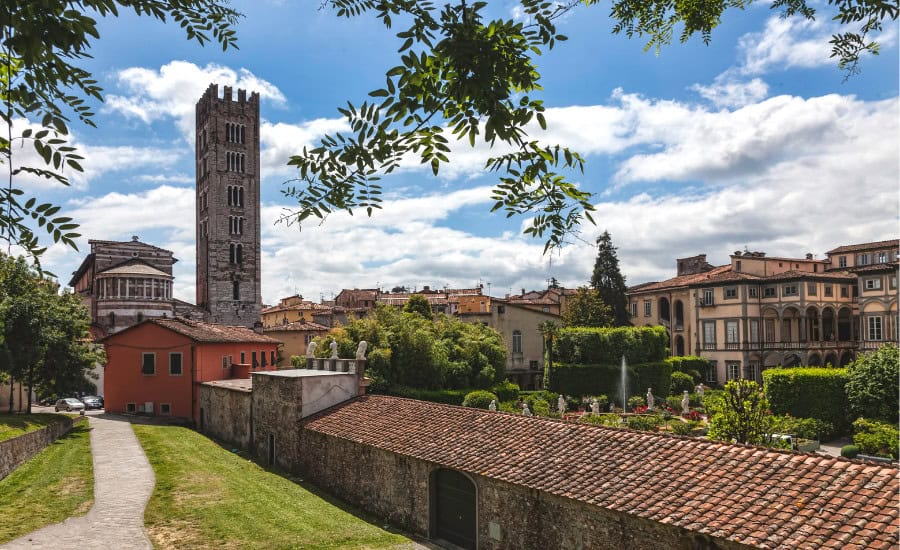
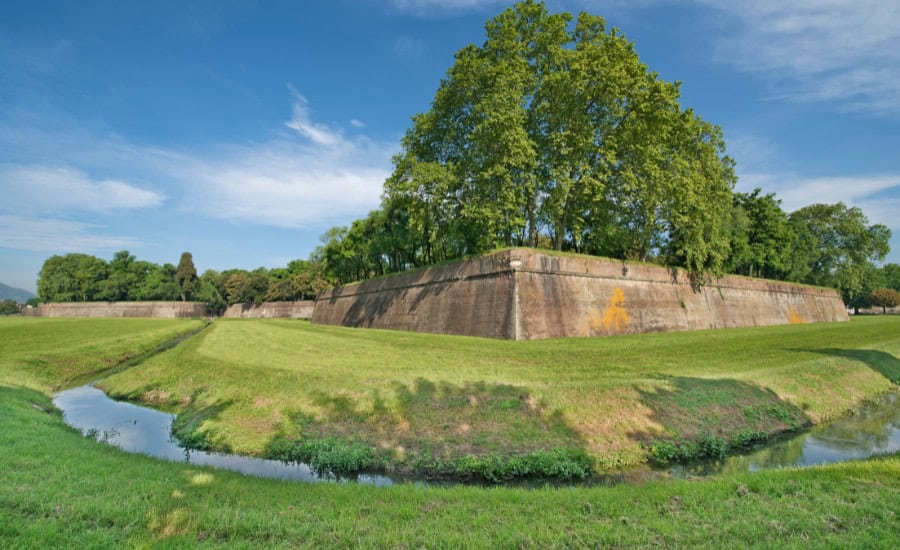
Lucca’s defining feature is its perfectly preserved Renaissance wall, stretching nearly 4.5 kilometers around the entire historic center. Built between the 16th and 17th centuries and never breached in battle, the walls were transformed in the 19th century into a tree-lined promenade — and today they’re the city’s beloved public park.
Walking the full circuit takes about an hour on foot; cycling it takes twenty minutes and feels like a dream. You can rent a bicycle at several shops near the main gates. The views over the rooftops and surrounding hills are particularly beautiful at golden hour, when the stone turns amber and the swallows swoop between the bastions.
Insider Tip: Bicycle rental shops cluster near Porta Santa Maria. Book in advance on busy summer weekends — it’s the most popular thing in the city for good reason.
2. Piazza dell’Anfiteatro
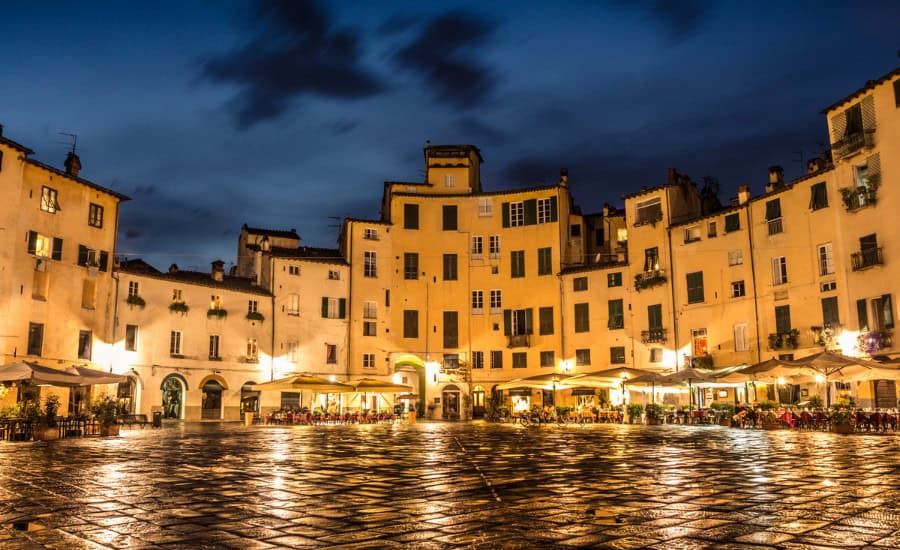
One of the most extraordinary public spaces in all of Italy, Piazza dell’Anfiteatro traces the exact elliptical footprint of a 2nd-century Roman amphitheater. Medieval builders simply incorporated the ancient structure into their houses, preserving the oval shape by accident — or genius. The result is a perfectly enclosed piazza, ringed by pastel-colored buildings at slightly varying heights, giving it an organic, breathing quality that no architect could have designed intentionally.
Today it’s lined with restaurants and cafés. In the morning, local children play football in the center while grandmothers gossip on benches. At night, it glows warmly and feels like the most civilized place on earth.
3. Cattedrale di San Martino
The Duomo of Lucca is a striking study in Pisan-Romanesque architecture — its asymmetric façade punctuated by loggias, inlaid marble, and carved reliefs that tell stories from the Bible and the life of San Martino. Inside, the cathedral houses the Volto Santo, a wooden crucifix of enormous local significance, said to have been carved by Nicodemus and miraculously completed by an angel.
Don’t miss Jacopo della Quercia’s tomb of Ilaria del Carretto (1406), one of the most quietly moving sculptures of the early Renaissance — a young noblewoman resting serenely, her feet resting on a small dog representing fidelity.
Insider Tip: The Cathedral Museum (Museo della Cattedrale) holds remarkable medieval treasures and is often overlooked by visitors — well worth the small admission fee.
4. Climb Torre Guinigi
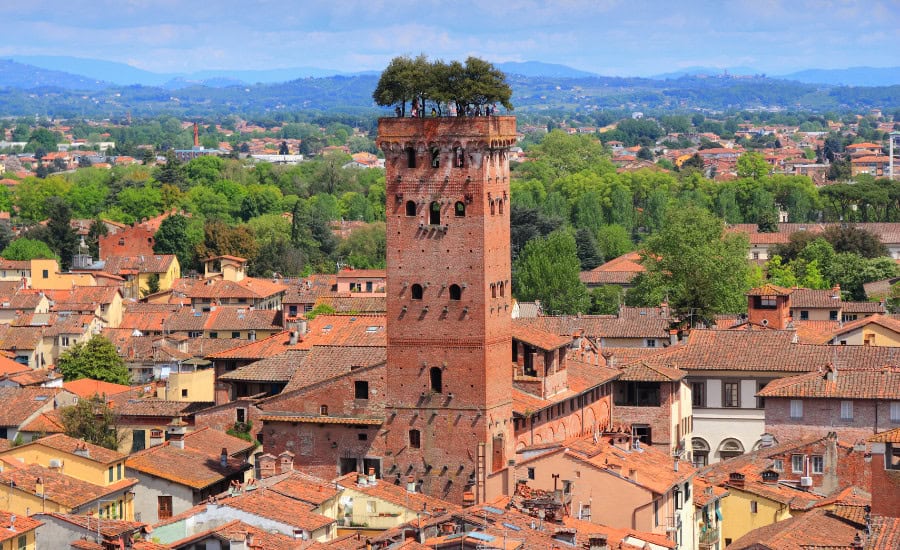
Lucca has numerous ancient towers — a sign of medieval wealth and rivalry — but none as memorable as Torre Guinigi. Climb its 230 steps and you emerge onto a rooftop garden where seven century-old holm oaks grow from the stone, their roots reaching down through the masonry. The effect is surreal and lovely: ancient trees suspended above the rooftops, swaying gently in the Tuscan breeze.
The panoramic view from the top is one of the finest in Tuscany — the tiled roofscape of Lucca’s centro storico, the walls, the surrounding plain, and on clear days the marble peaks of the Apuan Alps to the north.
5. Casa Natale di Puccini
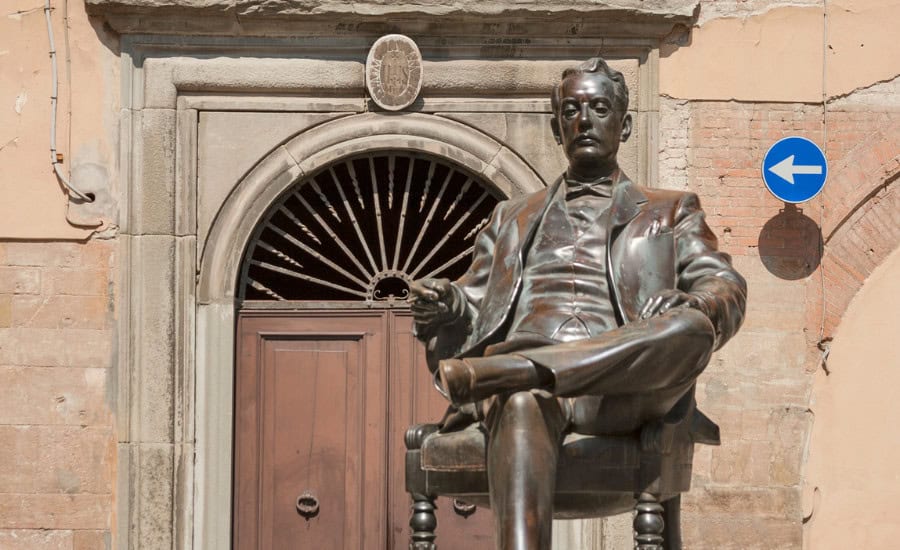
Giacomo Puccini — composer of La Bohème, Tosca, and Madama Butterfly — was born in Lucca in 1858, and the city wears this fact with elegant pride. His childhood home on Via di Poggio is now a beautifully curated museum containing portraits, original scores, his Steinway piano, and personal correspondence that paints an intimate portrait of the artist’s life.
The city’s love of Puccini extends to the streets: in summer, open-air concerts featuring his operas are staged throughout the old town, and his music drifts from cafés and restaurants as a kind of ambient soundtrack to the city.
Insider Tip: The annual Puccini e la sua Lucca concert series runs year-round in the magnificent church of San Giovanni — intimate, beautifully performed, and deeply atmospheric.
6. San Michele in Foro
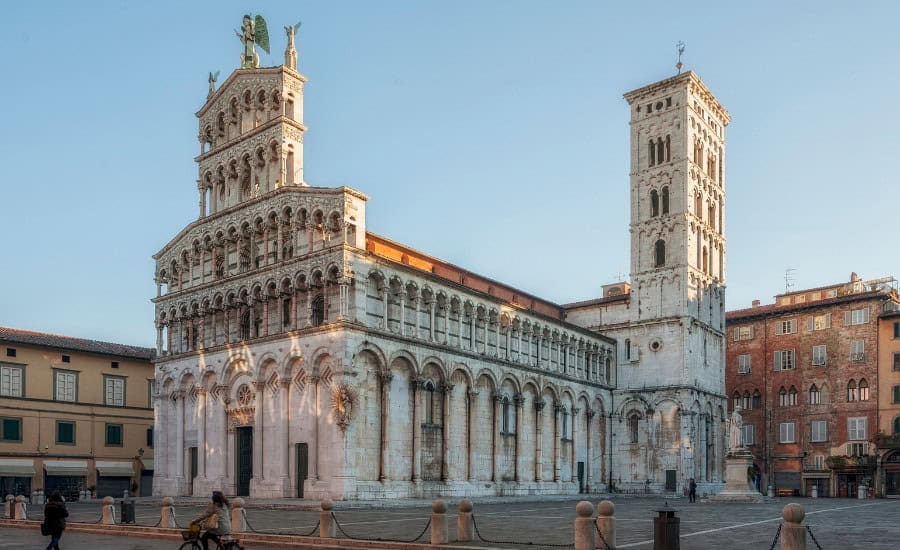
Built on the site of the ancient Roman forum — hence “in Foro” — the church of San Michele is Lucca’s most photogenic building and a textbook example of Lucca-Pisan Romanesque style at its most exuberant. Its façade soars far higher than the nave behind it, bristling with twisted marble columns, cosmatesque inlays, mythological beasts, and at the very apex, a triumphant winged archangel glittering in the sun.
The façade was designed as theatre as much as theology — a statement of civic pride visible from across the piazza. Step inside for Filippino Lippi’s luminous painting of saints, then step back out to appreciate the exterior properly from the far end of the square.
7. Villa Reale & the Lucchese Villas
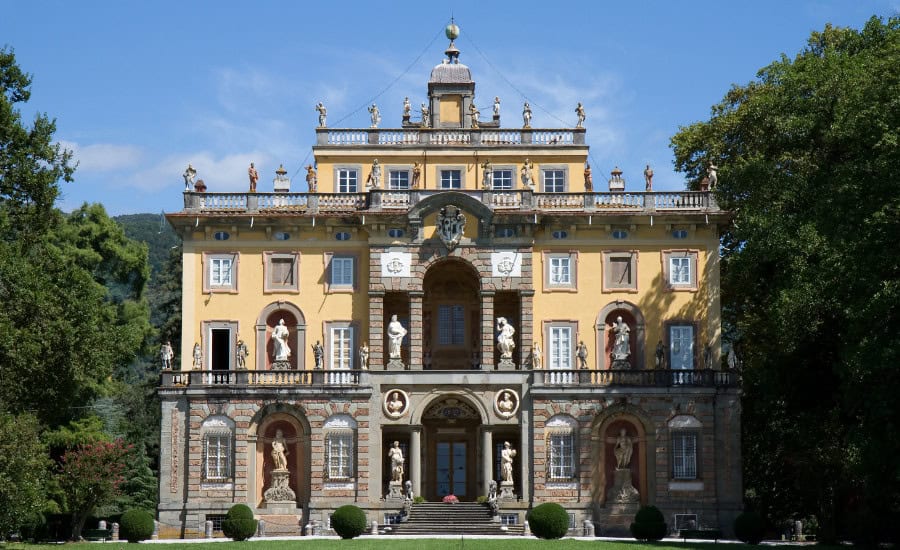
The plain surrounding Lucca is scattered with extraordinary aristocratic villas — a legacy of Lucchese merchant wealth from the 16th through 18th centuries. The most spectacular is Villa Reale di Marlia, whose gardens were redesigned by Napoleon’s sister Elisa Baciocchi and feature theatrical green rooms clipped from towering hedges, a nymphaeum, an open-air theatre, and reflecting pools.
Villa Torrigiani and Villa Grabau are also well worth visiting. Together they make for a perfect half-day excursion from the city center, best done by bicycle or rental car along the backroads.
Insider Tip: Villa Reale is only accessible by guided tour; check their website for times. The garden tour lasts about 90 minutes and is genuinely one of Tuscany’s hidden highlights.
8. The Antique Market & Local Mercato
On the third weekend of each month, Lucca’s piazzas fill with one of Tuscany’s finest antique markets — stalls spilling out across Piazza San Giusto and the surrounding streets, piled with silverware, vintage textiles, ceramics, old maps, and furniture. It draws serious collectors and casual browsers alike and gives the city an extra festive energy.
For everyday market life, the covered Mercato del Carmine offers local produce, cheeses, meats, and olive oils — the place to shop for a picnic to eat on the walls, or to stock up on the prized Lucchese extra virgin olive oil, considered among the finest in Italy.
A Taste of Lucchese Cuisine
Buccellato di Lucca
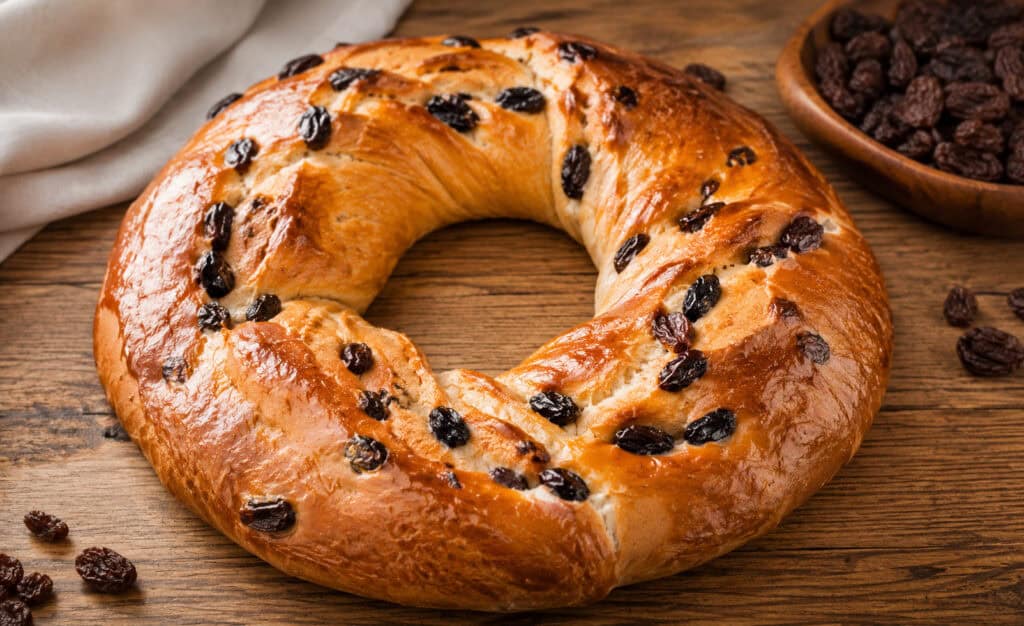
The city’s emblematic sweet bread — ring-shaped, flavored with anise and raisins, and best bought warm from the historic Pasticceria Taddeucci in Piazza San Michele. There is a local saying: you cannot claim to have visited Lucca without tasting buccellato.
Tordelli Lucchesi
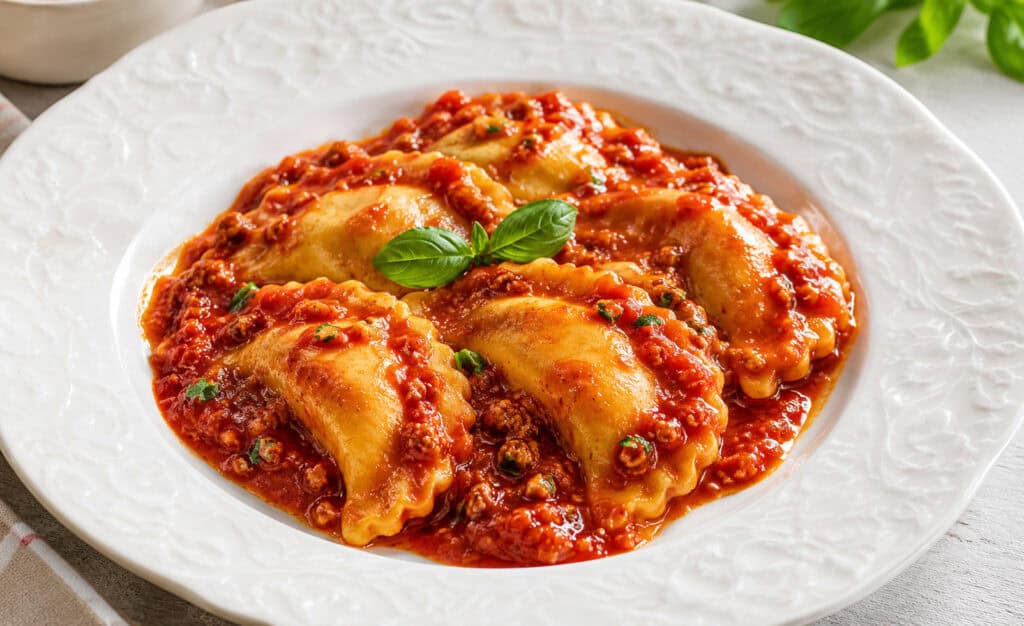
Lucca’s answer to tortellini — large, crescent-shaped pasta stuffed with a rich mixture of beef, pork, chard, cheese, and aromatic spices, then dressed with a slow-cooked meat ragù. It’s the Sunday lunch dish of every Lucchese family and the must-order item at any trattoria.
Lucchese Olive Oil
The hills around Lucca produce some of Italy’s most celebrated extra virgin olive oil — grassy, peppery, complex. Drizzled over ribollita, bruschetta, or simply soaked into good bread with a pinch of salt, it’s a revelation. Buy directly from producers or at the Mercato del Carmine.
Coffee Culture
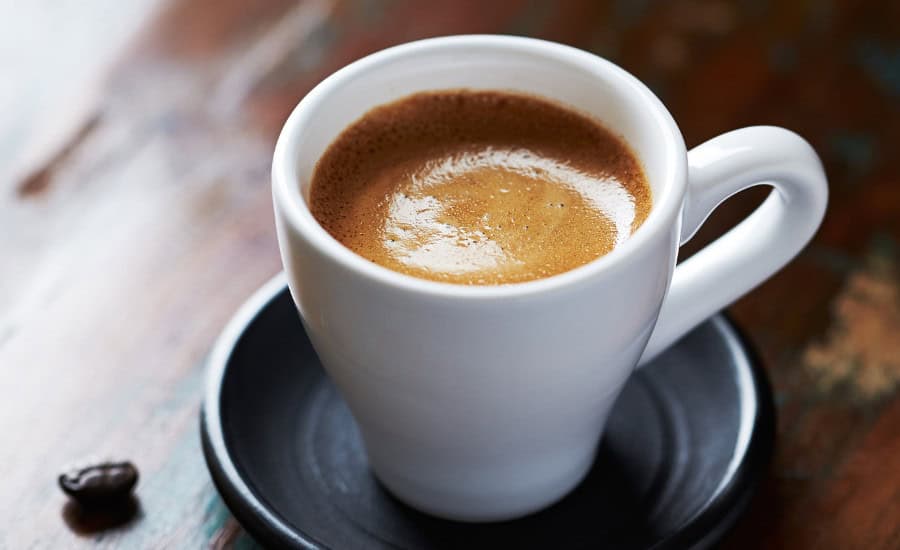
Lucca is justifiably proud of its café tradition. Pull up a stool at any bar in the old town for an espresso served the proper Tuscan way — short, intense, with a glass of still water on the side. The city has several historic cafés that have barely changed since the 19th century.

In Lucca, time does not feel wasted — it feels savored, the way good olive oil coats the back of a spoon.”
The tordelli hits differently after 25km on the Francigena. Lucca has been welcoming hungry pilgrims for over a thousand years — and walking in through the old gate is still the best way to earn your dinner. We take care of everything on the road so you can focus on the important things
Lucca is better when you arrive on foot
There’s a version of Lucca that most visitors never get to experience — the one where you walk in through the old pilgrim gate with a pack on your back, a few days of Tuscany in your legs, and the city opening up in front of you like a reward you actually earned.
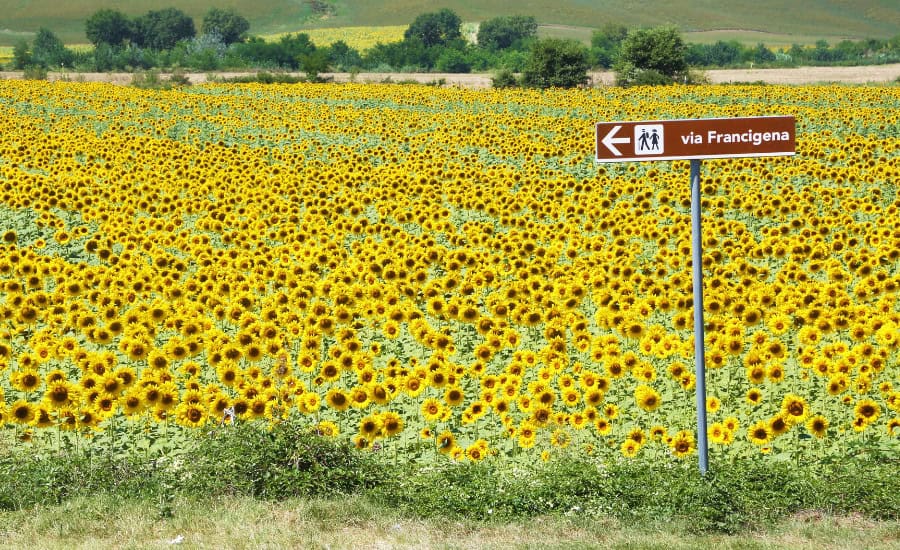
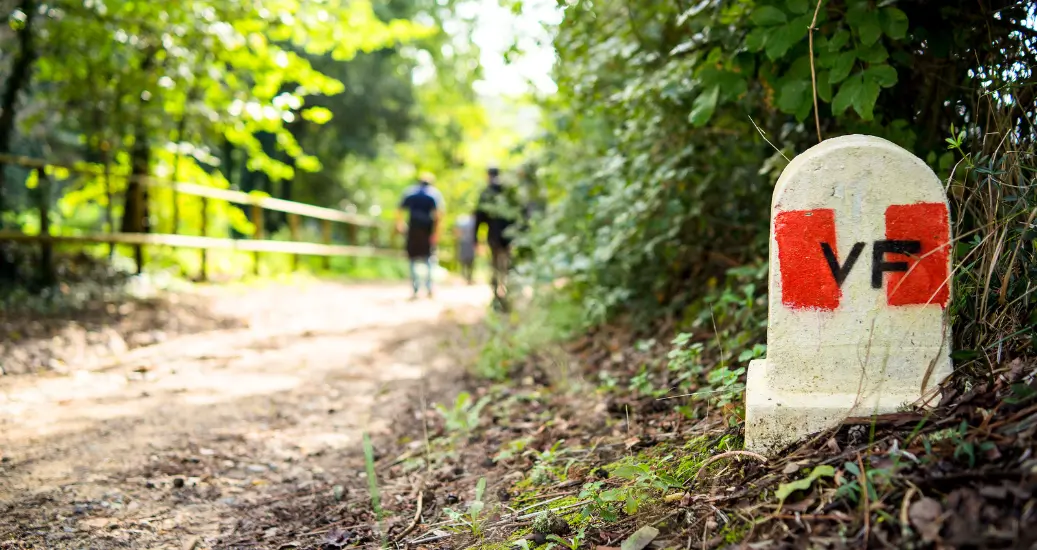
That’s the version we’ve been helping people find for years. The Via Francigena brings you here through the same gates that medieval pilgrims used — past the same countryside, through the same hilltop villages — and Lucca at the end of that journey feels completely different from Lucca off a day-trip train.
If any part of this guide has made you think “I’d like to do this properly” — that’s exactly what we’re here for.