All roads lead to Rome — and the Via Francigena is the one that pilgrims have been walking for over a thousand years.
Stretching from Canterbury, England, through France, Switzerland, and Italy to the Vatican itself, the Via Francigena is one of the great pilgrimages of the world. Less crowded than the Camino de Santiago, richer in landscape variety, and ending at one of the most significant destinations in human history, it is a once-in-a-lifetime experience that cannot be replicated anywhere else.
Whether you’re planning the full journey or dreaming of walking just the iconic Tuscan stretch, this guide covers everything you need to know — from the history of the route to practical planning advice, section by section.

What Is the Via Francigena?
The Via Francigena (pronounced vee-ah fran-CHEE-jay-nah) is an ancient pilgrimage and trade route connecting Canterbury, England, with Rome, Italy. Its name translates roughly as “the road that comes from France” — a reference to its path through the Frankish kingdom.
The route was formalised in the 10th century by Sigeric the Serious, Archbishop of Canterbury, after he was ordained a Cardinal by Pope John XV. His written record of the 80 stages of his return journey from Rome remains the oldest surviving itinerary of the route and the foundation of today’s official path.
During the Middle Ages, Rome was one of three great Christian pilgrimage destinations — alongside Santiago de Compostela and Jerusalem. The Via Francigena was the road that connected northern Europe to the heart of Christendom.
The Via Francigena vs. The Camino de Santiago
This is the question we hear most often — and it deserves an honest answer.
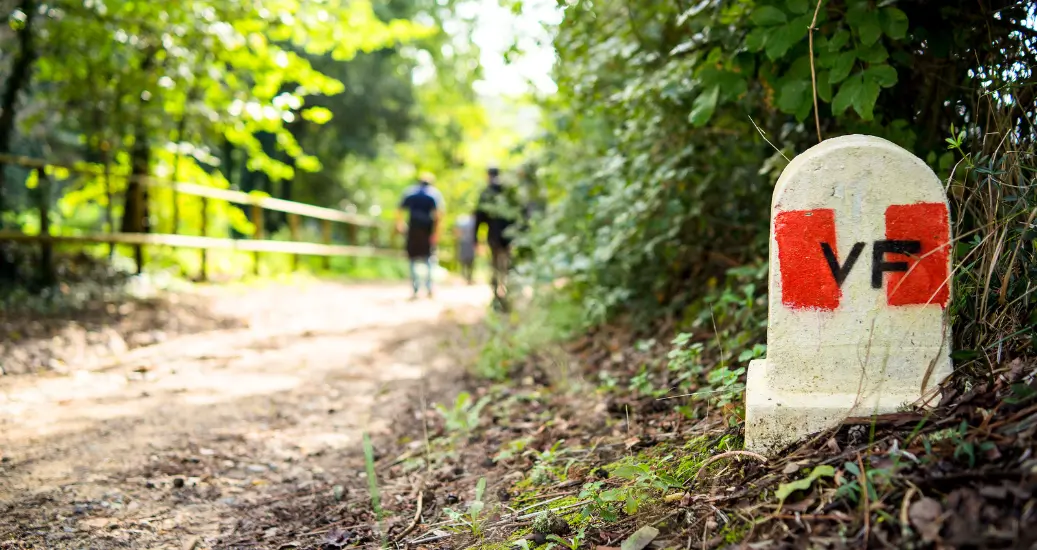
The Via Francigena paths are more challenging to navigate than the Camino de Santiago routes. The trail is not as densely waymarked, and the pilgrim infrastructure — particularly in France and Switzerland — is less developed. But that is precisely part of its appeal. It is not as busy, and it offers an entirely different pilgrim experience: four countries, multiple cultural worlds, and a journey that ends not in a Galician city but in the Vatican itself.
| Via Francigena | Camino Francés | |
|---|---|---|
| Distance(full route) | ~2,030 km | ~800 km |
| Countries crossed | 4 (England, France, Switzerland, Italy) | 2 (France, Spain) |
| Pilgrim numbers | Low–moderate | Very high (400,000+/year) |
| Waymarking | Developing (excellent in Italy) | Highly developed throughout |
| Infrastructure | Growing — less dense than Camino | Extensive |
| Destination | Vatican City, Rome | Santiago de Compostela |
| Duration (full route) | ~100 days | ~30–35 days |
If you’ve walked the Camino and want something deeper, quieter, and more challenging, the Via Francigena is the natural next step.

The Route: Four Countries, One Road to Rome
The Via Francigena covers approximately 2,030 km across four countries. Most pilgrims don’t walk the whole thing in one go — the route is designed to be completed in sections, over one trip or many.
- England is where the journey begins, at Canterbury Cathedral. The route heads south through the Kent countryside before crossing the Channel from Dover to Calais by ferry — a crossing unique among European pilgrimage routes.
- France is the longest national section, leading south through Picardy, the Champagne region, Burgundy, and the Jura hills towards the Alps. This is a stretch of extraordinary historical depth: WWI memorials in the Somme, the UNESCO cathedral at Reims, Clairvaux Abbey, and the vineyards of Champagne.
- Switzerland is short but unforgettable. The route climbs alongside Lake Geneva before ascending to the Great St Bernard Pass (2,473 m) — one of the most dramatic moments on the entire journey. The Alpine hospice, run by monks since the 11th century, still welcomes pilgrims today.
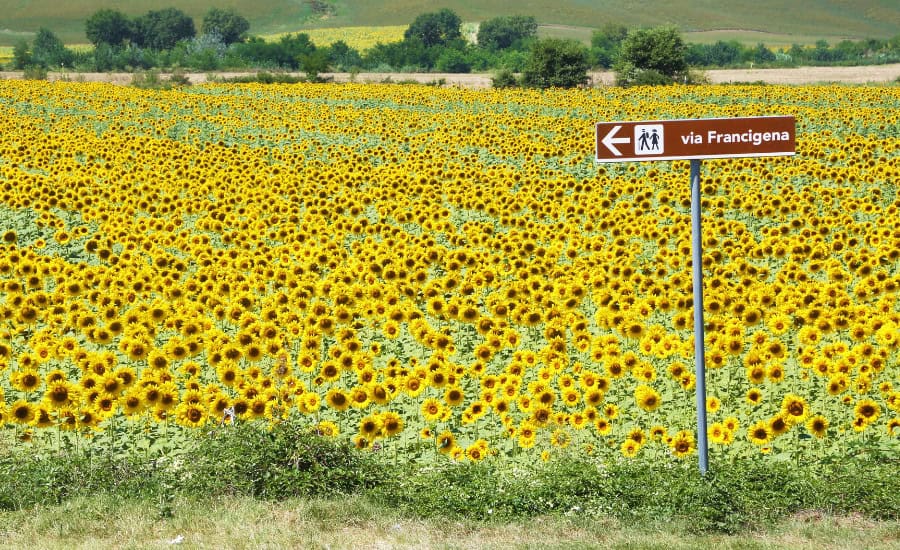
- Italy is where the Via Francigena comes fully into its own. Descending from the Alps through the Aosta Valley, crossing the Po Plain, and climbing into the hills of Tuscany, the route builds towards Rome through some of the most beautiful countryside in Europe — ending at St Peter’s Square in Vatican City.
Follow the Camino offers the route as 16 bookable sections, each walkable independently or combined into a longer journey.
Most Popular Sections
If you’re not ready for the full route, these are the sections most walkers choose:
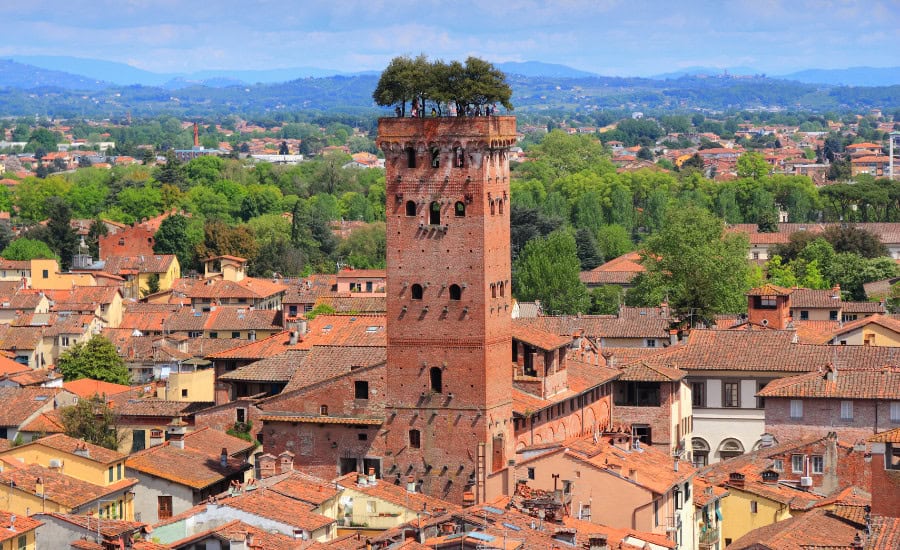
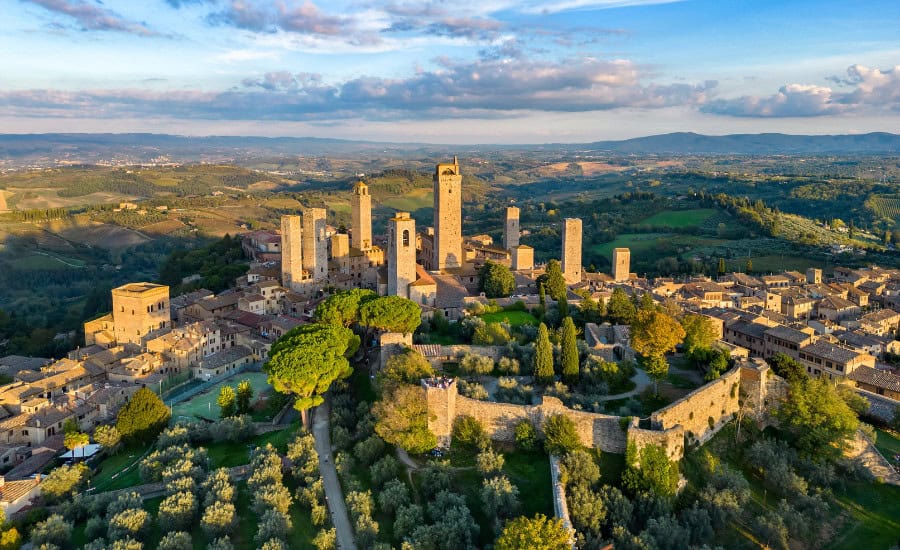
Tuscany: Lucca to Siena (Section 13) — the classic introduction to the Via Francigena. Beautiful medieval towns, rolling Tuscan countryside, and manageable terrain. Perfect for a first-time pilgrim.
Siena to Rome (Sections 14–16) — approximately 300 km, completable in around three weeks. Covers the best of Tuscany and Lazio and ends at the Vatican. This is the section needed to earn the official Testimonium certificate.
The Alpine Crossing (Sections 8–9) — for experienced walkers seeking something more dramatic. The Great St Bernard Pass is one of the most extraordinary days on the entire route.

When to Walk the Via Francigena
- Spring (April–June) and autumn (September–October) are the ideal seasons — mild temperatures, beautiful landscapes, and comfortable walking conditions throughout. These are the months when the Via Francigena is at its best.
- Summer (July–August) is popular but can be intensely hot in Tuscany and Lazio. Starting early each day and carrying plenty of water makes a real difference on the longer stages.
- Winter (November–March) Many pilgrim accommodation close, the days are short, and the alpine sections become inaccessible without specialist mountain equipment. The Great St Bernard Pass is only reliably open from mid-June to mid-October. For most pilgrims, winter is better spent planning the adventure rather than walking it.
The Via Francigena Credential
Like the Camino de Santiago, the Via Francigena has its own pilgrim passport — the Credenziale — in which you collect stamps at churches, guesthouses, and official points along the route.
To receive the official certificate of completion — the Testimonium — you must complete at least the final 100 km on foot (or 200 km by bicycle), collect stamps consistently along the way, and present your completed Credenziale at the official pilgrim reception point in Rome upon arrival.
When you book with us, your Credenziale comes included in your holiday pack — ready to go before you even set foot on the route.

Accommodation on the Via Francigena
The Via Francigena has a growing network of accommodation along the route, from family-run agriturismos and B&Bs to comfortable hotels in the main towns. In Italy — particularly through Tuscany — the options are excellent, often with exceptional local food and a warm welcome for pilgrims. In France and Switzerland, the infrastructure is less developed and availability can be limited at peak times.
Booking in advance is strongly recommended throughout the route. The Via Francigena has grown significantly in popularity in recent years, and the best-located places fill up fast.
When you walk with us, we take care of all of it. We hand-pick every place you’ll stay — chosen for location, comfort, and character — so every night on the road is as enjoyable as the walking itself. No scrambling for a bed at the end of a long day.
Planning Your Via Francigena with Follow the Camino
Follow the Camino has been helping pilgrims walk their journey for over a decade. We offer both self-guided and guided trips on the Via Francigena — from individual sections to the full Canterbury-to-Rome route.
Every trip includes:
- Pre-booked accommodation selected for quality and location
- Detailed route notes and maps
- Luggage transfers
- 24/7 support on the road
- Official Credenziale for pilgrims walking with us

Ready to Walk?
The Via Francigena has been calling pilgrims to Rome for over a thousand years. It is one of the world’s great journeys — and one that still feels like a genuine discovery.
That’s exactly what makes it so special right now.