

Despite this, both James and John held a special place in Jesus’ heart. They were present during the Transfiguration, where Jesus revealed his divine glory to them atop a mountain. James also witnessed the miracle of the raising of Jairus’ daughter and accompanied Jesus during his agonizing prayer in the Garden of Gethsemane.
Following Jesus’ crucifixion and resurrection, St. James became a fervent proclaimer of the Gospel, spreading the message of Christ throughout the Roman Empire. His missionary work took him to Spain, where he encountered significant resistance. Nevertheless, he persevered, gaining a small following of converts.
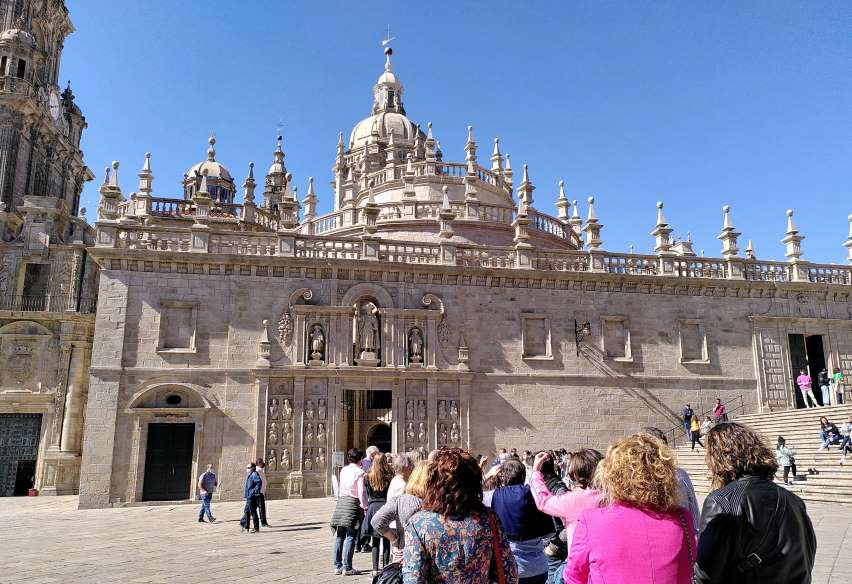
James’ life was cut short when he became the first apostle to be martyred for his faith. But his legacy continued when his body miraculously traveled by boat to the coast of Galicia. His remains were later discovered in a field, giving rise to the establishment of the city of Santiago de Compostela, which means “St. James of the Field of Stars.” The Cathedral of Santiago de Compostela, built in his honor, quickly became the focal point for pilgrims that we know today.

Since his tomb was discovered in the early 9th century, the Camino became a significant pilgrimage site, rivaling Rome and Jerusalem in its importance. Although the network of paths from various European locations has changed, the Camino remains in the well-established routes we know today.
In Spain, St. James is not only revered as an apostle but also known as Santiago Matamoros (St. James the Moor-slayer). He is believed to have appeared during the medieval battles between Christians and Moors, fighting alongside the Christian armies and securing victory. This image of St. James as a warrior saint became an emblem of Spanish nationalism and played a significant role in the Reconquista, the Christian reconquest of the Iberian Peninsula.