...

Vigo to Santiago de Compostela

Starting from

€800

This section of the Camino Portuguese from Vigo to Santiago de Compostela is a great option for pilgrims looking for a shorter Camino experience while still enjoying the essence of the route. Starting in the vibrant city of Vigo, the trail heads inland to Redondela, where it joins the traditional Camino Portuguese. From there, you’ll pass through welcoming towns like Pontevedra, famous for its charming old town and pilgrim-friendly atmosphere, before continuing through the green Galician countryside towards Santiago. Along the way, you can enjoy some of Galicia’s most famous flavours, including fresh seafood and oysters in Vigo, pimientos de Padrón, and the local Albariño wine, before reaching the impressive Cathedral of Santiago de Compostela.

This section of the Camino Portuguese from Vigo to Santiago de Compostela is a great option for pilgrims looking for a shorter Camino experience while still enjoying the essence of the route. Starting in the vibrant city of Vigo, the trail heads inland to Redondela, where it joins the traditional Camino Portuguese. From there, you’ll pass through welcoming towns like Pontevedra, famous for its charming old town and pilgrim-friendly atmosphere, before continuing through the green Galician countryside towards Santiago. Along the way, you can enjoy some of Galicia’s most famous flavours, including fresh seafood and oysters in Vigo, pimientos de Padrón, and the local Albariño wine, before reaching the impressive Cathedral of Santiago de Compostela.

Stage 2 of 2

100km

7 days

Comfort

Popular time

may

Starting from

€800

Starting from

€800

Route Summary

Stage 2 of 2

100km

7 days

Comfort

Popular time

may

Best time to go:

Jan
Feb
Mar
Apr
May
Jun
Jul
Aug
Sep
Oct
Nov
Dec
Popular Time
Good Time
Off/Low Season
Not Possible

Overall

Distance:

14.3 min | 19.6km average | 24.7 max

Ascent:

128.7 min | 318.7m average | 495.4 max

Cardio:

2   3   4

Follow the Camino Preview Map Trip 1344
Services Availability Advice advice
Food Food
Water Water
Toilet Toilets
Plentiful Plentiful

Facilities are abundantly available along the route.

Minimal recommended carry per person (keep well hydrated and energy coming in between services places):

  • 0.5 L water
  • One small snack (fruit, bar, nuts)
Marking Marking
Plentiful Plentiful

Clear and frequent signage

Follow the signs and enjoy the walk

View the popular times to visit this route

Jan
Feb
Mar
Apr
May
Jun
Jul
Aug
Sep
Oct
Nov
Dec
Popular Time
Good Time
Off/Low Season
Not Possible

Overall

Distance:

14.3 min | 19.6km average | 24.7 max

Ascent:

128.7 min | 318.7m average | 495.4 max

Cardio:

2   3   4

Follow the Camino Preview Map Trip 1344
Services Availability Advice advice
Food Food
Water Water
Toilet Toilets
Plentiful Plentiful

Facilities are abundantly available along the route.

Minimal recommended carry per person (keep well hydrated and energy coming in between services places):

  • 0.5 L water
  • One small snack (fruit, bar, nuts)
Marking Marking
Plentiful Plentiful

Clear and frequent signage

Follow the signs and enjoy the walk

Highlights

Vigo

Vigo

The bay city of Vigo is well worth exploring as it one of the settings for Jules Verne’s novel ‘Twenty Thousand Leagues Under the Sea’. It is from here that Captain Nemo pilfered his wealth to fund his submarine Nautilus from the galleons sunk by the British during the Battle of Vigo Bay in 1702. Vigo is also well-know for its maritime history, with the The European Fisheries Control Agency based here, so explore the age-old relationship between this city and the sea.

Sampaio Bridge, past Pontevedra on the Camino Portugues

Ponte Sampaio

Shortly before reaching Pontevedra, pilgrims cross the historic village of Ponte Sampaio, where an important battle against Napoleon’s troops took place in 1809. The beautiful stone bridge over the Verdugo River is one of the memorable points of the route, offering lovely views and a peaceful setting as you continue your walk toward Pontevedra.

Horreo in Galicia near Pontevedra

Pontevedra

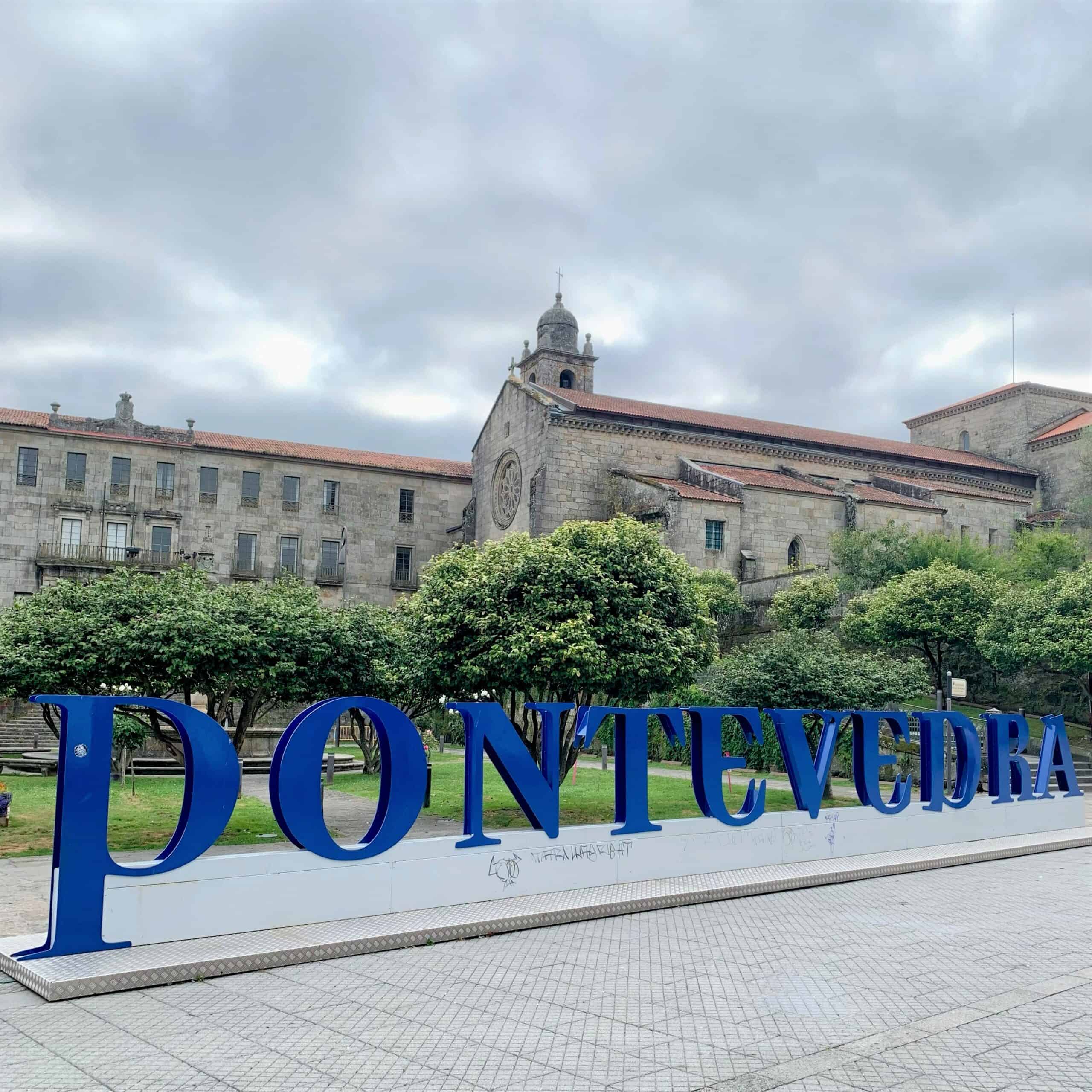
As the route progresses, you'll reach the city of Pontevedra. Surrounded by hills, the city is located on the edge of the mouth of the River Lérez, in the heart of the Rías Baixas. Here pilgrims can enjoy the relaxed environment of a quiet and pretty city.

Vigo

Vigo

The bay city of Vigo is well worth exploring as it one of the settings for Jules Verne’s novel ‘Twenty Thousand Leagues Under the Sea’. It is from here that Captain Nemo pilfered his wealth to fund his submarine Nautilus from the galleons sunk by the British during the Battle of Vigo Bay in 1702. Vigo is also well-know for its maritime history, with the The European Fisheries Control Agency based here, so explore the age-old relationship between this city and the sea.

Sampaio Bridge, past Pontevedra on the Camino Portugues

Ponte Sampaio

Shortly before reaching Pontevedra, pilgrims cross the historic village of Ponte Sampaio, where an important battle against Napoleon’s troops took place in 1809. The beautiful stone bridge over the Verdugo River is one of the memorable points of the route, offering lovely views and a peaceful setting as you continue your walk toward Pontevedra.

Horreo in Galicia near Pontevedra

Pontevedra

As the route progresses, you'll reach the city of Pontevedra. Surrounded by hills, the city is located on the edge of the mouth of the River Lérez, in the heart of the Rías Baixas. Here pilgrims can enjoy the relaxed environment of a quiet and pretty city.

Start Planning Now !

VIGO

SANTIAGO DE COMPOSTELA

Starting from € 800
Number of People
Person Icon
Your Contact Details
Please fill the required fields

Services

Included in this package

Bed & Breakfast

Specially Hand-Picked Accommodation

Our Holiday or Pilgrim Pack

24/7 On-Call Support

Virtual Face-to-Face Pre-Departure Briefing

Add-On

Premium Accommodation

Airport Pick-Up

Additional Nights

Dinners

Luggage Transfers from Hotel to Hotel

Day Tours to Local Sites of Interest

Not included: Flights/trains, Insurance, Drinks/Lunch

Itinerary

Day

1

km

VIGO

Set on the shores of the Ría de Vigo, with the Atlantic stretching out behind it and the legendary Cíes Islands on the horizon, Vigo is Galicia’s largest city and one of the most authentic on the entire Atlantic coast. Far more than its industrial reputation suggests, the city comes alive in its cobbled historic streets, its open-air oyster markets where the legendary ostreiras have been shucking by hand for generations, and its sweeping viewpoints over the ría — all best enjoyed with a plate of fresh seafood and the Atlantic breeze on your face.

Day

2

14.3 km

VIGO REDONDELA

This relatively short day mostly an uphill walk going out of Vigo, for which you are rewarded with wonderful views of the city and harbour. As this is not a very long day walking you may want to spend some time in Vigo and explore the bay area which is one of the settings for Jules Verne’s novel Twenty Thousand Leagues Under the Sea. It is here that Captain Nemo pilfered his wealth to fund his submarine Nautilus from the galleons sunk by the British during the Battle of Vigo Bay in 1702.

Day

3

19.5 km

REDONDELA PONTEVEDRA

Leaving Redondela, which is known as the Village of Viaducts due to the two 19th Century railroad viaducts in the town, you will proceed to the village of Arcade. From here you cross a Romanesque bridge where Napoleon was defeated by the Spanish during the War of Independence. Arriving into Pontevedra you will head through the narrow streets before reaching the 13th Century Church of Santa Maria. Of interest to pilgrims is the Capela da Peregrina which, although it appears round, is actually in the shape of a scallop shell.

Day

4

20.9 km

PONTEVEDRA CALDAS DE REIS

Passing chestnut groves, the Camino leaves Pontevedra and runs parallel to the railway for a while. After passing through the hamlet of Ponte Cabras, we encounter the rectory of Santa Maria de Alba, tucked away among pine and eucalyptus trees. Emerging from the dense woods of Lombo da Maceira, you’ll see a statue of St James, his staff pointing the way to proceed. Passing the lovely village of Tibo, with its fountain, public washing place and stone cross, brings us to Caldas de Reis.

Day

5

18.5 km

CALDAS DE REIS PADRON

Exiting the town, we take a bridge over the River Umia that leads us to a fountain of hot spring water that has lent the town its name since Roman times. Entering the woods once more, the Camino makes its way gently uphill to the hamlet of Santa Marina. Going downhill, we cross the river Fontenlo. Finally, we catch up again with the river as we arrive in Padron. Padron is famous for being the first land sighted by the ship bearing the body of St James.

Day

6

24.7 km

PADRON SANTIAGO DE COMPOSTELA

The Camino passes through many small hamlets before arriving at the Baroque sanctuary of A Esclavitude. On a hilltop to the left stands the mysterious ruins of the hillfort Castro Lupario. A few kilometres later, we come to the oldest wayside crossing in Galicia. As we near Agro dos Monteiros, it’s now possible to see the spires of the cathedral in Santiago. Finally, the Camino passes by the ruins of a castle known as A Rocha Vella, before entering the city of the Apostle.

Day

7

km

SANTIAGO DE COMPOSTELA

After breakfast, we bid you farewell.
If you wish to stay in the area, we recommend that you:
– Take your time and visit the magnificent historic centre of Santiago.
– Continue with us along the wild Camino Fisterra (Finisterre Way), and stay overnight at the hotel in the lighthouse!
– Or take a bus to Fisterra to visit the unspoilt sandy coves and beaches of the west coast. With very few tourists, you are guaranteed a very special experience. Buses depart from Santiago Bus Station at 9am and 10am. Buses return to Santiago at 4:45pm and 7pm. The journey takes 3 hours.

Day

1

km

VIGO

Set on the shores of the Ría de Vigo, with the Atlantic stretching out behind it and the legendary Cíes Islands on the horizon, Vigo is Galicia’s largest city and one of the most authentic on the entire Atlantic coast. Far more than its industrial reputation suggests, the city comes alive in its cobbled historic streets, its open-air oyster markets where the legendary ostreiras have been shucking by hand for generations, and its sweeping viewpoints over the ría — all best enjoyed with a plate of fresh seafood and the Atlantic breeze on your face.

Day

2

14.3 km

VIGO REDONDELA

This relatively short day mostly an uphill walk going out of Vigo, for which you are rewarded with wonderful views of the city and harbour. As this is not a very long day walking you may want to spend some time in Vigo and explore the bay area which is one of the settings for Jules Verne’s novel Twenty Thousand Leagues Under the Sea. It is here that Captain Nemo pilfered his wealth to fund his submarine Nautilus from the galleons sunk by the British during the Battle of Vigo Bay in 1702.

Day

3

19.5 km

REDONDELA PONTEVEDRA

Leaving Redondela, which is known as the Village of Viaducts due to the two 19th Century railroad viaducts in the town, you will proceed to the village of Arcade. From here you cross a Romanesque bridge where Napoleon was defeated by the Spanish during the War of Independence. Arriving into Pontevedra you will head through the narrow streets before reaching the 13th Century Church of Santa Maria. Of interest to pilgrims is the Capela da Peregrina which, although it appears round, is actually in the shape of a scallop shell.

Day

4

20.9 km

PONTEVEDRA CALDAS DE REIS

Passing chestnut groves, the Camino leaves Pontevedra and runs parallel to the railway for a while. After passing through the hamlet of Ponte Cabras, we encounter the rectory of Santa Maria de Alba, tucked away among pine and eucalyptus trees. Emerging from the dense woods of Lombo da Maceira, you’ll see a statue of St James, his staff pointing the way to proceed. Passing the lovely village of Tibo, with its fountain, public washing place and stone cross, brings us to Caldas de Reis.

Day

5

18.5 km

CALDAS DE REIS PADRON

Exiting the town, we take a bridge over the River Umia that leads us to a fountain of hot spring water that has lent the town its name since Roman times. Entering the woods once more, the Camino makes its way gently uphill to the hamlet of Santa Marina. Going downhill, we cross the river Fontenlo. Finally, we catch up again with the river as we arrive in Padron. Padron is famous for being the first land sighted by the ship bearing the body of St James.

Day

6

24.7 km

PADRON SANTIAGO DE COMPOSTELA

The Camino passes through many small hamlets before arriving at the Baroque sanctuary of A Esclavitude. On a hilltop to the left stands the mysterious ruins of the hillfort Castro Lupario. A few kilometres later, we come to the oldest wayside crossing in Galicia. As we near Agro dos Monteiros, it’s now possible to see the spires of the cathedral in Santiago. Finally, the Camino passes by the ruins of a castle known as A Rocha Vella, before entering the city of the Apostle.

Day

7

km

SANTIAGO DE COMPOSTELA

After breakfast, we bid you farewell.
If you wish to stay in the area, we recommend that you:
– Take your time and visit the magnificent historic centre of Santiago.
– Continue with us along the wild Camino Fisterra (Finisterre Way), and stay overnight at the hotel in the lighthouse!
– Or take a bus to Fisterra to visit the unspoilt sandy coves and beaches of the west coast. With very few tourists, you are guaranteed a very special experience. Buses depart from Santiago Bus Station at 9am and 10am. Buses return to Santiago at 4:45pm and 7pm. The journey takes 3 hours.

How to Get There

Getting to Vigo, Spain

Fly into Santiago de Compostela

Ryanair, Aer Lingus and Iberia/BA fly direct to Santiago de Compostela from the UK and Ireland. Ryanair flies from Stansted, Iberia/BA operate from Gatwick and Aer Lingus operates from Dublin.  Santiago de Compostela can also be reached by a number of locations around Spain and Portugal, as well as major European cities. Iberia/BA offers the best selection of flights and you can fly to and from Santiago De Compostela returning to Frankfurt, Paris, Rome, Barcelona, Bilbao, Fuerteventura, Gran Canaria, Lanzarote, Madrid, Malaga, Palma, Seville, Tenerife and Valencia. The bus from Santiago Airport to Vigo takes 1 hour.  

    Getting home from Santiago de Compostela, Spain

    Fly from Santiago de Compostela

    Shuttle buses from Santiago city centre to the airport take 20 minutes, or you can request an airport transfer that will pick you up from your hotel.

      Getting to Vigo, Spain

      Fly into Santiago de Compostela

      Ryanair, Aer Lingus and Iberia/BA fly direct to Santiago de Compostela from the UK and Ireland. Ryanair flies from Stansted, Iberia/BA operate from Gatwick and Aer Lingus operates from Dublin.  Santiago de Compostela can also be reached by a number of locations around Spain and Portugal, as well as major European cities. Iberia/BA offers the best selection of flights and you can fly to and from Santiago De Compostela returning to Frankfurt, Paris, Rome, Barcelona, Bilbao, Fuerteventura, Gran Canaria, Lanzarote, Madrid, Malaga, Palma, Seville, Tenerife and Valencia. The bus from Santiago Airport to Vigo takes 1 hour.  

        Getting home from Santiago de Compostela, Spain

        Fly from Santiago de Compostela

        Shuttle buses from Santiago city centre to the airport take 20 minutes, or you can request an airport transfer that will pick you up from your hotel.

          Frequently Asked Questions

          How long is the Camino from Vigo to Santiago and how many days does it take?
          Starting in Vigo means you’ll walk the final 100 km of the Portuguese Coastal Camino, the minimum distance required to earn your Compostela certificate in Santiago. From this point, most pilgrims complete the route in about five days of walking.
          What is the terrain like between Vigo and Santiago?
          The terrain between Vigo and Santiago de Compostela is mostly gentle and varied. Walkers can expect a mix of countryside paths, forest trails, and quiet roads, with some gradual hills typical of Galicia. Overall, it’s considered a moderate and enjoyable section of the Portuguese Coastal Camino.
          What are the highlights along the Vigo to Santiago route?
          You can visit charming towns like Redondela and Pontevedra, explore historic squares and medieval churches, enjoy scenic rivers and Galician countryside, taste pimientos de Padrón, seafood and oysters in Vigo, and finish at the Santiago de Compostela Cathedral.
          When is the best time to walk from Vigo to Santiago?
          The best walking conditions are from April to October, when weather is mild and coastal services are fully open. September is one of the most popular months, offering warm, stable weather and vibrant towns along the way. For climate information across Galicia, check our Camino Weather Map
          What should I pack for the Vigo to Santiago section?
          Bring comfortable walking shoes, light layers, and a waterproof jacket, as Galicia can experience changeable weather. Sun protection is useful on the earlier coastal days, while a reusable water bottle is handy for longer stretches between villages. Our full gear advice is in the Camino Packing List

          Start Planning your Adventure Now

          Walk the Camino to experience what is set to be the biggest Camino experience of the
          century so far. Embrace your freedom to explore and challenge yourself to walk the Camino.

          Search
          Blog
          Enquire Now
          Saved
          Log in
          Off season
          February Off season
          March Off season
          April Good time
          July Good time
          August Good time
          October Good time
          November Off season
          December Off season