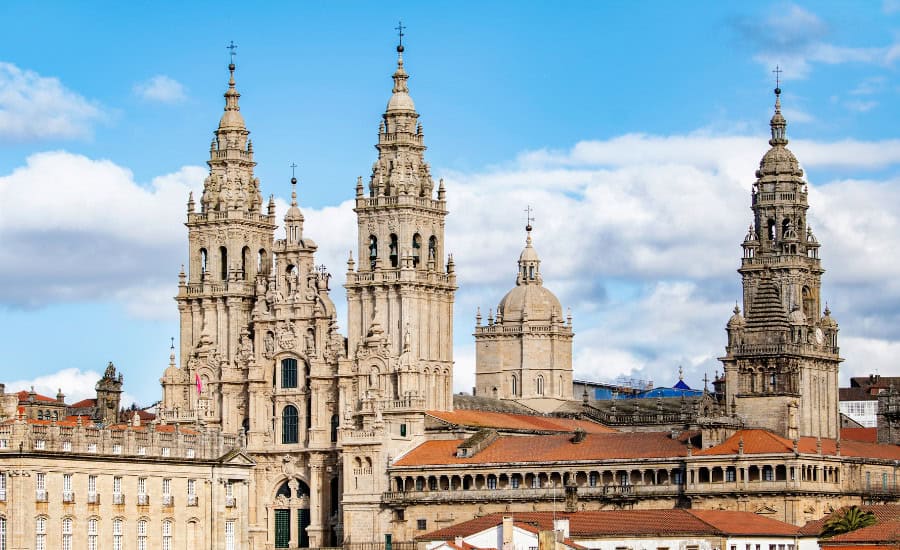
After days or weeks of walking, arriving at Praza do Obradoiro and seeing the Cathedral’s towers for the first time is a moment that stays with you. But a lot of pilgrims make the same mistake: they hug the Apostle, snap the photo in the square, and by that afternoon they’re already on a bus or a plane home. They barely get a chance to see the city that welcomed them at the end of their journey.
If you’re planning your Camino de Santiago, here’s something worth thinking about early on: book one or two extra days in Santiago de Compostela once your route is finished. It’s not some separate sightseeing add-on. It’s the last part of your own Camino, the time you need for everything you’ve just lived through to actually sink in before you’re back to your normal routine.
So here’s what to see in Santiago de Compostela if you decide to stick around a bit longer, laid out so you can make the most of those final days without rushing, and without your Camino feeling like it just stops dead at the Cathedral door.
Why It’s Worth Staying Longer in Santiago de Compostela
Rush off the same day you arrive, and you’ll miss the Mercado de Abastos, the museum that explains the “why” behind everything you’ve just been through, and the sunset from Parque de la Alameda with the Cathedral in the background, the one almost nobody catches because they’re already packing.
Staying an extra weekend, whether it’s right before your flight home or just a slower way to wrap up your route, gives you something the Camino itself doesn’t usually allow: time with no backpack, no stage left to walk, no clock running. In a lot of ways, it’s how you let everything settle before going back to daily life.
That’s why, when we plan your Camino with you, we always suggest building in room for this. It’s not a minor extra, it’s part of how a Camino gets a proper ending.
1. Santiago Cathedral and Praza do Obradoiro
This is where it all starts, literally. Praza do Obradoiro is the gateway into the old town, and the spot where, after weeks on the road, many pilgrims see the Cathedral’s towers for the first time. Even if you get there by car or plane, it’s worth sitting in the square for a moment before going in, the way those who walked the whole way do.
Inside the Cathedral, don’t miss:
- The Pórtico de la Gloria, the recently restored Romanesque masterpiece. The detail really rewards a bit of extra time.
- The embrace of the Apostle behind the main altar, a simple gesture a lot of people describe as the symbolic end of their Camino.
- The crypt with the remains of the Apostle James, beneath the altar.
- The botafumeiro, the giant incense burner used on special occasions. Check the Mass schedule if you want a shot at seeing it in action

2. The Old Town: Streets, Squares, and Everyday Life
Wandering the old town without an agenda is honestly one of the best ways to understand Santiago de Compostela. It’s a World Heritage Site, but it’s also just a place people live, not only something to look at.
A few stops worth working into your walk:
- Praza da Quintana, with stone steps where locals and pilgrims sit and rest.
- Rúa do Franco and Rúa da Raíña, the city’s food streets, perfect for pulpo á feira or a Galician empanada.
- Convento de San Francisco, with a quiet cloister tucked away from the noise of the main streets.
- The stone arcades that keep you dry when it rains (which it does often in Galicia), and give the city a lot of its character.

3. Mercado de Abastos
If you’re there between Tuesday and Saturday morning, don’t skip the Mercado de Abastos. This is Galicia as it actually is: fishmongers calling out the day’s prices, stalls of tetilla cheese and cured ham, and a handful of tiny bars that will cook whatever you just bought right there on the spot. It might be the single best way to understand how this land relates to its food.

4. Museo das Peregrinacións e de Santiago
This museum is where a lot of the “why” clicks into place. It walks through more than a thousand years of Camino history, from its medieval roots to today, and gives context to everything you’ll see later in the Cathedral and out on the streets. Worth the time if you’re curious about the history, or if you ever need to explain to someone else why this city matters so much.

5. Parque de la Alameda
To end the day on a different note, Parque de la Alameda has one of the most photographed views in Santiago de Compostela: the Cathedral peeking out between the trees, especially at sunset. It’s also just a good place to sit, breathe, and let the city finish sinking in after a day on your feet.

How to Plan Your Extra Days in Santiago de Compostela
If you’re staying two extra days after finishing on foot, here’s roughly how we’d suggest splitting it up:
- Day 1 (arrival): Praza do Obradoiro, the Cathedral at your own pace, lunch at the Mercado de Abastos or on Rúa do Franco, then a free afternoon in the old town. For a lot of people, this is the first day in weeks without a stage waiting for them.
- Day 2: Museo das Peregrinacións in the morning, Praza da Quintana and Convento de San Francisco after, then sunset at Parque de la Alameda before your flight or bus home.
- Day 3: If time allows, tack on a day trip to Fisterra, Muxía, or one of the Rías Baixas villages before heading back.
None of this is time wasted before going home. It’s the part of the Camino that almost nobody lets themselves have.
Got a Third Day? Fisterra, Muxía, and the Rías Baixas
If your schedule stretches a little further, there’s something a lot of pilgrims don’t think about until they’re already home: pushing on to the coast. Just over an hour by car from Santiago de Compostela is Fisterra, with its lighthouse over Cabo Fisterra, long considered the “end of the world,” where plenty of pilgrims close their Camino facing the Atlantic. Nearby, Muxía is wilder and quieter, with the Ermita de la Virgen de la Barca perched almost right over the rocks.
If you want a real change of pace from the Camino, the Rías Baixas are another good call for that extra day: villages like Combarro, with its hórreos and cruceiros right on the water, or Cambados, home of Albariño wine, show a more coastal, unhurried side of Galicia, a calm way to close out the trip before heading home.
There’s honestly a lot more we could put here (the Galician coast could fill several extra days on its own), so instead of trying to cram it all in, we’ll point you to our day trips, where we get into the details of each route and option:

At the end of the day, staying a bit longer in Santiago de Compostela isn’t a tourist indulgence. It’s how you properly close out something you started kilometers ago. That’s why, when we plan your Camino at Follow the Camino, we’re not just thinking about the walking stages. We’re also thinking about how you want to arrive, and how you want to say goodbye. Let us know how many extra days you’d like when you’re planning your route, and we’ll make sure that closing chapter gets just as much care as the rest of your trip.