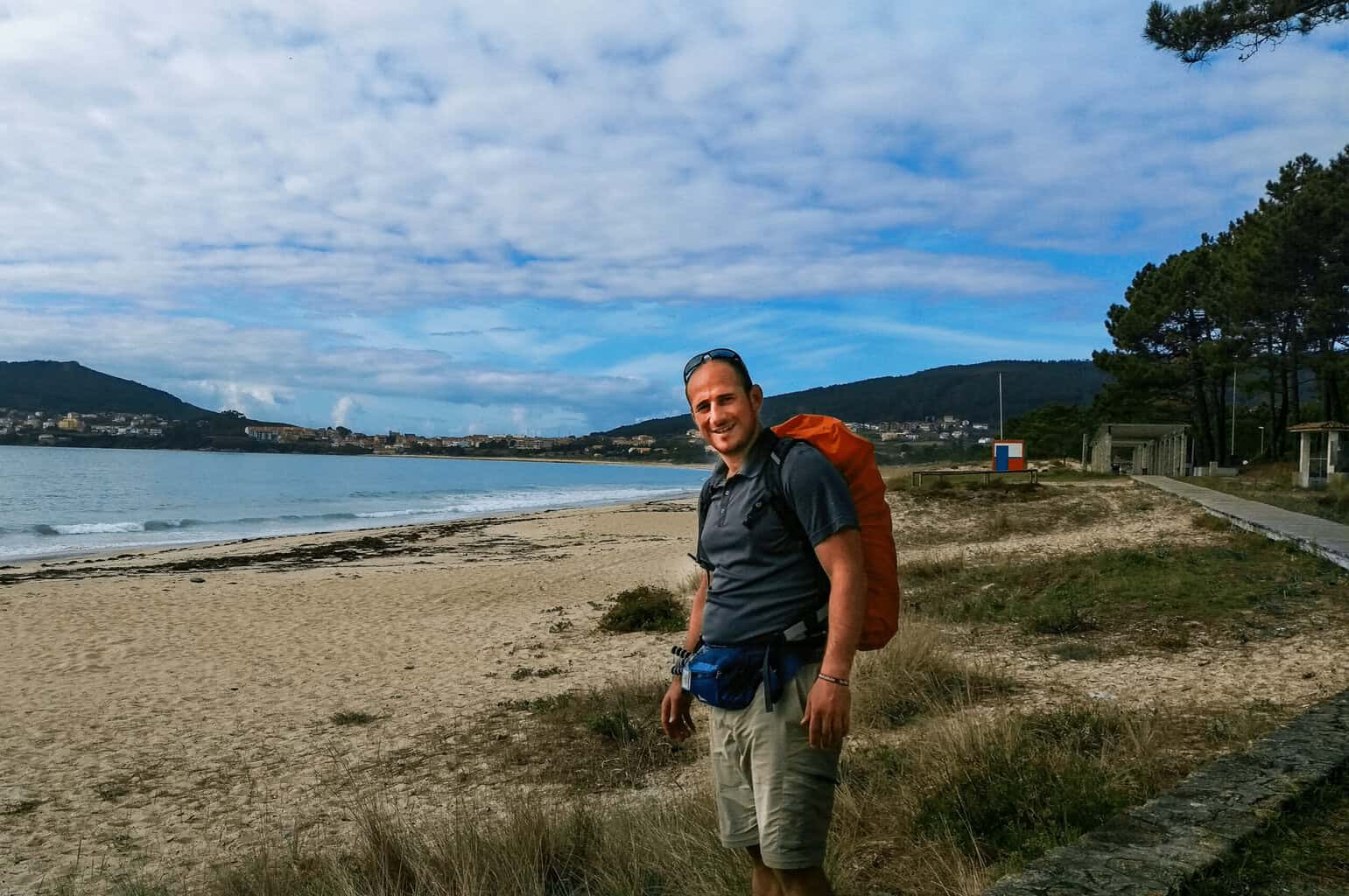
A conversation with Umberto di Venosa, Founder & CEO of Follow The Camino
In 2026, Follow The Camino marks twenty years of walking alongside pilgrims. We sat down with founder and CEO Umberto to talk about how a humble passion project became a trusted companion on one of the world’s great journeys — and why care, not scale, still guides every step.
Interviewer: Twenty years is a long time to stay close to any path. When you look back to 2006, what were you really trying to solve?
Umberto:
In the beginning we started as a group of friends with a passion project, looking to fill a gap in our local Irish market for walking holidays. While countries like France and the UK had long-standing walking holidays specialists, there was none serving the Irish market.
From my own experience I knew that walking holidays were difficult to organise. To start, you are moving every day on foot. Carrying a bag is a pain (especially as a lot of us overpack). Every day you arrive in a new location and have to get your bearings quickly. So there were lots of things that when added together equaled a lot of complexity.
Anyone who knows me will tell you that I like to make things easy for me and others so we wanted to solve these 2 problems of offering and ease of booking customising trips.What a nightmare for agencies.
I was aware of the Camino and its symbolic power at the time and tested it along with a number of other destinations. Within months, the magic and interest in the Camino helped us realise there was opportunity. Follow The Camino was born.
The question was simple: how do we make the Camino easier to experience and hassle free without taking away its magic?
Interviewer: So Follow The Camino began as a passion project. At what point did you realise it was becoming something more?
Umberto:
As a startup, at first I was still working full-time and in the early years there was a lot of uncertainty. for example, I remember the subprime crises hit us right at the start. We were building everything from scratch – processes, relationships, ways of working that didn’t really exist yet. There was risk, of course. But what kept us going was the response from pilgrims.
Every message, every piece of feedback, every small improvement mattered. People would write to say how supported they felt, or how the Camino gave them something they didn’t even realise they were looking for. We started people coming for 2-3-4 weeks Full Camino routes. Real life changing journeys That became the fuel.
Over time, this quiet, careful work turned into a team of people who care deeply about what they do — professionals, yes, but still guided by the same curiosity and respect that shaped the early days.

Umberto in Finisterre
Interviewer: You often say you’re most proud of the things people never see. What do you mean by that?
Umberto:
It might sound strange, but it’s true.
When you book an 8 day / 7 night walking holiday for 2 people with different expectations of each day, perhaps different fitness levels. Add some hills and different terrain, 7 hotel nights (rooms, beds, staff, Air Conditioning), 7 breakfasts and dinners, sprinkle in some weather and top with a blister on day 2, you get a feel for what is involved.
The most important work happens in the background. We prepare everything you can control and advise people on the things you can influence, for example, we can’t guarantee the weather but we can prepare you on what to wear.
The care our team takes to understand each person. The work and thinking we do around sustainability. The depth of route knowledge built step by step over many years. The local relationships that mean we don’t just “book” places, we know the people who run them. The Camino should always feel human-led about the people.
That’s what allows us to create journeys that feel personal, even though they’re carefully planned. Most people never notice these things and that’s exactly how it should be.
Interviewer: The Camino has grown enormously in popularity. Does that concern you?
Umberto:
It does and it should concern anyone who cares about these paths.
The Camino has survived for centuries because people treated it with respect. Today, we all share responsibility for its future: operators, pilgrims, local communities and leaders.
There are practical challenges, overcrowding at peak times, pressure on certain routes and villages but there are also solutions. For example, we can inspire people to walk lesser-known paths, to travel outside peak months, to understand that a “quieter” route can often be a richer one. That’s why we have seasonality guidelines to illustrate – ‘popular times’, ‘good times’, ‘off/low season’ and ‘not possible (which we use for a couple of mountainous trips we operate).
We purposely do not put a “best time to go” because everyone’s experience of the Camino should be built around their unique needs. We prefer to encourage people to go when you want and when you can. And anytime is ok. Going in summer for example, will experience higher temperatures. But this is far better than NOT going at all – we can easily adapt and start earlier in the morning to finish your walk before the sun gets high above our heads.
Growth without thought is dangerous. The goal isn’t more people at any cost. The goal is to ensure the Camino remains meaningful, not just now, but for generations to come.
We became a certified B Corp because it reflected how we already worked, not because it looked good on a page. In 2023, we were proud to become the first Camino walking specialist to take that step.
We choose to carbon offset the impact of our trips because it feels like the responsible thing to do for us, and for the places that make the Camino what it is.
From time to time, I’m asked whether we could lower prices by cutting carbon offsets or squeezing costs elsewhere. But that kind of thinking doesn’t sit comfortably with our long-term view. The Camino depends on people, on small family-run places, on local knowledge, on communities that care enough to keep these paths alive.
Paying fairly, supporting local livelihoods and acting with intention helps ensure that future generations will want to stay, take over these businesses and continue the work. That’s how the Camino remains a living, thriving journey, not just for today’s pilgrims, but for those still to come.
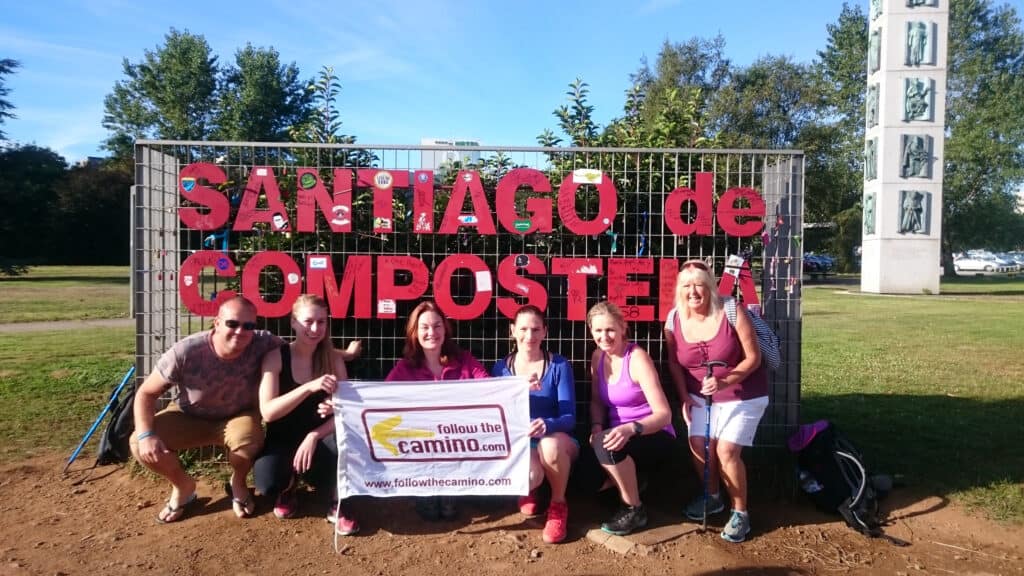
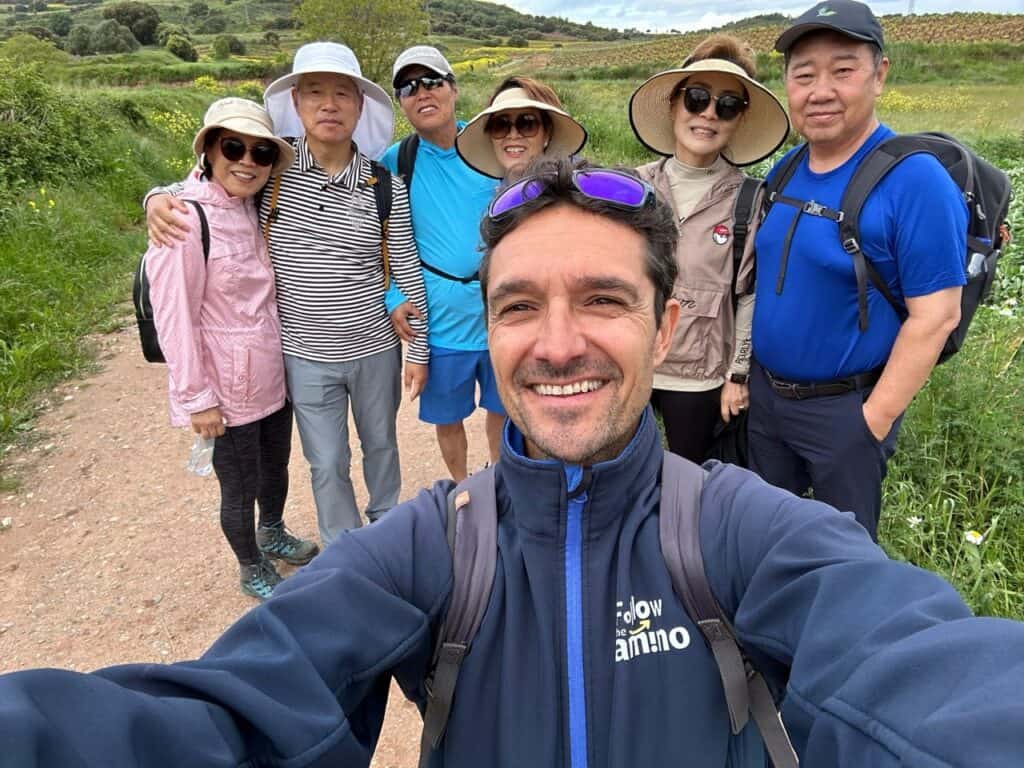
2016 vs. 2025
Interviewer: If Follow The Camino didn’t exist, what do you think would genuinely be lost?
Umberto:
Twenty years of lived knowledge and care.
Understanding how to shape a Camino that fits this person, at this moment in their life, on this route — that comes from time, not templates.
We use technology, but always in support of people. Real conversations. Real listening. That’s how you craft an experience that feels right, rather than generic.
Without that, something subtle but important disappears. The Camino becomes easier to sell, perhaps but harder to feel.
Interviewer: After walking the Camino, people often struggle to explain what it gave them. How do you describe it?
Umberto:
I often say: the Camino sometimes gives you what you want but it always gives you what you need.
It teaches patience. The weather might not cooperate. The steps can be steep. Your body gets tired, and when it does, it starts speaking very clearly. But you have to get on with yourself. You have to get on with your journey.
There’s time to slow down. Time to think. Time to connect — with others, and with yourself. Many people feel a sense of belonging to something bigger than themselves, often for the first time in years.
That’s the magic. And it can’t be packaged or rushed.
“The Camino sometimes gives you what you want — but it always gives you what you need.”
Interviewer: Looking back over twenty years, what still surprises you?
Umberto:
We are lucky enough that for newcomers it is still magical. And that spirit and mood we share, resonate back at us from our clients. It is really cool!
The continued growth surprises but more importantly, why it grows.
The Camino spreads because people talk about it. They share their experience in ways that encourage others to walk. It’s never been about marketing. It’s about impact.
That tells me the Camino still matters deeply in a world that often moves too fast.
Interviewer: Has your thinking changed since those early days?
Umberto:
We always knew systems would be necessary as the complexity demands it. What’s become even clearer over time is that systems should stay in the background.
We’re not a standard travel company. We simply try to offer the kind of experience we’d expect ourselves.
What we share with our clients is what we would choose for our own journeys. In that sense, we’re partners in the experience. We organise and support, our local hosts and transport partners bring it to life, and our walkers enjoy the journey — often passing it on to the next person.
It’s a simple, self-sustaining circle built on trust and care.
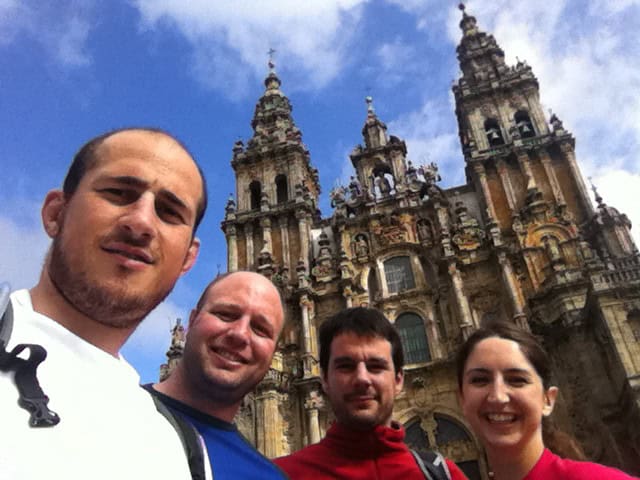
Umberto in Santiago de Compostela, in 2011
Interviewer: As you approach the 20-year milestone, what excites you most about the next chapter?
Umberto:
I never expected to do anything for twenty years but the Camino has a way of keeping you close.
What drives us is the steady work of improving the experience, patiently and with care. Some projects take years. They evolve, pause and return stronger.
That way of thinking now runs through the team.
Twenty years isn’t about nostalgia. It’s about readiness for the future. We’re building capacity to grow, but only in ways that feel considered and right.
Twenty years isn’t about looking back. It’s about being ready.
Interviewer: Finally, when people finish reading this, what do you hope they understand about Follow The Camino?
Umberto:
That we care.
About the people who walk with us. About creating Camino experiences for everyone. About the communities who live along the route. About the Camino itself.
We see ourselves as caretakers and connectors, nothing more, and nothing less. If we do our job well, the Camino remains what it has always been: a path that gives people space to reconnect, reflect, and move forward, a powerful “enabler” — one step at a time.
Follow The Camino celebrates 20 years in 2026. Not as a milestone of age, but as a marker of purpose and a commitment to care for the Camino for generations to come.