
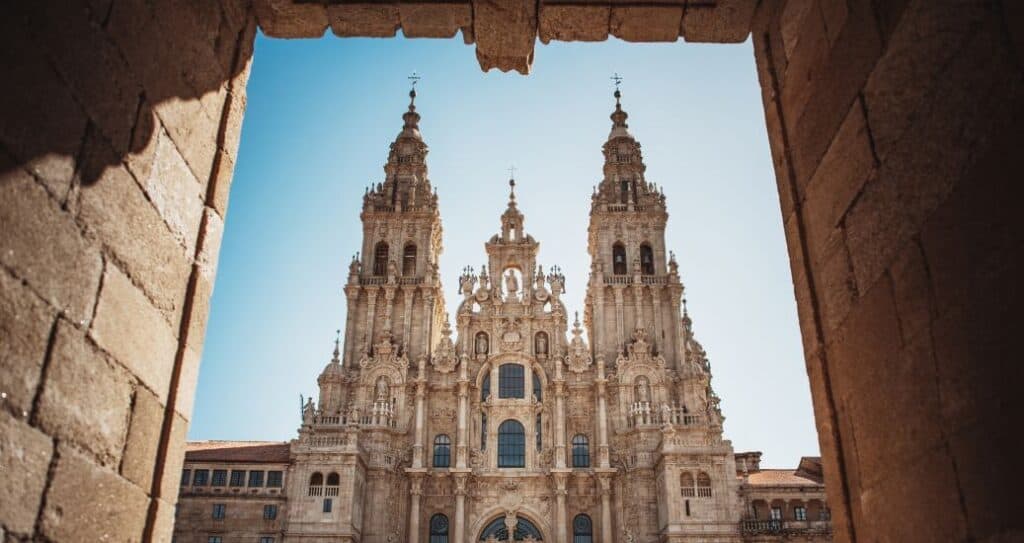
After days — or weeks — of walking, the moment you step into the Praza do Obradoiro and lay eyes on the towering spires of the Cathedral of Santiago de Compostela, everything changes. The aching legs, the blisters, the early mornings — all of it melts away. You made it.
But Santiago de Compostela is far more than a finish line. It is a living, breathing city with 1,000 years of pilgrimage history, world-class food, a buzzing university culture, and enough hidden corners to fill another week of exploration. Whether you are arriving via the Camino Francés, the Camino Portugués, or any of the other iconic routes, this guide will make sure you experience Santiago to its absolute fullest.
What is Santiago de Compostela?
Santiago de Compostela is the capital of Galicia, in the northwest corner of Spain. Its name translates roughly as St. James of the Field of Stars — a nod to the medieval legend at the heart of the Camino.
According to that legend, in the year 813 AD, a shepherd named Pelayo was guided by a mysterious star to a field outside the town. There, he discovered what the local bishop, Teodomiro, declared to be the tomb of the apostle St. James (Santiago in Spanish). Word spread rapidly. King Alfonso II of Asturias ordered a church to be built on the site, and pilgrims began arriving almost immediately.
Over twelve centuries later, they are still coming — from every corner of the world, on foot, by bicycle, and on horseback.
In 1985, the Old Town of Santiago de Compostela was designated a UNESCO World Heritage Site, recognising its extraordinary cultural, architectural, and spiritual significance.
The Cathedral of Santiago de Compostela
No guide to Santiago would be complete without a thorough look at its centrepiece — the Cathedral of Santiago de Compostela. This is the destination that has drawn pilgrims across mountains, deserts, and coastlines for over a thousand years.
A Brief History
Construction of the current cathedral began in 1075 under the direction of Bishop Diego Peláez, replacing earlier, smaller churches on the same site. The Romanesque structure was largely completed by 1122. Over the following centuries, Gothic chapels, a Renaissance cloister, and finally the iconic Baroque façade — the Obradoiro — were added, with the twin towers completed in 1750. The result is a layered architectural masterpiece that tells the story of a thousand years of faith.
What to See Inside
- The High Altar and the Statue of St. James: Pilgrims traditionally climb behind the altar to embrace the gilded statue of St. James and offer a prayer. This intimate ritual has been performed by millions of pilgrims over the centuries.
- The Silver Altar (Crypt of St. James): Beneath the high altar lies the crypt containing the silver reliquary said to hold the remains of St. James. It is a deeply moving place to visit.
- The Botafumeiro: One of the world’s most dramatic religious ceremonies. This enormous silver incense burner — weighing over 50 kg — is swung at tremendous speed across the transept of the cathedral during the Pilgrim’s Mass. Originally used to fumigate exhausted (and fragrant) pilgrims, today it remains a breathtaking spectacle.
- The Pórtico de la Gloria: Master sculptor Maestro Mateo created this extraordinary Romanesque portal in 1188. For centuries, pilgrims placed their fingers into the Tree of Jesse column and touched their foreheads to the statue of Maestro Mateo himself (“the Saint of Bumps”) for wisdom. Note: the fingerprints are now protected, but the tradition lives on in spirit.
- The Museum of the Cathedral: Spanning several floors and buildings, the cathedral museum houses an exceptional collection of tapestries, archaeological finds, and sacred art.
The Pilgrim’s Mass
Every day at noon, the Pilgrim’s Mass is celebrated in the cathedral, specifically for those who have completed the Camino. If your group has pre-arranged it, this is when the Botafumeiro swings. Arriving early is strongly recommended — the cathedral fills quickly.
Collecting Your Compostela Certificate
After completing the Camino, every pilgrim who has walked at least 100 km (or cycled 200 km) on an official route is entitled to receive the Compostela — the traditional certificate of completion.
Where to Go
The Pilgrim’s Office (Oficina del Peregrino) is located at: Rúa das Carretas, 33, Santiago de Compostela
It is open daily and typically has extended hours during peak pilgrimage season (April–October).
What You Will Need
- Your Credential (Pilgrim Passport) with stamps collected along the route — at least two stamps per day for the final 100 km on foot, or the final 200 km by bicycle
- A completed form stating your reason for undertaking the Camino (spiritual, religious, or other)
Types of Certificates
- The Compostela — awarded to pilgrims who walked/cycled for religious or spiritual reasons
- The Certificate of Welcome (Certificado de Bienvenida) — available to all pilgrims regardless of motivation
- The Distance Certificate — indicates the exact distance of your Camino route
Pro tip from Follow the Camino: Arrive at the Pilgrim’s Office early in the morning to avoid long queues, especially in July and August when hundreds of pilgrims arrive each day.

Top Things to Do in Santiago de Compostela
1. Explore the Old Town (Zona Vella)
The UNESCO-listed Old Town is the soul of Santiago. Its granite-cobbled streets, covered arcades (soportales), and medieval plazas are unlike anywhere else in Spain. Allow yourself to get lost here — every alley leads somewhere beautiful.
Key squares to visit:
- Praza do Obradoiro — the grand arrival square, flanked by the cathedral, the Hostal dos Reis Católicos (now a luxury parador), and the Pazo de Raxoi
- Praza das Praterías — the silversmiths’ square, with its beautiful central fountain
- Praza da Quintana — the hauntingly beautiful square behind the cathedral, especially atmospheric at night
2. Visit the Mercado de Abastos
Santiago’s covered market is one of the largest and most atmospheric in all of Spain. Open Tuesday to Sunday mornings, it overflows with fresh Galician produce: octopus, barnacles, razor clams, local cheeses, filloas (Galician crêpes), and the famous Tarta de Santiago almond cake.
Many stalls will cook your seafood on the spot — buy it fresh and eat it right there. This is a quintessentially Galician experience and not to be missed.
3. Stroll Alameda Park
Just south of the Old Town, the Parque da Alameda offers a welcome escape from the cobblestones. Tree-lined avenues, rose gardens, and sweeping views of the cathedral spires make this the perfect place to breathe and reflect after your Camino.
Keep an eye out for the famous statue of As Marías — two women who were a beloved fixture of Santiago’s streets for decades and became icons of the city’s character.
4. Taste Your Way Along Rúa do Franco
This lively pedestrian street, running south from the cathedral, is Santiago’s famous food strip. Restaurants and tapas bars spill onto the street with boards advertising fresh seafood, pinchos, and Galician wines. The atmosphere is vibrant and welcoming — perfect for a well-earned celebratory meal.
Must-try dishes in Santiago:
- Pulpo á feira (Pulpo a la Gallega) — octopus cooked with olive oil, paprika, and sea salt on a wooden board
- Empanada Gallega — a savoury pie filled with tuna, peppers, and onion
- Percebes — barnacles, a Galician delicacy
- Caldo Gallego — a hearty bean and greens soup
- Tarta de Santiago — the iconic almond tart dusted with a St. James cross in icing sugar
- Albariño wine — the crisp, aromatic white wine of Galicia
5. Visit the Museum of the Galician People (Museo do Pobo Galego)
Housed in the stunning former convent of Santo Domingo de Bonaval, this museum offers a fascinating window into Galician history, culture, crafts, and traditions. The building itself is extraordinary — don’t miss the remarkable triple-spiral stone staircase, one of the great architectural wonders of Galicia.
6. The Pilgrimage Museum (Museo das Peregrinacións e de Santiago)
For those who want to deepen their understanding of what they have just done, this excellent museum traces the history of the Camino and the cult of St. James across Europe and the wider world. It places your own journey into a remarkable historical context.
7. Galician Centre of Contemporary Art (CGAC)
Designed by Portuguese architect Álvaro Siza and opened in 1993, this striking contemporary building is one of the finest modern art museums in Spain. Its contrast with the medieval surroundings is intentional — and extraordinary. Entry is free.
8. Enjoy the Nightlife
Santiago has a thriving nightlife scene, powered largely by the students of the University of Santiago de Compostela — one of Europe’s oldest universities, established in 1495. By night, the Old Town hums with energy. The bars of the Zona Nova and the lanes around the cathedral fill up late and stay lively until the early hours.

Practical Information for Pilgrims
Getting Around
The Old Town of Santiago is entirely walkable — in fact, after the Camino, the compact streets will feel like nothing at all. Most sights, restaurants, and accommodation are within easy walking distance of the cathedral.
When to Visit
The Camino season runs year-round, but the most popular months are May through September. The Feast of St. James (25 July) is the city’s biggest celebration — a spectacular week of fireworks, concerts, and the famous Queimada ritual. Holy Years (when 25 July falls on a Sunday) see even larger crowds.
Getting There and Away
Santiago de Compostela has its own international airport (SCQ), with direct connections to many European cities. It is also well connected by train (including high-speed AVE from Madrid) and bus.
How Long to Stay
We recommend at least two full days in Santiago after completing the Camino. One day is simply not enough to do justice to the cathedral, the Old Town, the food, and the atmosphere. Many pilgrims find themselves lingering for three or four days — and we encourage it.