
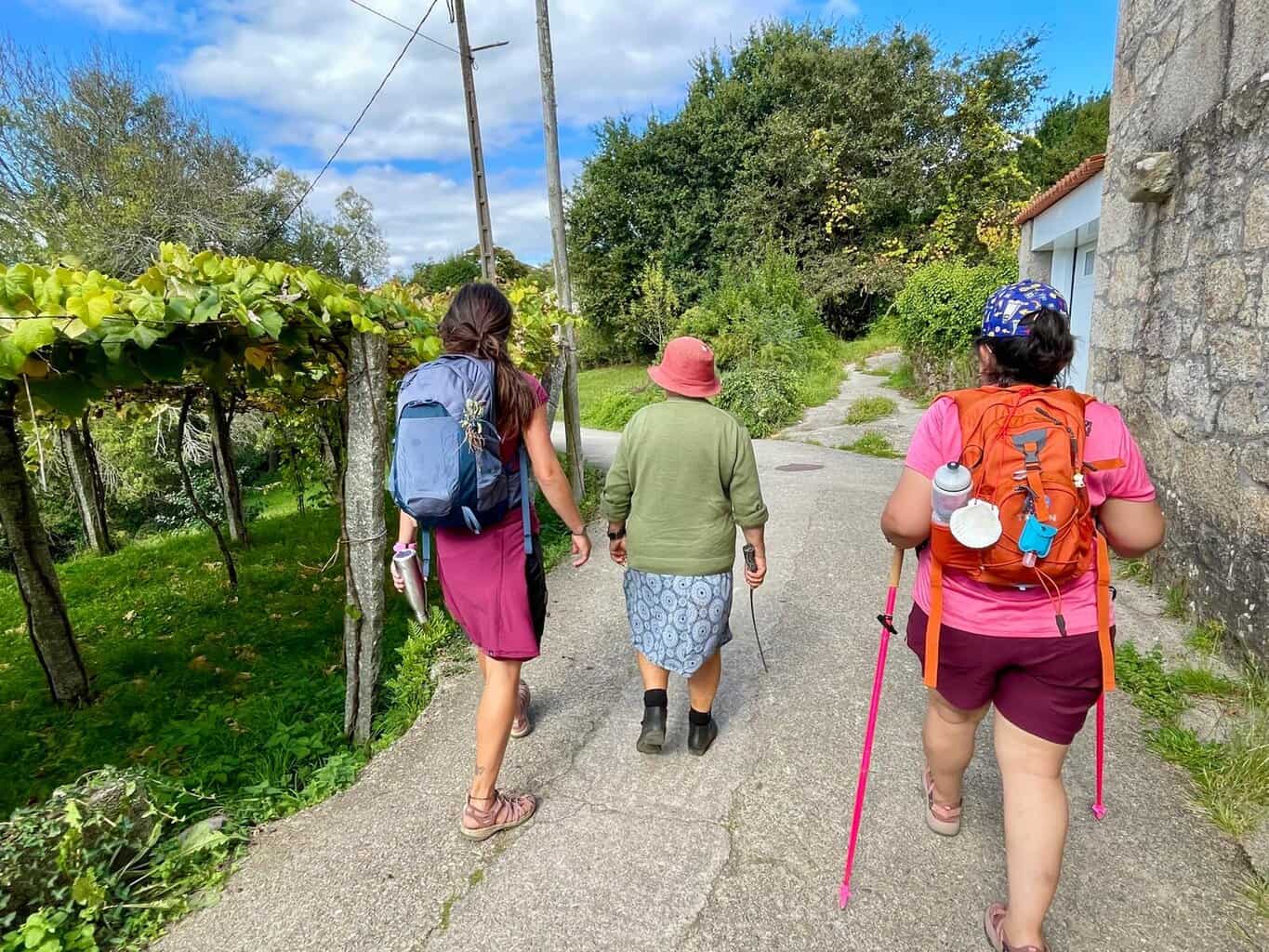
Shin splints are one of the most common injuries we hear about from pilgrims — and one of the most preventable. Whether you’re three weeks out from your departure or already walking the Camino, this guide covers everything you need to know: what shin splints actually are, why the Camino puts you at particular risk, how to stop them before they start, and what to do if they catch you mid-route.
What Are Shin Splints?
Shin splints is pain along the inner edge of your shinbone (tibia), caused by repetitive stress to the bone, surrounding muscle and connective tissue. It’s not a single injury but an overuse condition: the tissue gets more load than it can recover from, day after day, until pain becomes unavoidable.
You’ll typically feel:
- A dull, aching pain along the front or inner side of your lower leg
- Tenderness or soreness when you press along the shinbone
- Mild swelling in the lower leg
- Pain that eases once you warm up — but returns after you stop
That last point is important. Many pilgrims dismiss early shin splint symptoms because the pain fades after the first hour of walking. Don’t. That fading is not recovery — it’s your body masking a problem that’s quietly getting worse.

Why Pilgrims Are Particularly Vulnerable
The Camino is not a walk in the park — literally. Most routes involve 20–28km per day for consecutive weeks, often on varied terrain: cobblestoned medieval streets, compacted gravel meseta paths, rocky mountain descents and asphalt road sections. That combination is a textbook trigger for shin splints.
Here’s what makes Camino walking uniquely demanding on your shins:
1. Daily mileage jumps Many pilgrims arrive undertrained and immediately begin walking more than they ever have. Going from 5km daily walks in training to 25km on Day 1 puts sudden, repeated load on tissue that isn’t ready for it.
2. Descents Downhill sections — like the descent into Pamplona from the Pyrenees on Day 1 of the Camino Francés, or the long drops on the Camino Primitivo — force your shin muscles to work hard as brakes. This eccentric loading is a primary driver of shin splints.
3. Hard and uneven surfaces Cobblestones and compact gravel absorb very little impact compared to trail or grass. Your shin absorbs what the ground doesn’t. The meseta is deceptively hard underfoot despite looking flat and forgiving.
4. Worn or poorly fitted boots Boots that have passed their mileage limit lose cushioning and support. Walking 200+ kilometres in boots that were already worn when you started is a fast track to lower leg problems.
5. Foot mechanics Overpronation (flat feet rolling inward) increases torsional stress on the tibia. High arches reduce natural shock absorption. Both are risk factors — and both are addressable before you leave.
Prevention: How to Avoid Shin Splints Before and During the Camino
This is where most guides fall short. Prevention isn’t one tip — it’s a sequence of decisions made weeks before you set foot on the trail.
6–8 Weeks Before Departure
Build mileage gradually. Increase your weekly walking distance by no more than 10% per week. If you’re walking 30km per week, move to 33km the following week — not 50km. This gives your tibial bone and surrounding tissue time to adapt.
Train on similar terrain. Walking on tarmac and cobblestones is different from walking on grass. Include harder surfaces in your training walks so your legs adapt before the Camino, not during it. You can always download our free training plan to learn the ideal way to train your body.
Get your footwear right — and early. Your boots should be broken in with a minimum of 100km before departure. If they’re causing any discomfort at 20km, they’ll be causing real problems at 200km. Visit a specialist running or hiking shop for a gait analysis if you have any concerns about pronation.
Strengthen the right muscles. Shin splints often point to weakness in the muscles around the shin and calf. Add these exercises to your pre-Camino routine.
On the Camino
Resist the urge to push through pain signals. The first twinges along your shin are your body asking you to slow down. Listen. A 20-minute rest on Day 5 costs you nothing. Ignoring it and developing a stress fracture costs you the entire Camino.
Walk on softer surfaces where available. When the path runs parallel to a hard road, take the softer edge. On the meseta, the gravel margins are often preferable to the central track.
Use poles correctly. Trekking poles, when used properly, reduce load on the lower legs by up to 25% on descents. Plant them slightly ahead and lean into them going downhill. If you don’t have poles, consider hiring or buying a pair in Saint-Jean-Pied-de-Port or Pamplona — they’re widely available.
Tape your shins on high-load days. Kinesiology tape applied along the tibialis anterior (the main shin muscle) can reduce perceived pain and provide proprioceptive support. Learn the technique before you go or ask at any sports pharmacy along the route.
Treatment: What to Do If Shin Splints Develop on the Camino
If you’re already on the trail and shin pain has arrived, act quickly and methodically.
Immediate Steps (First Sign of Pain)
1. Stop and rest. Don’t walk through it hoping it will ease. Sit down, take weight off the leg.
2. Stretch the shin muscle. Kneel on a soft surface (grass, your jacket, a folded towel). Point your toes behind you, pressing the top of your foot gently to the ground. Slowly sit back toward your heels until you feel a stretch along the front of your lower leg. Hold for 30 seconds. Repeat 3 times. Do not force the stretch — discomfort is normal, pain is not.
3. Ice or cold water immersion. Ice is your best friend and often unavailable mid-route. Use what you have:
- Ask at your albergue for ice — most have it or can source it
- If you’re near a river or stream, submerge your lower leg for 10–15 minutes. This is genuinely effective and a time-honoured pilgrim remedy
- Apply a cold compress or frozen water bottle if available
4. Anti-inflammatory support. Ibuprofen gel (available in any Spanish farmacia) applied topically directly to the shin is effective and avoids the stomach issues of oral NSAIDs during high activity. Voltaren (diclofenac) gel is widely available throughout Spain. Oral ibuprofen can help in the short term but should not become a way to walk through pain — it masks signals you need to hear.
5. Compress and elevate overnight. A compression bandage or calf sleeve on the affected leg, combined with elevating your legs while sleeping, reduces overnight swelling and speeds recovery.
The Following Day
Walk shorter. A 15km stage instead of 28km is not failure — it’s intelligent pacing. The Camino will still be there. Consider taking a taxi or bus for part of a particularly punishing stage (the descent into Burgos, for example) to protect a recovering shin.
If you have access to a physiotherapist — many larger Camino towns have clinics familiar with pilgrim injuries — a single session can be transformative. Ultrasound, massage and targeted taping by a professional is worth every euro.

When Shin Pain Is Something More Serious
Most shin splints resolve with rest and sensible management. But shin pain can occasionally indicate a stress fracture — a small crack in the tibial bone caused by repetitive impact.
Signs that demand medical attention:
- Pain that is severe, constant, and does not ease with rest
- A specific, pinpoint area of extreme tenderness on the bone (rather than diffuse shin tenderness)
- Pain that has significantly worsened over 2–3 days despite rest
- Swelling that is pronounced and localised
- Any pain that wakes you at night
If you experience any of these, stop walking and seek medical care at the nearest clinic or hospital. A stress fracture walked upon can become a complete fracture — and that ends not just your Camino but leaves you with a longer recovery at home.
Shin Strengthening Exercises for Camino Preparation
Build these into your training routine from 6 weeks out. They target the muscles that stabilise the shin and reduce impact stress.
1. Towel Shin Stretch (for flexibility)
Already described above under Treatment — also use as a daily prevention stretch throughout training and on the Camino.
2. Toe Raises (Tibialis Anterior Strengthening)
Stand with your back against a wall, heels about 15cm from the wall. Lift the front of both feet off the ground as high as possible (dorsiflexion). Hold for 2 seconds, lower slowly. 3 sets of 15 repetitions. This directly strengthens the muscle most responsible for shin splints.
3. Eccentric Calf Lowering
Stand on the edge of a step on your toes. Rise up using both feet, then lower yourself slowly using only the affected (or training) leg over 3–4 seconds. 3 sets of 12 repetitions. This builds the calf’s ability to absorb downhill impact — exactly what descents demand.
4. Single-Leg Balance
Stand on one leg for 30–60 seconds. Progress to doing this on a slightly unstable surface (a folded towel works well). 2 sets per leg. Improves ankle stability and reduces the rotational stress that contributes to shin splints.
5. Hip Abductor Strengthening
Lie on your side. Keeping your leg straight, raise it to 45 degrees and lower slowly. 3 sets of 15 per side. Weak hips cause overpronation — which directly loads the shin. This is the exercise most often skipped and most often needed.
A Final Word from the Follow the Camino Team
We’ve helped thousands of pilgrims prepare for and walk the Camino de Santiago. Shin splints come up in almost every conversation about injury — and the pilgrims who manage them best are always the ones who prepared intelligently, listened to their bodies early, and didn’t let pride push them past the point of no return.
The Camino is a long walk. The point is to finish it — and to enjoy it. Build your mileage, strengthen your legs, choose your footwear carefully, and if the shin starts talking, listen to it before it starts shouting.
Buen Camino.