
For some, the Camino de Santiago is an opportunity to explore the beautiful landscapes of northern Spain. For others, it is a physical challenge, a chance to disconnect from everyday life or an opportunity to discover new places.
But ask someone who has walked the Camino, and you may hear something different: It changed the way I see things.
There is something about walking day after day, carrying only what you need and following ancient paths that invites you to slow down and look inward. The Camino de Santiago is, after all, much more than a walking holiday. It is a journey with a spiritual dimension that has inspired pilgrims for centuries, regardless of their religious beliefs.
So, what makes the Camino such a meaningful experience? And why do so many people return home feeling that they have gained something they cannot quite put into words?
Let’s explore the spiritual side of the Camino de Santiago.
A Pilgrimage with Centuries of History
The spiritual roots of the Camino de Santiago go back more than a thousand years.
According to Christian tradition, the remains of Saint James the Apostle were discovered in the early 9th century in what is now Santiago de Compostela, in Galicia, northwestern Spain. The site gradually became one of the most important Christian pilgrimage destinations in Europe, alongside Rome and Jerusalem.
Over the centuries, pilgrims from across Europe travelled towards the tomb of Saint James, following different routes that eventually became known as the Camino de Santiago or the Way of St James.
Today, the Camino remains an important Christian pilgrimage, but its meaning has evolved. People of different faiths, spiritual traditions and backgrounds walk these ancient routes for their own reasons.
Some come to reconnect with their religious beliefs. Others are searching for clarity, personal growth or simply a break from the noise of modern life.
You don’t need to be religious to experience the spiritual dimension of the Camino. You only need to be open to the journey.

Finding Meaning in the Simplicity of Walking
Modern life is full of distractions. We move between responsibilities, notifications, deadlines and expectations, often without giving ourselves much time to think.
The Camino offers a different rhythm.
You wake up, pack your backpack, put on your walking shoes and start moving. Your day becomes wonderfully simple: follow the trail, enjoy the landscape, find somewhere to rest, meet other pilgrims and eventually reach your next destination.
This simplicity can be surprisingly powerful.
When you spend several hours walking, your mind gradually begins to settle. Thoughts that usually get lost in the rush of everyday life have room to surface. Problems may become easier to put into perspective, and questions you have been avoiding might finally find their way to the surface.
Walking can become a form of moving meditation. You don’t need a meditation app, a yoga mat or any particular technique. Sometimes, all it takes is putting one foot in front of the other.
And perhaps that is one of the Camino’s greatest gifts: the opportunity to be present.
The Camino Is a Journey Inwards, Too
The Camino de Santiago is often described as an outward journey towards a destination and an inward journey towards yourself.
There is a reason this idea resonates with so many pilgrims.
When you leave behind your familiar surroundings, daily routines and usual responsibilities, you create space to see your life from a different perspective.
The physical challenges of walking can also reveal things about yourself. You learn to be patient, accept your limitations, adapt to unexpected situations and celebrate small achievements.
A difficult climb, a rainy afternoon or a particularly long stage can become an opportunity to discover your own resilience.
But personal transformation doesn’t always arrive as a dramatic revelation. Sometimes, it is much quieter.
It might be realising that you are happier with less, discovering that you enjoy your own company or understanding what really matters to you.
You might finish the Camino with answers. Or you might return home with better questions.
Either way, the experience can stay with you long after you reach Santiago.
The People You Meet Along the Way: The Spirit of the Camino
One of the most special aspects of the Camino de Santiago is the community that forms along the trail.
Pilgrims come from different countries, cultures, generations and walks of life. Some travel alone, others with friends, partners or family. Some are looking for a spiritual experience, while others simply want to enjoy a walking holiday.
Yet, once you are on the Camino, many of these differences become less important.
You share a table at a local restaurant, exchange stories at an albergue, encourage someone struggling with a steep climb or walk alongside a stranger for a few kilometres.
These small encounters often become some of the most memorable moments of the journey.
There is a particular openness among pilgrims. Conversations can become surprisingly meaningful, even with people you have only just met. Without the usual social expectations, it can feel easier to be yourself.
This sense of connection is often described as part of the Camino spirit: a feeling of solidarity, generosity and shared purpose that brings people together.
You may arrive in Santiago remembering the landscapes and monuments, but it is quite possible that you will remember the people most of all.

Ancient Traditions That Give the Camino Its Spiritual Meaning
The Camino de Santiago is full of traditions and symbols that connect today’s pilgrims with those who walked these paths centuries ago.
Understanding some of them can add another layer of meaning to your experience.
The Scallop Shell: A Symbol of the Camino
The scallop shell, or concha de vieira in Spanish, is one of the most recognisable symbols of the Camino de Santiago.
Traditionally associated with Saint James, the shell became a symbol of pilgrimage and a practical marker used to identify pilgrims travelling towards Santiago.
Today, many walkers attach a scallop shell to their backpacks as a reminder of their journey and their connection to the wider Camino community.
The Yellow Arrows: Trusting the Way
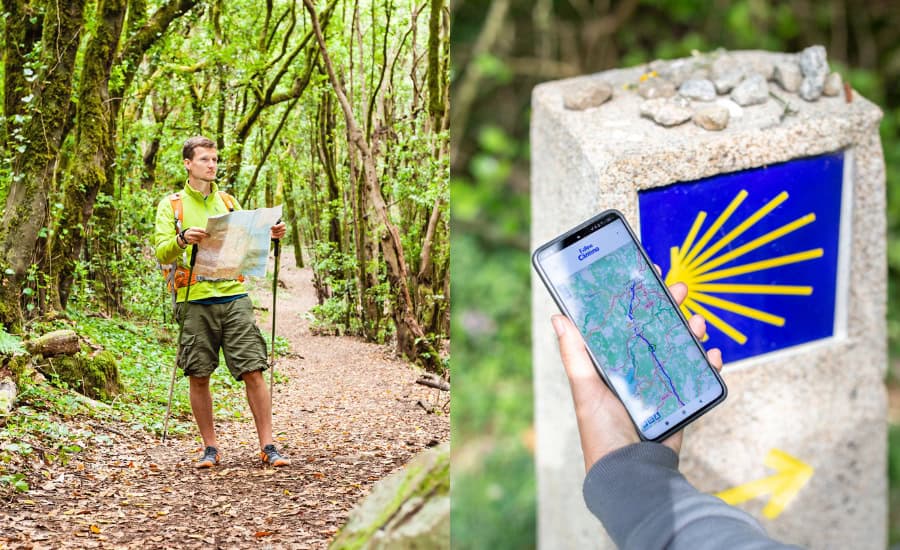
The yellow arrows that guide pilgrims along the Camino are now an unmistakable part of the experience.
They help walkers navigate the routes, but they can also become a simple metaphor for the journey itself.
You don’t always need to know exactly what lies ahead. Sometimes, you just need to find the next arrow and keep going.
The Pilgrim’s Mass at Santiago Cathedral
For many pilgrims, arriving at Santiago de Compostela is an emotional milestone.
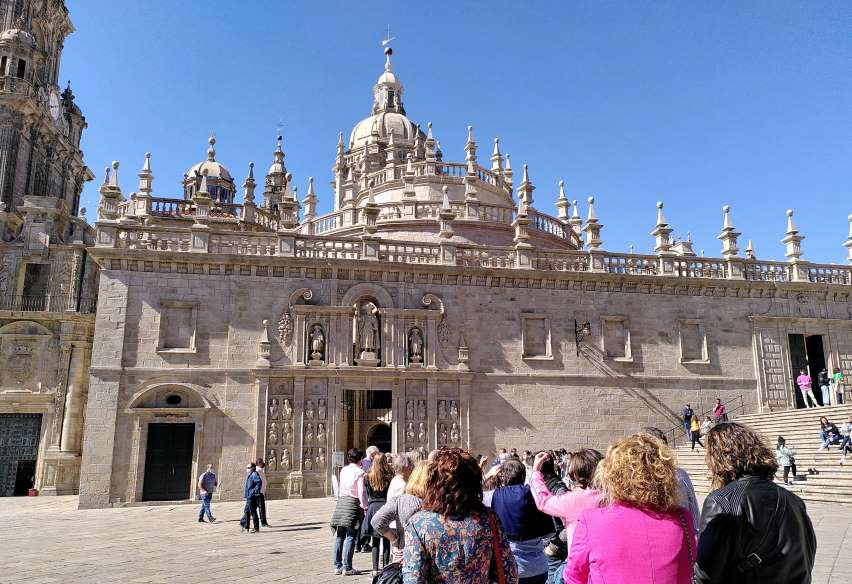
The Pilgrim’s Mass at the Cathedral of Santiago is an important part of the religious tradition of the Camino. It offers an opportunity to give thanks, reflect on the journey and celebrate reaching the destination.
Whether you attend for religious reasons or simply to experience one of the Camino’s oldest traditions, visiting the cathedral is a memorable way to mark the end of your pilgrimage.

Places Along the Camino That Invite Reflection
The spiritual atmosphere of the Camino is not limited to churches and religious monuments. Sometimes, it is the landscape itself that makes you stop, take a breath and appreciate where you are.
Certain places along the different Camino routes have become particularly meaningful to pilgrims.
O Cebreiro: A Place Above the Clouds
Located in the mountains of Galicia, O Cebreiro is one of the most atmospheric villages along the French Way (Camino Francés).
Its traditional stone houses, ancient church and often mist-covered landscape create a unique sense of timelessness.
The Church of Santa María la Real is closely connected to the Eucharistic miracle traditionally associated with O Cebreiro.
For many pilgrims, reaching this mountain village is both a physical achievement and a moment to pause and reflect.
Cruz de Ferro: Leaving Something Behind
On the Camino Francés, between Foncebadón and Manjarín in the province of León, stands the Cruz de Ferro.
This simple iron cross sits atop a wooden pole surrounded by a large mound of stones.
For generations, pilgrims have left stones at its base, often carrying them from home or picking them up along the way. The gesture has come to symbolise leaving behind worries, burdens or something they no longer wish to carry.
There is no formal requirement to participate. But for many walkers, placing a stone at Cruz de Ferro becomes one of the most meaningful moments of the Camino.
Santiago de Compostela: The Destination and the Beginning
For centuries, pilgrims have travelled to Santiago de Compostela to visit the Cathedral of Saint James and pay their respects at the apostle’s tomb.
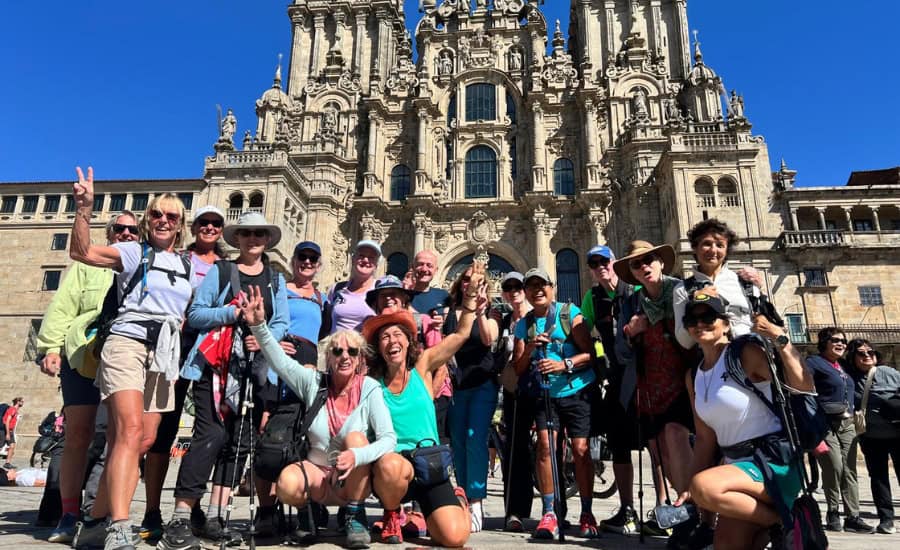
Arriving at Praza do Obradoiro, the square in front of the cathedral, is an emotional experience for many walkers.
You may feel relief, happiness, pride, gratitude or even a little sadness that the journey is coming to an end.
But reaching Santiago is not necessarily the end of your Camino experience. For many people, it is the beginning of a new chapter.
You Don’t Have to Be Religious to Walk the Camino
One of the most common misconceptions about the Camino de Santiago is that you need to be religious to appreciate it.
Historically, the Camino is a Christian pilgrimage, and its religious heritage remains an essential part of its identity. However, the experience is open to people with many different motivations.
You might walk the Camino to:
- Disconnect from technology and the pressures of everyday life.
- Spend meaningful time alone and reconnect with yourself.
- Mark an important life transition or personal milestone.
- Remember someone special or honour their memory.
- Explore your faith or reconnect with your spiritual beliefs.
- Meet people from different cultures and share meaningful experiences.
- Challenge yourself physically and discover what you are capable of.
There is no single right reason to walk the Camino.
You don’t need a life-changing question, a particular belief system or a clear intention before you set off. Sometimes, the meaning of the journey only becomes apparent once you are walking it.

Which Camino Route Should You Choose for a Spiritual Journey?
There is no single Camino route that guarantees a deeper or more spiritual experience. Each has its own atmosphere, landscapes and opportunities for reflection.
Here are three popular options to consider.
The French Way (Camino Francés)
The Camino Francés is the most traditional and well-known Camino route. Starting in Saint-Jean-Pied-de-Port, France, it crosses the Pyrenees and travels through Navarra, La Rioja, Castilla y León and Galicia before reaching Santiago de Compostela.
It is particularly appealing if you want to experience the historical and cultural heritage of the pilgrimage, visit important religious landmarks and enjoy the sense of community created by walking alongside other pilgrims.
The Portuguese Way (Camino Portugués)
The Camino Portugués offers a wonderful combination of history, coastal scenery, charming towns and cultural experiences.
The Central Route travels through places such as Porto, Barcelos, Ponte de Lima, Tui and Pontevedra before reaching Santiago.
It is a great option for pilgrims looking for a balance between peaceful walking, cultural discovery and opportunities to connect with other travellers.
The Primitive Way (Camino Primitivo)
The Primitive Way is traditionally considered the oldest Camino route, following the path associated with King Alfonso II’s pilgrimage to Santiago in the 9th century.
Starting in Oviedo, Asturias, it crosses mountainous landscapes before joining the French Way in Galicia.
Its quieter trails, challenging terrain and spectacular natural surroundings make it an appealing choice for walkers seeking a more solitary and contemplative experience.
Ultimately, the best route is the one that matches your interests, available time and walking experience.
How to Make Your Camino More Meaningful
You don’t need to follow a particular spiritual practice to experience the deeper side of the Camino. However, a few simple habits can help you make the most of your journey.
Walk at your own pace. Resist the temptation to compare your progress with other pilgrims. The Camino is not a race, and some of its best moments happen when you slow down.
Spend some time walking in silence. Conversations and shared experiences are wonderful, but allow yourself moments without music, podcasts or distractions.
Keep a journal. Writing down a few thoughts at the end of each day can help you process your experiences and remember the small details that might otherwise fade.
Be open to unexpected encounters. Some of the most meaningful conversations happen when you least expect them. Give yourself the opportunity to connect with other pilgrims.
Embrace the imperfect moments. Not every day will be beautiful. You might experience rain, tiredness, blisters or unexpected changes to your plans. These moments are also part of the journey.
Don’t put pressure on yourself to have a transformative experience. The Camino is not a self-improvement project. You don’t need to come back as a different person. Sometimes, simply enjoying the experience is enough.

More Than a Walking Holiday: A Journey That Stays With You
The Camino de Santiago means something different to everyone who walks it.
For some, it is a religious pilgrimage. For others, it is a chance to reconnect with themselves, experience a new culture or discover the beauty of northern Spain.
But perhaps the most remarkable thing about the Camino is that you don’t have to know exactly what you are looking for when you begin.
You simply start walking.
Along the way, you discover new landscapes, share stories with fellow pilgrims, overcome challenges and experience moments of unexpected beauty.
And when you finally arrive at Santiago de Compostela, you may realise that the destination was only one part of the journey.
The Camino is not just about the kilometres you walk. It is about the moments you collect, the people you meet and the perspective you gain along the way.
Ready to discover the Camino for yourself? Explore our Camino de Santiago walking holidays and find the route that speaks to you.