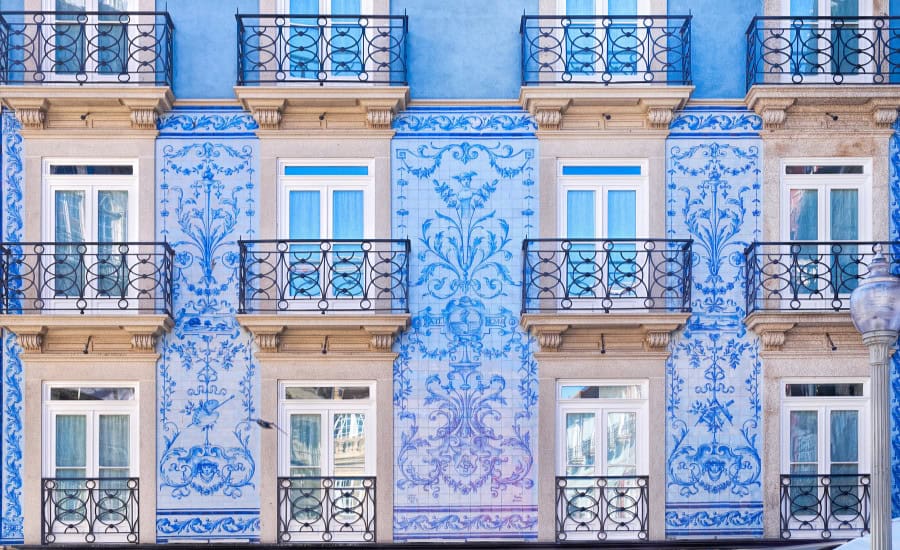
Porto sits on a hillside above the Douro, and you feel that incline in your legs before you’ve even noticed the view. Steep streets, chipped azulejo tiles, laundry strung between balconies, the smell of sardines on a grill somewhere you can’t quite locate. It’s a working port city that happens to also be beautiful, not the other way around.
We know it well because a lot of our pilgrims pass through here first. Porto sits on the Camino Portugués itself, and it’s also where the Camino Portugués Coastal begins, the route that hugs the coastline before cutting inland toward Santiago. So this list is written with two kinds of visitor in mind: the one arriving early who wants to see a city this good before the adventure starts, and the one already walking, who’s chosen Porto as the place to pause, rest, and take it in properly.
The Essentials
1. Ribeira
This is the riverside district, and it’s where you should start. Narrow lanes, houses painted in mismatched yellows and blues, old men playing cards outside cafés that haven’t changed their menu in decades. Walk the promenade at golden hour and the Dom Luís I Bridge turns almost silver against the sky.

2. Dom Luís I Bridge
An Eiffel-trained engineer built this one, and it shows, that same confidence in iron you see in Paris. Cross on the top deck, not the bottom, the view over the Douro and both riverbanks is worth the extra height. People tend to rush across it. Don’t. Stop halfway and look both ways.

3. Livraria Lello
Yes, it’s the bookshop everyone photographs, the one with the carved staircase and the stained glass overhead. The Harry Potter connection gets repeated a lot; we’ve never found much evidence for it, and honestly the shop doesn’t need the story to be worth a visit. Book a timed ticket ahead of time. Turning up and hoping for the best means standing in a queue that snakes down the street.

4. Porto Cathedral (Sé do Porto)
Half church, half fortress, sitting above Ribeira with granite walls that have been there since the 1100s. Inside, the cloister is lined with tiled panels telling the story of the Virgin Mary, worth the small entry fee by itself. Step out onto the terrace afterward for one of the better views in the city, and one that most visitors miss because they don’t realise it’s there.

5. Port Wine Cellars, Vila Nova de Gaia
Cross the river and the city changes character. This is Gaia, where houses like Graham’s, Taylor’s, and Sandeman have aged port in cool cellars for generations. Most run short tours ending in a tasting, a good way to actually understand what separates a tawny from a vintage before you buy a bottle to take home.

What to Eat and Drink in Porto
Port wine, obviously.
But go beyond the tourist tasting menus if you can. Ask for a glass of white port with tonic before dinner, it’s what locals drink on a hot evening, and most visitors never try it.
Francesinha.
A sandwich stacked with cured meats, steak, and sausage, drowned in melted cheese and sauce, then usually topped with a fried egg. It’s exactly what you want after a long day of walking around the city, or before walking out of it.
Petiscos.
Think of them as Portugal’s answer to tapas, small plates meant for sharing over a slow evening. Order two or three between two people and let the meal stretch out, that’s the point.
Bolhão Market.
Recently renovated, this covered market is where locals actually shop, fresh fish laid out on ice, wheels of regional cheese, flower stalls, cured meats hanging from hooks. It’s a better lunch stop than most restaurants nearby, and a good place to pick up something small to carry with you if you’re setting off on the Camino the next morning.


Start planning your Camino
Porto isn’t just a nice stop before the real journey starts, it’s part of it. The city sits directly on the Camino Portugués (Central), and it’s also where the Coastal variant begins, following the shoreline north before cutting inland toward Santiago through fishing villages and quiet stretches of forest. Whichever route you choose, we handle the accommodation, the luggage transfers, the route notes, so that once you cross that first bridge out of the city, your only job is to walk.
Give yourself a full day in Porto before you set off if you can. It’s enough time to see the city properly and start the Camino with tired feet from sightseeing rather than jet lag.