If you’ve been researching the Camino de Santiago, you’ve probably come across the term Semana Santa — and wondered whether it matters for your trip. It does. Knowing exactly when Semana Santa falls, and how it affects the Camino can make the difference between a smooth, soul-filling journey and an unexpected scramble for accommodation.
Here’s everything you need to know, from someone who has been guiding pilgrims along the Camino for over 20 years.
What Is Semana Santa?
Semana Santa means Holy Week in Spanish. It is the week leading up to Easter Sunday — the most significant religious celebration in Spain, Portugal, and much of Latin America. It begins on Palm Sunday and ends on Easter Sunday, encompassing seven days of solemn processions, music, prayer, and deep cultural ritual.
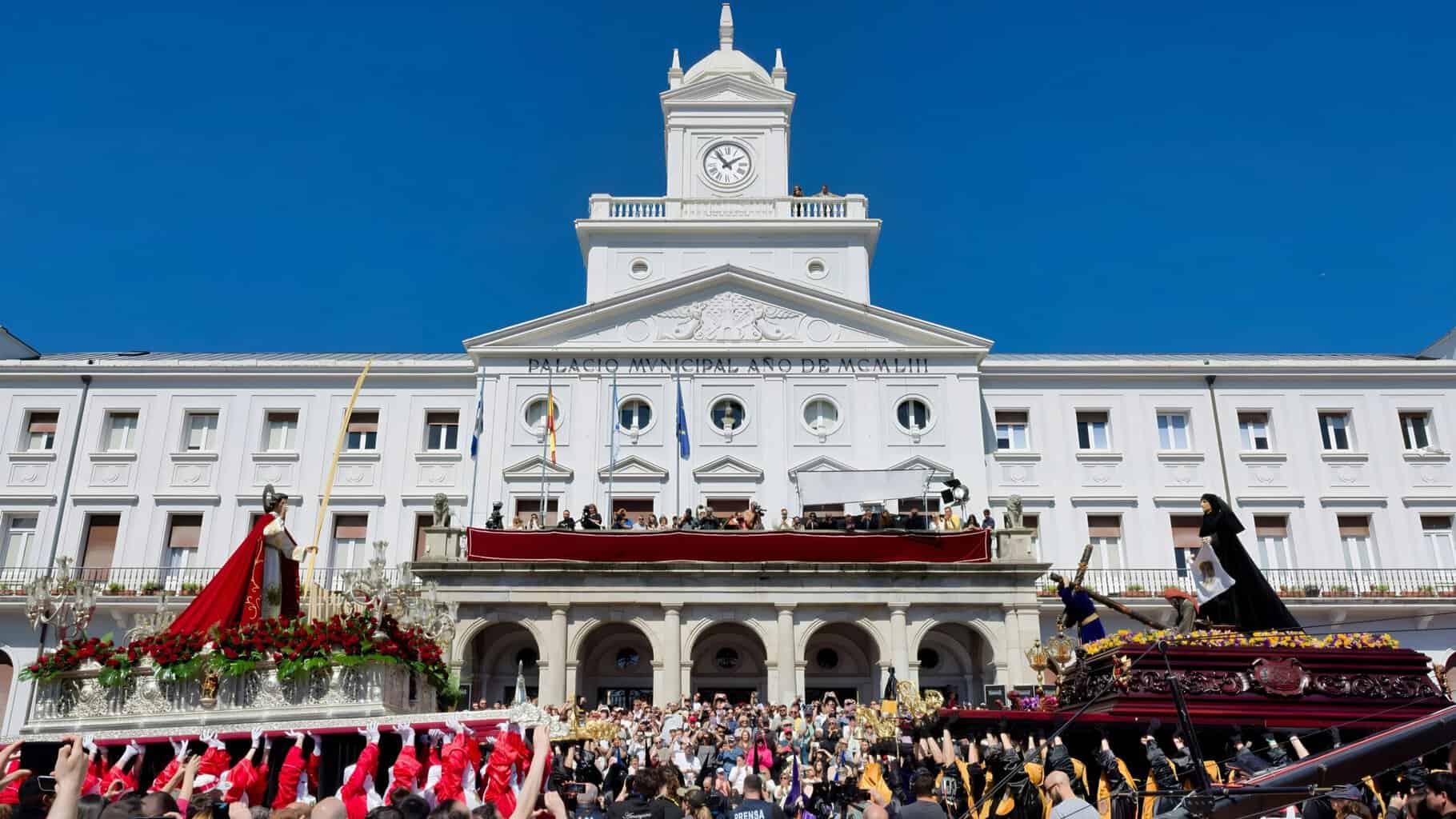
In Spain, especially, Semana Santa is not a quiet, private observance. It is loud, magnificent, emotional, and public. Brotherhoods (known as cofradías) carry elaborately decorated floats (pasos) bearing religious figures through the streets, often accompanied by brass bands and thousands of spectators. In cities like Seville, Granada, and Málaga, Semana Santa is considered one of the greatest cultural spectacles in Europe.
For pilgrims on the Camino de Santiago, Semana Santa is a deeply relevant period both spiritually and practically.
When Is Semana Santa? Dates by Year
Semana Santa moves every year because Easter is a moveable feast — it falls on the first Sunday after the first full moon following the spring equinox (March 21). This means the dates shift, sometimes significantly, from one year to the next.
Here are the confirmed and projected dates:
| Year | Palm Sunday (Start) | Easter Sunday (End) |
|---|---|---|
| 2024 | 24 March 2024 | 31 March 2024 |
| 2025 | 13 April 2025 | 20 April 2025 |
| 2026 | 29 March 2026 | 5 April 2026 |
| 2027 | 21 March 2027 | 28 March 2027 |
| 2028 | 9 April 2028 | 16 April 2028 |
| 2029 | 25 March 2029 | 1 April 2029 |
| 2030 | 14 April 2030 | 21 April 2030 |
Key rule: Easter Sunday always falls between 22 March and 25 April. If you’re planning your Camino and want to avoid (or experience) Semana Santa, use this table to map your route dates accordingly.

Semana Santa and the Camino de Santiago: What to Expect
Increased Pilgrim Numbers
Semana Santa is one of the busiest periods on the Camino. Many Spanish pilgrims take the week off work and begin their journey during Holy Week — it holds particular spiritual resonance for those walking as an act of faith or reflection. On the most popular routes, especially the Camino Francés and the Camino Portugués, albergues, hostels, and guesthouses fill up faster than at almost any other time of year.
If you’re walking during Semana Santa, book your accommodation well in advance. This is not a week to rely on walk-in availability, especially in towns close to Santiago de Compostela.
Closures and Changed Hours
During Holy Week, many businesses in Spain and Portugal operate on adjusted schedules:
- Banks, government offices, and some shops may close on Good Friday and Easter Monday.
- Restaurants and cafés often remain open but may be busier than usual.
- Supermarkets in smaller towns may have reduced hours on key days (Holy Thursday, Good Friday, Easter Sunday).
- Public transport can run on holiday timetables — check ahead if you’re arriving by bus or train at the start of your Camino.
Road Closures and Processions
In cities along popular Camino routes — including Burgos, León, Ponferrada, Ferrol, and Santiago de Compostela itself — processions take place throughout the week, sometimes late into the night. Streets can be closed for several hours, which may affect your walking route through town or access to your accommodation. It’s worth checking local schedules if you’re arriving in a major city during the week.
A Unique and Meaningful Experience
That said, walking the Camino during Semana Santa is something many pilgrims describe as profoundly moving. The overlap between the Camino’s own spiritual DNA and the intensity of Holy Week creates an atmosphere that’s difficult to find anywhere else. If you arrive in a town during a procession — the paso swaying through the streets, the smell of incense in the air, the saeta (a spontaneous flamenco lament) rising from a balcony — you will not forget it.
For first-time pilgrims, especially those drawn to the Camino for personal, spiritual, or reflective reasons, this can feel like arriving at exactly the right moment.
Tips for Walking the Camino During Semana Santa
- Book accommodation early — ideally 3 to 6 months ahead. Albergues and small guesthouses fill up fast. If you’re travelling with a guide service like Follow the Camino, your accommodation will be pre-booked as part of your package, which removes this stress entirely.
- Be flexible with your daily distances. Town centres can be busier and slower to pass through during procession days. Build a little buffer into your daily plan.
- Embrace it, don’t avoid it. Many pilgrims try to sidestep the crowds, but others time their walk specifically for Semana Santa. The spiritual energy is real, the cultural experience is extraordinary, and the sense of shared purpose between pilgrims and locals is unlike any other time of year.
- Pack for spring variability. Semana Santa falls in March or April, which means the weather on the Camino can range from warm and sunny to cold, wet, or even snowy (especially in mountain sections). Layers are essential.
- Consider a less-travelled route. If you prefer quieter paths, the Camino del Norte, the Camino Primitivo, or the Camino Inglés see far fewer pilgrims during Semana Santa than the Camino Francés. These routes offer their own extraordinary landscapes and are particularly well-suited to solo female travellers who want a more personal experience.
Planning Your Camino Around Semana Santa: A Note for First-Time Pilgrims
At Follow the Camino, a large part of the community we serve is first-time pilgrims — people who are drawn to the Camino but have real, practical questions about safety, logistics, and going it alone (or not quite alone).
Semana Santa can feel daunting to plan around. The dates change. The crowds appear. Everything seems to move faster.
But here’s what 20 years of experience has taught us: the Camino has its own rhythm, and it will look after you. With the right preparation — a well-planned itinerary, pre-booked accommodation, and a trusted guide service — Semana Santa becomes a gift, not a problem. You walk into something ancient and alive, surrounded by other people in motion, all of you heading somewhere meaningful.
Whether you want to walk during Holy Week or plan your journey for the quieter weeks before or after, we can help you find the Camino that fits your pace, your needs, and your courage.

Start Planning Your Camino with Follow the Camino
With over 20 years of experience organising Camino journeys, Follow the Camino takes care of everything: accommodation, luggage transfers, route guidance, and the kind of personal support that first-time pilgrims genuinely need.