Some years it’s five years away. Some years eleven.
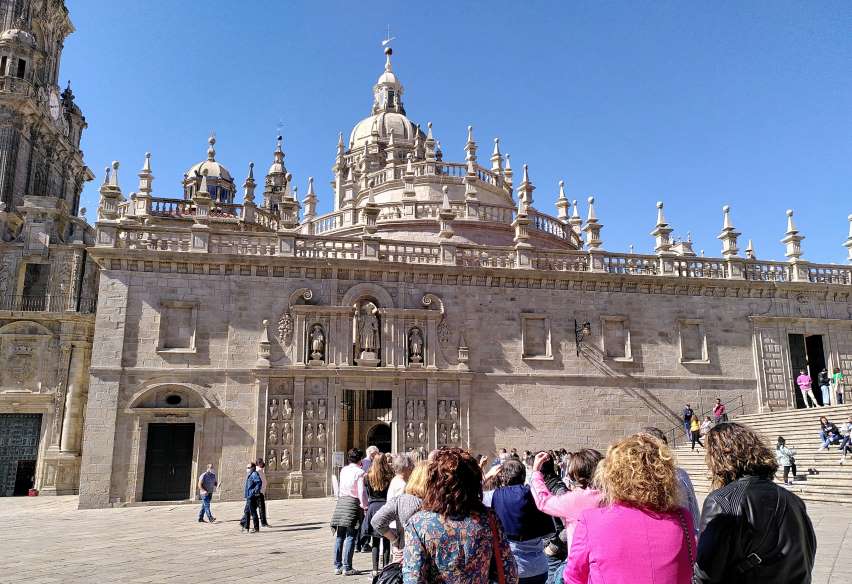
In 2027, the Puerta Santa (Holy Door) opens.
Walk the Camino!
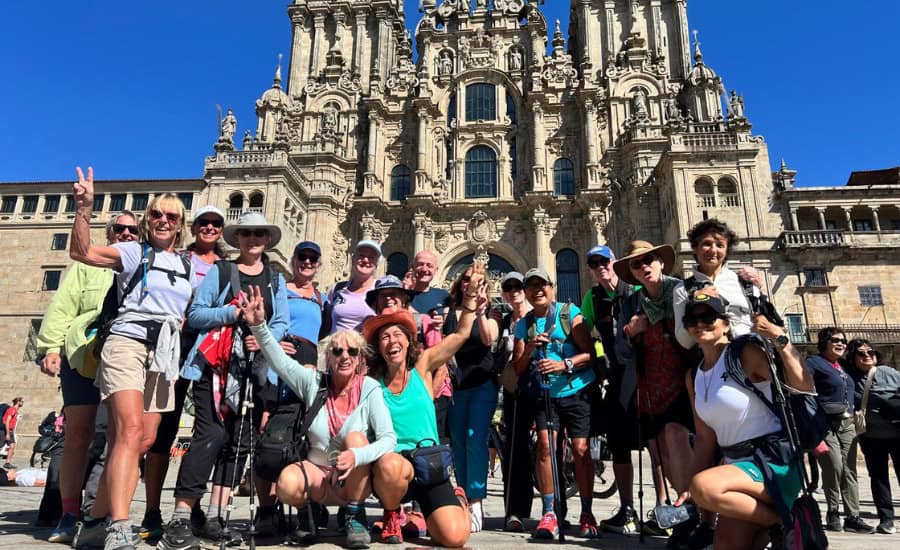
Holy Year on the Camino de Santiago — Año Santo Compostelano — is one of the most extraordinary events in Christian pilgrimage. It occurs only when July 25th, the Feast of St James, falls on a Sunday. There is no fixed pattern: the gap can be five years, six years, or eleven. The last was 2021. The next after 2027 won’t arrive until 2032. If walking the Camino has ever crossed your mind, the window is now.
“In a Holy Year, pilgrims who pass through the Puerta Santa and meet the conditions of confession, communion and prayer receive a plenary indulgence — a tradition stretching back to the 12th century.”

Most Popular Full Camino Routes
Walk from the very beginning — the complete pilgrim’s journey
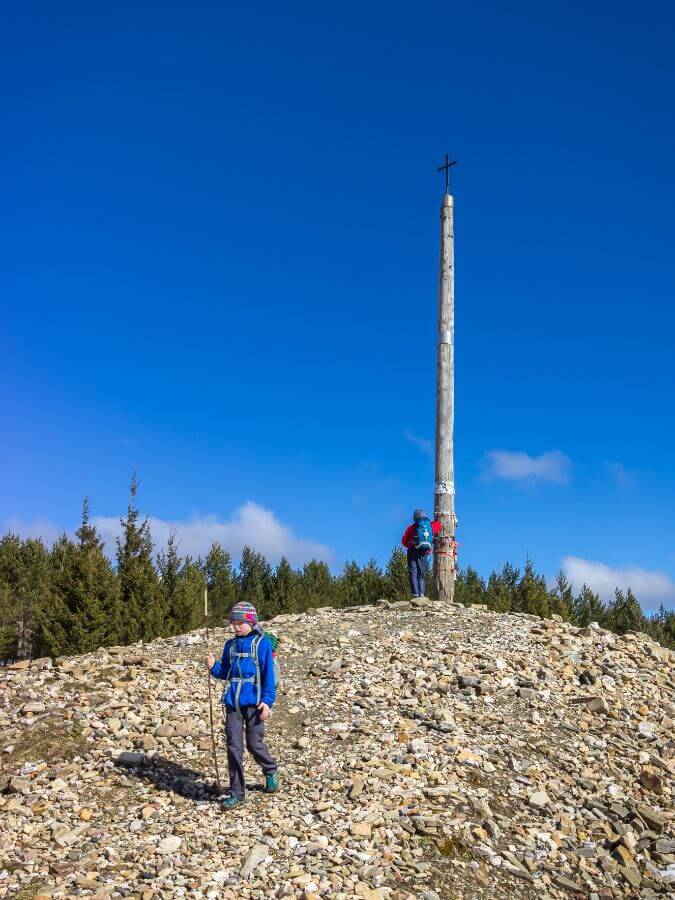
The most iconic pilgrimage route in the world. You cross the Pyrenees on the first day — a statement of intent — and then spend five weeks walking across the north of Spain through Pamplona, Burgos, León and Ponferrada. The landscapes shift from mountain to meseta to green Galicia, and the pilgrim community builds around you as the kilometres pass.
This is the route most pilgrims mean when they say “the Camino.” In a Holy Year, it will be busier than it has been in decades. Book well ahead.


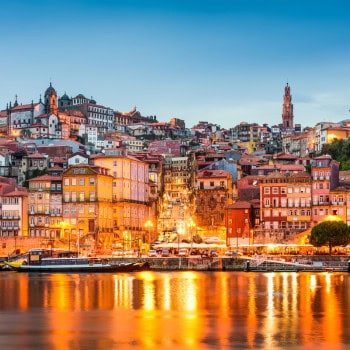
Begin in Lisbon and walk north through the heart of Portugal — through Santarém, Tomar, Coimbra and Porto — before crossing the border into Galicia. Ancient paths wind through olive groves, vineyards and historic towns, offering a quieter and culturally richer alternative to the French Way.
The Easy challenge rating and the sheer beauty of northern Portugal make this a compelling choice for first-time pilgrims and those who want a gentler pace.

An Atlantic adventure that traces the coastline of northwest Portugal before crossing into the coastal region of Galicia and rejoining the traditional Portuguese route. The Coastal Way offers spectacular ocean scenery — cliffs, fishing villages, estuaries — with a shorter total distance that can be completed in a fortnight.
If time is limited but you still want to walk a full route (not just the last 100km), this is the most scenic option available.

Last 100 km Packages
The Compostela. The Holy Door. One week is all you need.
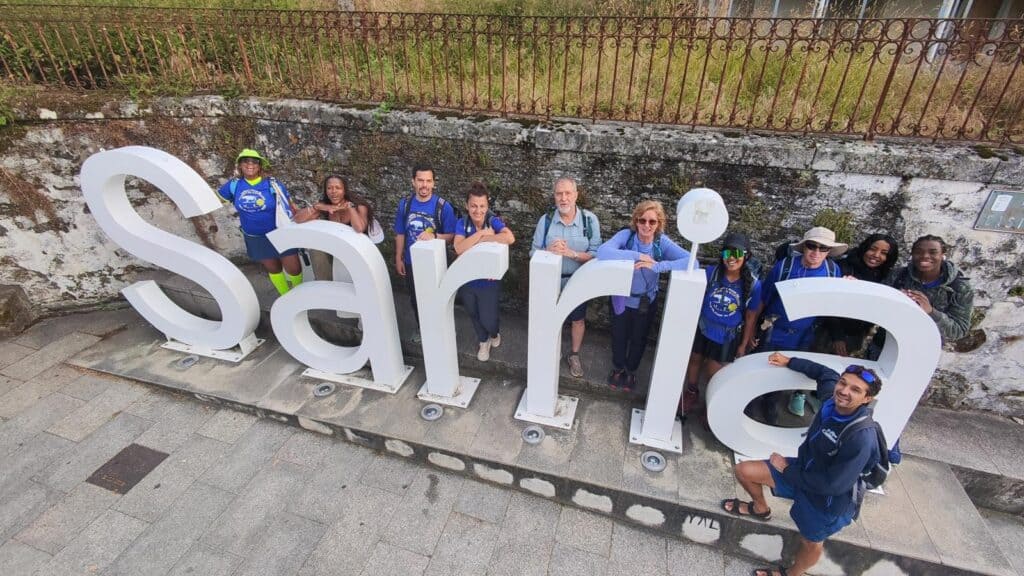
Sarria to Santiago — Camino Frances
The final and most iconic stretch of the Camino Francés
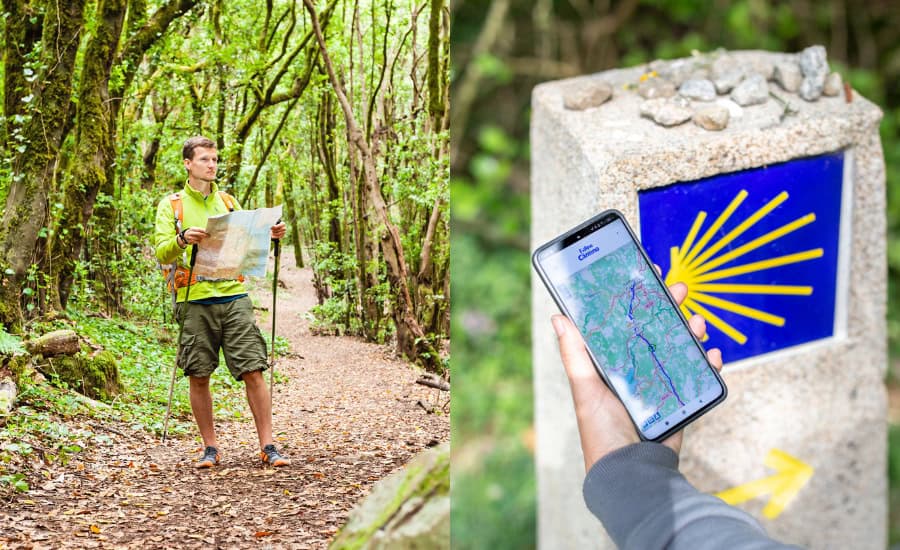
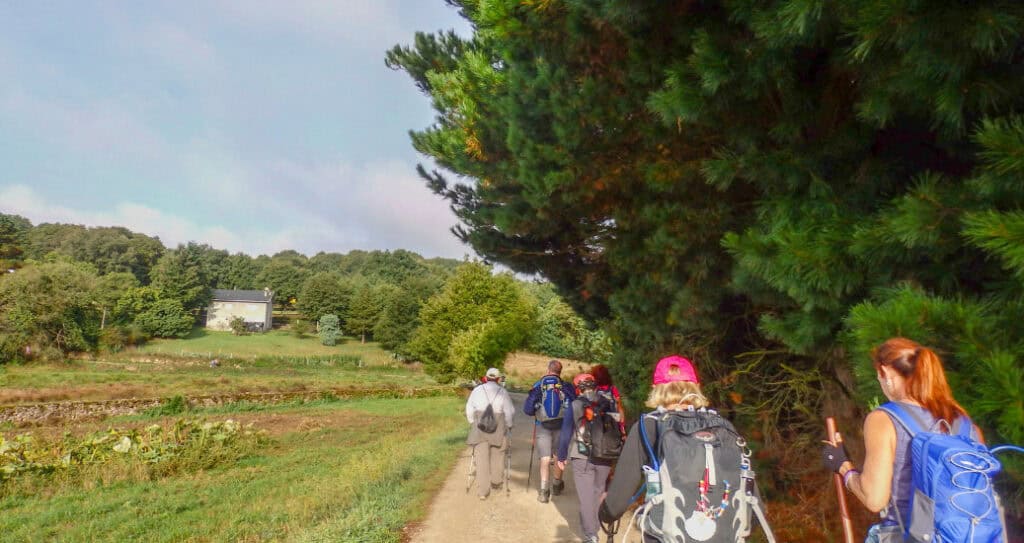
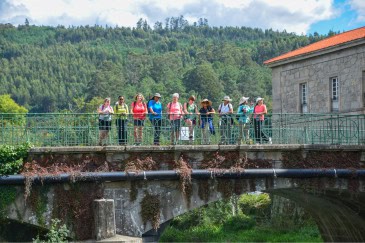
Sarria is the minimum starting point for earning the Compostela, and for good reason — the walk through the hilly landscapes of Galicia is quintessential Camino. Eucalyptus forests, stone villages, carved waymarkers, and the gradual build of anticipation as Santiago draws closer.
This is the most popular route in any year. In 2027, it will be extraordinary — a sea of pilgrims converging on the Cathedral for the Holy Year.
Oia to Santiago de Compostela — Camino Portugues Coastal
Magnificent coastline into the heart of Galicia · Camino Portugués Coastal
This section takes you along a spectacular stretch of Atlantic coastline around the Vigo estuary, with overnight stays in the beautiful coastal cities of Baiona and Vigo before rejoining the traditional Camino Portugués at Redondela for the final push to Santiago.
The route is known for its seafood — oysters and scallops in particular — washed down with local Albariño wine for a true gastronomic pilgrimage.
Tui to Santiago — Camino Portugues
Camino Portugués final section: Galicia’s green heart
Starting in Tui, already on the Spanish side of the border, this final section of the Camino Portugués winds north through woodlands, vineyards and historic Galician towns. Every day brings scenic views and local gastronomy: oysters, pimientos de Padrón, Albariño wine.
A highly rewarding walk, used by Queen Isabel of Portugal in the 13th century, and now one of the most beloved final stretches for pilgrims on this Way.
Ferrol to Santiago — Camino Inglés
The sailors’ route from the coast of Galicia
English and Irish pilgrims once arrived by sea at Ferrol and A Coruña, beginning here rather than crossing all of Spain. The English Way follows the rugged hilly coastline before moving inland to lush wooded countryside, passing the medieval village of Betanzos along the way.
Quieter than the French Way even in a Holy Year, this route is ideal for those who want a genuine pilgrimage experience without the crowds — and who want to earn their Compostela in a week.
Lugo to Santiago — Camino Primitivo
From Roman walls to the pilgrim’s tomb
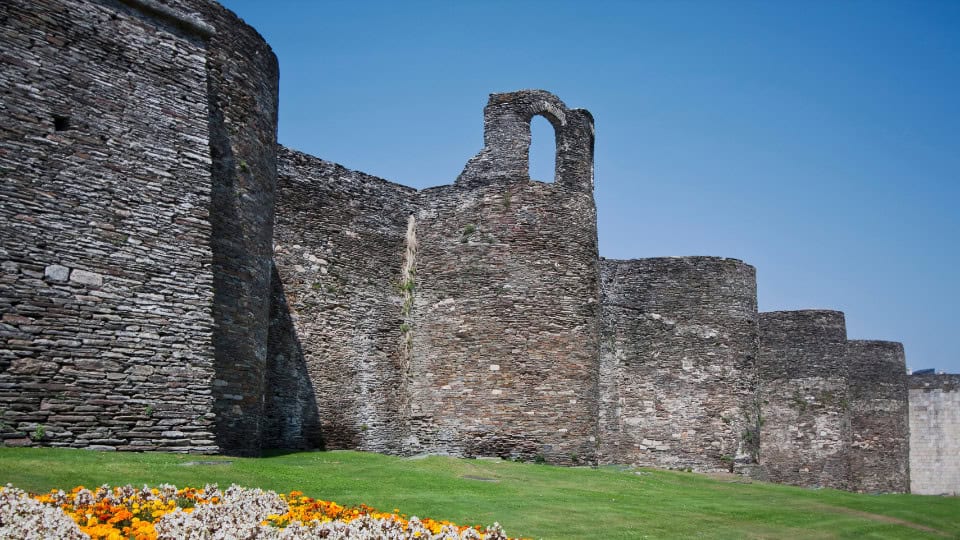
Beginning in Lugo, the only city in the world still encircled by intact Roman walls, this section of the Camino Primitivo winds through heavily forested rural Galicia before meeting the Camino Francés in Melide — famous for its pulpo a feira — for the final stretch into Santiago.
Walking in the footsteps of King Alfonso II, who made this journey in the 9th century, this is one of the oldest pilgrim routes of all. Quiet, green, and deeply historic.
Ourense to Santiago — Vía de la Plata
The final stretch of the Silver Way
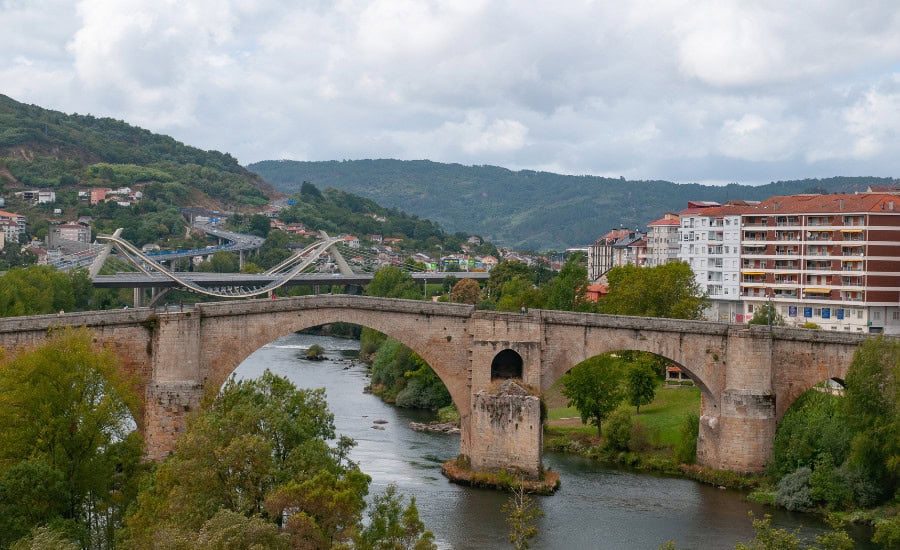
Starting in the spa city of Ourense, this section runs through Galician farmland and low green mountains, past chapels, crosses and wayside shrines that speak to the Camino’s heritage over the centuries. As Santiago approaches, the spiritual weight of the journey becomes tangible.
For pilgrims who have always wanted to walk the ancient Via de la Plata from the south of Spain but have limited time, this section captures its essence.
Monforte de Lemos to Santiago — Camino de Invierno
Ribeira Sacra wine country to the Cathedral
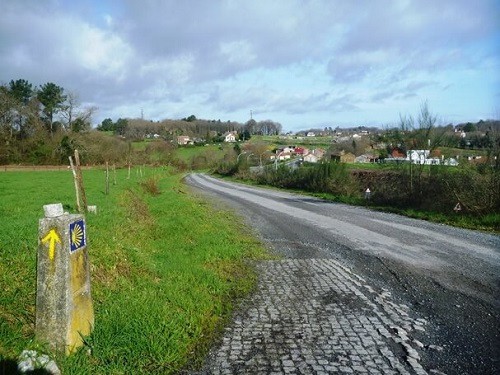
Beginning in Monforte de Lemos, capital of the Ribeira Sacra wine region, this is the lesser-known last 100km — a route through one of Europe’s most outstanding Romanesque landscapes, with ancient religious buildings at nearly every turn. The natural scenery is arresting: river gorges, terraced vineyards, forested hillsides.
For pilgrims who want something genuinely off the beaten path while still earning the Compostela and walking the Holy Door in 2027.






Camino Experiences
Every pilgrim is different. Find the Camino that fits your way.
Camino Deluxe
The pilgrim’s path, refined
The Camino is a journey of the spirit — but that doesn’t mean the nights have to be basic. Our Deluxe packages pair the same authentic walking routes with carefully selected premium accommodation and private luggage transfers, so you arrive each evening restored rather than exhausted.
Every detail is taken care of. All that’s left is the walking.
Camino Pet Friendly
Four-legged pilgrims welcome
The Camino has always welcomed all who come in the spirit of pilgrimage. Our Pet Friendly packages ensure your dog can walk every step with you — with accommodation carefully selected to welcome four-legged pilgrims, and route guidance tailored for travelling with a pet.
Because some journeys are better shared.
Camino by Bike
Pedal the pilgrim’s path
Cycling the Camino is a different kind of rhythm — faster through the open meseta, slower through the towns and villages where the route comes alive. Bike packages cover the same iconic waypoints, with cyclist-friendly accommodation and luggage support throughout.
A minimum of 200km by bike is required to earn the Compostela.
Camino Highlights
The iconic stages, hand-picked
Not every pilgrim can walk the full route — but that shouldn’t mean missing its most extraordinary stages. The Camino Highlights experience selects the most memorable days across any route, combining iconic walking sections with the cultural, gastronomic and spiritual high points of the journey.
15 days. 3 landscapes. 1 Compostela.

2027 is filling up fast
Holy Years draw more pilgrims than any other. Accommodation books out months ahead — and so do packages. The time to secure your place is now.