
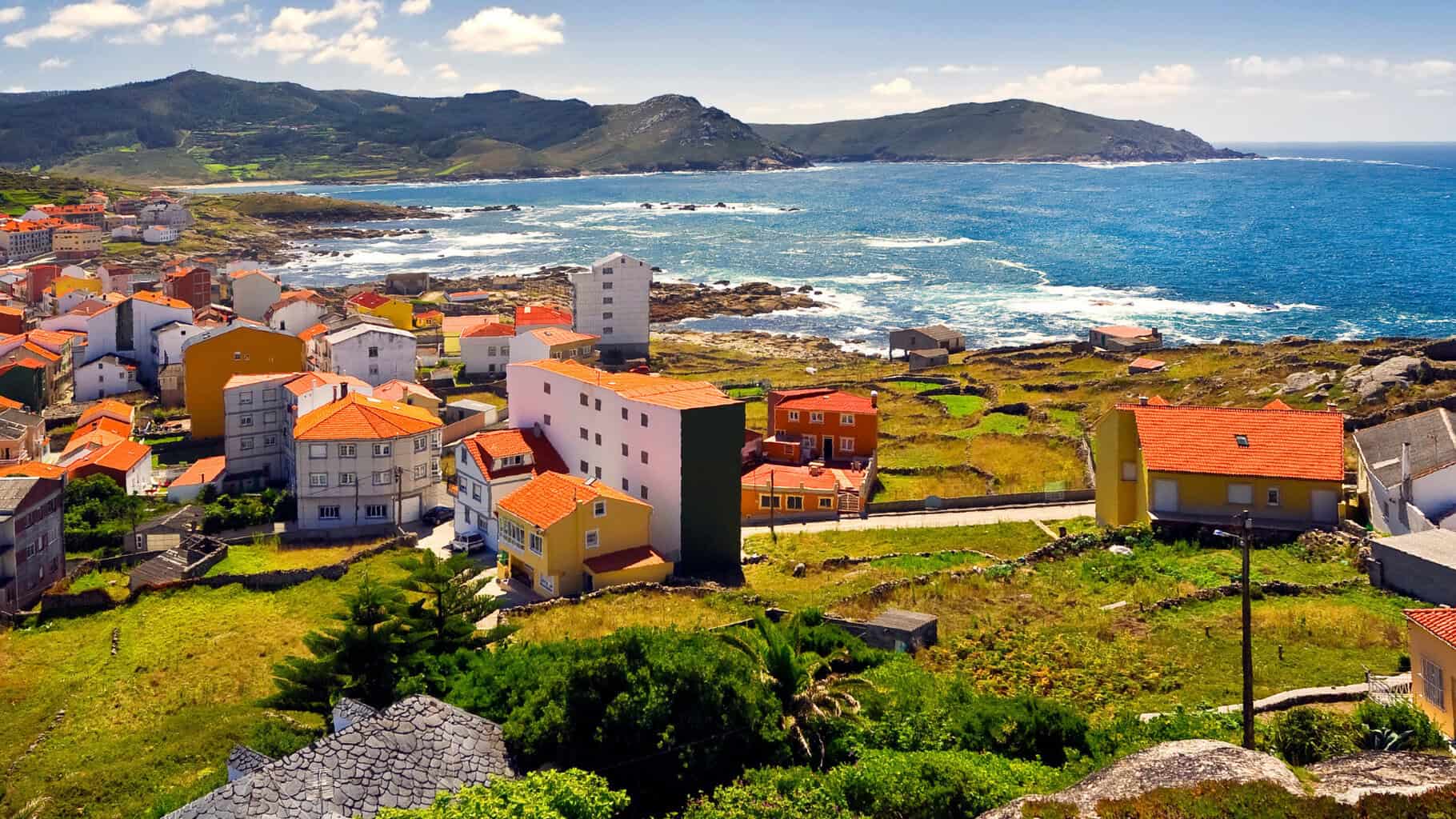
At the western edge of Galicia, where the Atlantic Ocean meets rugged granite shores, lies Muxía — a small fishing town with a remarkable sense of place.
Here, waves crash against ancient rocks, fishing boats return to harbour, and a centuries-old sanctuary stands facing the open sea. It is a landscape shaped by nature, maritime traditions and stories that have been passed down through generations.
Located on the spectacular Costa da Morte, in the province of A Coruña, Muxía is one of the most memorable places to visit in Galicia, Spain. It is also an important destination on the Camino de Santiago, particularly for pilgrims who choose to continue their journey beyond Santiago de Compostela.
Whether you are planning a walking holiday along the Galician coast, extending your Camino to the Atlantic, or exploring the region’s traditional fishing villages, Muxía offers something special: the chance to slow down, reconnect with nature and experience a quieter side of Galicia.
In this guide, we explain what to see in Muxía, why it matters to pilgrims, how to get there and how to make the most of your visit.
Where Is Muxía, Galicia?
Muxía is a coastal town in the province of A Coruña, in north-western Spain. It lies on the Costa da Morte, a stretch of Galician coastline known for its dramatic cliffs, windswept beaches, fishing communities and powerful Atlantic scenery.
The town is approximately 90 kilometres by road from Santiago de Compostela, although the exact distance depends on your starting point and route. It is also connected to Fisterra by the coastal Camino trail.
Muxía is best known for three things:
- The Sanctuary of Virxe da Barca: A striking seaside sanctuary surrounded by granite rock formations and centuries of religious tradition.
- The Camino de Santiago: Muxía is one of the principal destinations of the Camino de Fisterra and Muxía, the pilgrimage route that continues west from Santiago.
- The Costa da Morte: A beautiful and sometimes wild coastline of beaches, fishing villages, walking trails and unforgettable ocean views.
Unlike some of Galicia’s busier tourist destinations, Muxía retains a strong connection to everyday coastal life. Its harbour, seafood traditions and close relationship with the sea are part of its appeal.

7 Best Things to Do in Muxía
You can explore the main sights of Muxía in half a day, but staying longer allows you to discover the surrounding coastline and experience the town at a more relaxed pace.
1. Visit the Sanctuary of Virxe da Barca
The Sanctuary of Virxe da Barca (Sanctuary of Our Lady of the Boat) is the defining landmark of Muxía.
Standing on the rocky shoreline just beyond the town, the sanctuary faces the Atlantic Ocean. Its location makes it a remarkable sight, especially when the sea is rough and waves break against the surrounding granite formations.
The sanctuary is closely associated with the legend of the Virgin Mary arriving by stone boat to encourage the Apostle Saint James during his mission in Galicia. According to tradition, the enormous rocks beside the church are the remains of that boat.
The site combines Christian devotion with older traditions associated with sacred stones and the natural landscape. For centuries, pilgrims and local visitors have come here seeking spiritual meaning, protection or simply a moment of reflection beside the ocean.
Even if you are not religious, it is worth visiting for its atmosphere and setting. Take time to walk around the headland, observe the changing light and listen to the waves.
Why visit? For its spiritual significance, coastal scenery and connection to the Camino de Santiago.
2. Discover the Sacred Stones of Muxía
The rocks surrounding the Sanctuary of Virxe da Barca are not ordinary geological features in the eyes of local tradition. Each has its own name, symbolism and stories.
Among the best known are:
- Pedra de Abalar: Traditionally associated with the hull of the Virgin’s stone boat. Its name refers to its rocking movement, although its movement has been affected by fractures.
- Pedra dos Cadrís: A curved rock associated with the sail of the legendary boat. Local tradition attributes healing properties to passing beneath it in a ritual repeated nine times.
- Pedra do Timón: Associated with the rudder of the boat.
These traditions reveal how deeply nature, spirituality and local identity are intertwined in Galicia.
Treat the stories as part of the area’s living cultural heritage rather than as historical facts. And remember that the rocks can be slippery, especially in wet or windy conditions.
3. Walk to the A Ferida Monument
Close to the sanctuary stands A Ferida, a monumental sculpture created in memory of the Prestige oil spill of 2002 and the volunteers who helped clean Galicia’s coastline.
The sculpture, whose name means “the wound” in Galician, resembles a split stone or a deep opening in the landscape. It commemorates one of the most significant environmental disasters in Spain’s recent history and the extraordinary public response that followed.
The Prestige disaster had a profound impact on the Costa da Morte, affecting marine ecosystems, fishing communities and the livelihoods of people who depended on the sea.
Visiting A Ferida adds another dimension to a walk around the sanctuary. It is a reminder that the relationship between Galicia and the Atlantic is not only beautiful but also fragile.
4. Explore Muxía’s Harbour and Old Town
Muxía is still a working fishing town, and its harbour offers a glimpse of everyday life on the Galician coast.
Stroll along the waterfront, watch the fishing boats and explore the streets around the port. You will find traditional buildings, small local businesses and places to stop for a coffee or a seafood lunch.
Look out for the traditional drying structures used for congrio (European conger eel), a local speciality that reflects the town’s maritime heritage.
You can also visit the Church of Santa María, a historic Gothic-style church near the route connecting the town with the sanctuary.
The best way to experience this part of Muxía is without a rigid schedule. Allow yourself time to wander, observe and enjoy the slower rhythm of a coastal community.
5. Watch the Sunset at Cabo Touriñán
For one of the most memorable coastal experiences near Muxía, head to Cabo Touriñán.
This exposed headland extends into the Atlantic and is known for its rugged scenery, lighthouse and expansive ocean views. It is also one of mainland Spain’s westernmost points, making it a particularly evocative place to watch the sun sink towards the horizon.
The surrounding landscape feels wonderfully open and untamed. Depending on the weather, you may see powerful waves, windswept vegetation and changing colours across the water.
Sunset is especially rewarding, although the experience depends on cloud cover and seasonal conditions.
Practical tip: Cabo Touriñán is outside the town centre, so plan transport if you are visiting without a car. Check the weather before setting out, and stay away from exposed cliff edges.
6. Discover the Beaches Around Muxía
The coastline around Muxía offers beaches ranging from sheltered stretches of sand to wide, exposed Atlantic shores.
Two particularly worthwhile places to explore are:
- Praia de Nemiña: A beautiful, open beach near the Ría de Lires, appreciated for its natural surroundings and surfing conditions.
- Praia de Lourido: A scenic beach close to Muxía, framed by hills and a striking coastal landscape.
These beaches are wonderful for walking, photography and enjoying the Atlantic air. However, Galicia’s coastal waters can be cold, and currents and waves can be powerful. Always assess local conditions before swimming.
If you are walking the Camino between Fisterra and Muxía, the beaches and coastal stretches along the way become part of the journey itself, rather than simply places to stop.
7. Taste the Flavours of the Costa da Morte
Food is an essential part of understanding Muxía.
The town’s maritime heritage is reflected in its menus, with fish and seafood playing a central role. Depending on the season and restaurant, you may find octopus, hake, mussels, barnacles and other seafood specialities.
Galician cuisine also celebrates simple, high-quality ingredients: locally grown potatoes, seasonal vegetables, bread and regional wines.
For a genuine taste of the area, choose a restaurant that works with local produce and ask what is in season. A leisurely meal after a day of walking is one of the pleasures of travelling through this part of Galicia.
If you are visiting during a busy period or a local celebration, booking ahead is sensible.

Muxía and the Camino de Santiago: Why Do Pilgrims Visit?
Muxía is much more than a beautiful coastal destination. It is one of the historic spiritual endpoints of the Camino de Santiago.
Most pilgrims think of Santiago de Compostela as the finish line. Yet for centuries, some have continued west towards the Atlantic, drawn by the landscapes and traditions of Fisterra and Muxía.
The Camino de Fisterra and Muxía is distinctive because it begins in Santiago de Compostela rather than ending there. After reaching the cathedral, pilgrims can continue walking towards the coast, passing through rural Galicia before arriving at the ocean.
The route offers a different rhythm from the more heavily travelled Camino Francés. You walk through small villages, wooded paths, agricultural landscapes and coastal communities, gradually approaching the Atlantic.
For many walkers, this final section offers something that is difficult to plan or measure: time to reflect on the journey they have completed.
The Camino de Fisterra and Muxía: Key Facts
| Detail | Information |
|---|---|
| Starting point | Santiago de Compostela |
| Main destinations | Fisterra and Muxía |
| Approximate combined distance | 119–120 km, depending on the route and measurement |
| Typical walking time | Around 5–6 days for both destinations, depending on stage planning |
| Difficulty | Moderate overall, with some long and demanding stages |
| Landscape | Rural Galicia, forests, villages, beaches and Atlantic coastline |
| Main highlights | Ponte Maceira, the countryside around Olveiroa, Fisterra and the Sanctuary of Virxe da Barca |
| Pilgrim certificates | Fisterrana for Fisterra and Muxiana for Muxía, subject to the relevant requirements |

Should You Visit Muxía or Fisterra?
If you have time for only one destination, the right choice depends on what you want from your Camino.
Fisterra is famous for its lighthouse, the traditional kilometre-zero marker and its association with the ancient idea of the world’s end. It is a particularly iconic place to watch the sunset over the Atlantic.
Muxía offers a quieter, more contemplative atmosphere, with its seaside sanctuary, sacred stones, fishing-town character and dramatic rocky coastline.
Neither destination is inherently better. They offer different ways of experiencing the same extraordinary coast.
If time allows, visiting both is the most rewarding option. The walk between Fisterra and Muxía is approximately 29 km on the official route, although the exact distance depends on the itinerary. It can be a long day for walkers, so some pilgrims choose to split it with an overnight stay.
For those who want to experience the full coastal journey without rushing, allowing enough time for both destinations makes all the difference.
What Is the Best Time to Visit Muxía?
Muxía can be visited throughout the year, but each season offers a different experience.
Spring (March–May) brings greener landscapes, wildflowers and generally comfortable temperatures for walking. Rain is still possible, so waterproof clothing is essential.
Summer (June–August) offers longer daylight hours and a livelier atmosphere in the town. It is a popular time for coastal holidays, although accommodation may need to be booked well in advance.
Autumn (September–November) can be particularly beautiful, with changing light, quieter trails and a more atmospheric Atlantic coastline. Weather becomes increasingly unpredictable as the season progresses.
Winter (December–February) reveals a wilder side of the Costa da Morte. Stormy seas and dramatic skies can be spectacular, but wind, rain and shorter days require careful planning.
For a walking holiday, late spring and early autumn are excellent starting points. However, there is no guaranteed dry season in Galicia. Flexible planning and appropriate clothing matter more than choosing a supposedly perfect month.
How to Get to Muxía
There are several ways to reach Muxía, depending on your itinerary.
From Santiago de Compostela: Muxía is approximately 90 km away by road. You can travel by car or investigate public transport connections, which may involve limited departure times or changes depending on the day.
From Fisterra: You can walk between the two towns on the Camino de Fisterra and Muxía. The official walking stage is approximately 28.7 km from Fisterra to Muxía and is considered demanding because of its length.
If you are travelling by public transport, check current timetables before departure. Services in rural Galicia can be less frequent than in major cities, particularly on weekends and outside the main tourist season.
How Long Should You Spend in Muxía?
The ideal length of your stay depends on whether you are visiting independently or walking the Camino.
- A few hours: Enough to visit the Sanctuary of Virxe da Barca, explore the surrounding rocks and walk along the waterfront.
- One full day: Allows time for the sanctuary, the harbour, a relaxed seafood lunch and a visit to one nearby beach or coastal viewpoint.
- Two days or more: Ideal if you want to explore Cabo Touriñán, discover more of the Costa da Morte and enjoy the town without rushing.
- As part of the Camino: Plan your overnight stay around your walking stages and allow time to enjoy the destination after arriving.
If you are walking the Camino, resist the temptation to treat Muxía as just another place to sleep. Arriving at the ocean after several days on foot is an experience worth giving space to.
Practical Tips for Visiting Muxía
A little preparation will help you enjoy Muxía whatever the weather brings.
- Bring waterproof clothing. Rain and wind are part of the Galician coastal experience.
- Wear comfortable walking shoes. The rocks around the sanctuary can be uneven and slippery.
- Check the forecast. Coastal weather can change quickly, especially around exposed headlands.
- Respect the ocean. Keep a safe distance from breaking waves and cliff edges.
- Plan transport in advance. Public transport connections can be limited, so confirm times before travelling.
- Book accommodation early. This is particularly important in summer and when walking popular Camino stages.
- Allow time to stop. Muxía is a place to experience slowly, not simply photograph before moving on.
Why Muxía Deserves a Place on Your Camino
The Camino is rarely only about reaching Santiago. It is also about what happens along the way: the conversations, the changing landscapes, the unexpected encounters and the moments when walking gives you room to think.
Muxía brings these elements together in a particularly powerful setting.
Here, the Camino meets a coastline that has shaped local life for generations. The sanctuary, the harbour and the immense Atlantic horizon each tell a different part of the story. You can explore its history, discover its traditions or simply sit beside the sea and watch the waves.
For some pilgrims, Muxía is a spiritual destination. For others, it is an opportunity to extend their walking holiday and discover a less familiar part of Galicia. For many, it becomes a memorable final chapter to their Camino.
At Follow the Camino, we believe that a great walking holiday is about more than the kilometres you cover. It is about having the freedom to enjoy the journey, knowing that the practical details have been taken care of.
If you are planning your next Camino, consider continuing beyond Santiago to discover Fisterra and Muxía — and experience the Atlantic coast at the end of the road.
Ready to explore Galicia on foot? Discover our Camino de Santiago walking holidays and find the route that suits your pace, interests and travel plans.