
If you’ve just heard about the Camino de Santiago and want to know what it’s all about, you’re in the right place. This FAQ-style guide will give you an accessible introduction, help clarify common misconceptions, and answer the questions people ask most often when planning their first Camino. With nearly 20 years of experience organizing Camino journeys, we’ve helped thousands of pilgrims find the right route, stage, and pace for their adventure.
What is the Camino de Santiago?
The Camino de Santiago, or The Way of Saint James, is a network of pilgrimage routes across Europe leading to the Cathedral of Santiago de Compostela in Spain. The cathedral houses the remains of Saint James, one of the apostles of Jesus. The Camino has been walked for over a thousand years, combining history, culture, and personal reflection into an unforgettable journey.
Why do people walk the Camino?
Many people walk the Camino for religious or spiritual reasons, following in the footsteps of centuries of pilgrims. However, faith is not a requirement—the Camino welcomes everyone. Others walk for personal challenge, cultural discovery, time in nature, or simply the chance to step away from daily routines. There are many reasons to walk the Camino de Santiago! Whatever the motivation, the shared experience of walking, connecting with others, and finding meaning along the path is what unites pilgrims of every background.

What are routes and stages?
A route is the full path you choose to walk, such as the Camino Frances or Camino Portugues. Each route is made up of stages (or sections), which are the daily segments most pilgrims walk. For example, a long Camino like the full Camino Frances is typically divided into 30–40 stages, while shorter Caminos, such as the last 100 km from Sarria, may have 5–8 stages. Most longer-route pilgrims understand this distinction, while those doing shorter Caminos often just select a starting city.
While guidebooks and maps often outline ‘official’ stages of the Camino, these are only suggestions. In reality, each pilgrim creates their own stages depending on how far they feel comfortable walking each day, the time they have available, and where they prefer to stop for the night. Some choose shorter days to enjoy the towns and scenery, while others cover longer distances. One of the Camino’s greatest strengths is this flexibility—it adapts to you, not the other way around. And with our experience, we can help you design the ideal rhythm and stages to make your journey truly yours.

How long does it take?
Duration depends on the route and pace:
- Camino Frances: ~780 km, 30–40 days.
- Camino Portugues: ~610 km from Lisbon, or ~240 km from Porto.
- Camino Portugues Coastal: ~280 km from Porto, more scenic with some challenging terrain.
Shorter Caminos, like the last 100 km from Sarria, can be completed in about a week.
Can longer stages be split?
Absolutely. Longer walking days can be divided into shorter stages, depending on your pace and desired experience. Ask your Camino Planner about our Camino Short Walking Days!
You can also choose to add Rest Days during your Camino —perfect for exploring a historic town, savoring the local gastronomy, or simply giving your feet a well-deserved break.
We help design routes to match your stamina and interests.
How hard is the Camino de Santiago?
Difficulty depends on distance, terrain, and elevation. The Camino Frances is mostly moderate with some hilly sections, while the Camino Primitivo route includes more challenging climbs and descents. Our experience shows that basic fitness and some pre-walk training make the journey enjoyable, and we advise our pilgrims to follow a Camino training plan like the one we offer for free.
When is the best time to walk the Camino?
Spring (April–June) and early autumn (September–October) offer mild weather, but also more crowds. Summer can be too warm for some people, while winter is quiet but less predictable.
What about terrain and scenery?
- Camino Frances: Rolling hills, vineyards, medieval towns.
- Camino Portugues: Flat to moderate, rivers, historical towns.
- Portugues Coastal: Coastal cliffs, beaches, small villages.
Each route has its highlights, and we help pilgrims select stages that maximize scenic beauty. Check our Camino Routes page to do your own research or reach out to us with any specific questions you might have!

Do I qualify for the pilgrim credential?
Yes—most pilgrims can qualify for both the Pilgrim Credential (Credencial del Peregrino) and the Compostela certificate in Santiago. Here’s how it works:
-
Pilgrim Credential: This is a small booklet that you carry with you and stamp along the way in churches, cafés, accommodations, and pilgrim offices. It’s your proof that you are walking (or cycling) the Camino.
-
Compostela Certificate: To receive this certificate when you arrive at the Pilgrim’s Office in Santiago, you must walk at least 100 km on foot or 200 km by bike on any recognized Camino route. The most popular option for walkers is the last 100 km from Sarria on the Camino Frances, while cyclists often begin in Ponferrada.
It’s important to collect at least two stamps per day in your credential for the final 100 km (or 200 km for cyclists). This shows the Pilgrim’s Office that you genuinely completed the journey.
Even if your motivation is not religious, you can still receive a Compostela—simply indicate whether your reason for walking was “religious,” “spiritual,” or “other.” If you prefer, you can request a Certificate of Distance, which records the exact starting point of your pilgrimage and the total kilometers covered.
With our support, you don’t need to worry about the details—we’ll make sure you start at the right point, guide you on where to collect your stamps, and ensure you qualify for your Compostela at the end of your Camino.

Camino de Santiago Logistics: flights, transfers, and meals
Pilgrims often wonder about logistics: where to fly into and out of, how to reach the starting point, or whether luggage transfers are available. Our expert Camino Planners take care of these details, offering tailored advice and arranging services such as private transfers and luggage support. That way, every practical concern is handled in advance—leaving you free to focus on the walk itself.
Where do pilgrims stay?
Along the Camino, pilgrims can choose from a wide range of accommodations. Traditional albergues (pilgrim hostels) offer a budget-friendly and communal experience, while hotels, guesthouses, and private lodgings provide more comfort and privacy. With us, you can enjoy carefully specially hand-picked accommodations, chosen for their quality and charm. For those seeking even more comfort, upgraded options like Paradores and Pousadas are also available—ensuring your Camino is as relaxing and enjoyable as it is meaningful.

What makes the Camino special?
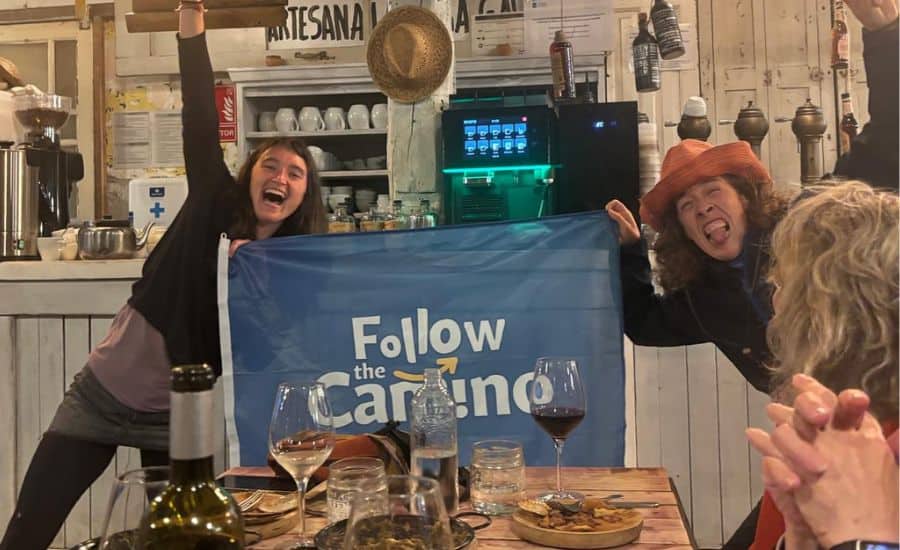
Beyond landscapes and history, the Camino offers a sense of community, connection, and personal growth. You meet people from around the world, share meals and stories, and experience a rhythm of life that is both simple and profound.


How can I start planning?
With nearly 20 years of experience, we help pilgrims of all levels plan their ideal Camino. From self-guided trips with luggage support to fully guided journeys, we ensure every stage of your adventure is smooth and memorable.
Ready to plan your Camino? Schedule a Virtual Appointment with a Camino Planner today to start designing your perfect pilgrimage.