
You searched for Spain’s main dish food. Here’s the truth: Spain doesn’t have one. It has seventeen regions, each with its own cuisine, its own ingredients, and its own argument about whose food is best. This guide tells you what the main dishes of Spain actually are — and then makes the case that the most extraordinary Spanish food of all is the least famous: the Galician cuisine you’ll discover if you walk the Camino de Santiago.
Spain’s Main Dish Food: Why There Is No Single Answer
The most googled question about Spanish food is some version of “what is Spain’s main dish?” The honest answer is that it depends entirely on where in Spain you are.
Spain is not a culinary monolith. It is a country of dramatic geographic contrasts — Atlantic coast, Mediterranean coast, high central plateau, Pyrenean mountain range, subtropical south — and its food reflects every one of them. The cold tomato soup of Andalusia (gazpacho) and the slow-braised octopus of Galicia (pulpo á feira) are both Spanish food, and they have almost nothing in common.
Here is the quick answer to what Spain’s main dishes are, by region:
- Valencia: Paella — rice with chicken, rabbit, and beans, cooked over wood fire. The dish the world thinks of as “Spanish food.”
- Andalusia: Gazpacho (cold tomato soup), pescaíto frito (fried fish), and the finest jamón ibérico on earth
- Basque Country: Pintxos, bacalao al pil-pil (salt cod in emulsified olive oil), and more Michelin stars per capita than anywhere else on the planet
- Madrid: Cocido madrileño — a three-course slow-cooked chickpea and meat stew, the capital’s defining dish
- Castile: Lechazo asado and cochinillo — wood-roasted milk-fed lamb and suckling pig so tender they’re carved with a plate, not a knife
- Catalonia: Pa amb tomàquet (bread rubbed with tomato and olive oil), escudella, and some of the most technically sophisticated cooking in Europe
- Galicia: Pulpo á feira, caldo gallego, empanada, percebes, vieiras — and Albariño wine
That last region is the one most travellers know least. It is also, by a serious argument, the best.

A Note on Tapas: Spain’s Most Misunderstood Food Concept
Before going deeper into the regions, it’s worth addressing the word every visitor arrives with: tapas.
Tapas are not a type of food. They are a way of eating: small dishes shared between people, ordered one at a time, designed to keep a table talking for as long as anyone wants to stay. The word comes from tapar (to cover): the original tapa was a slice of bread or cured meat placed over a wine glass to keep out the flies. What started as a lid became a culture.
In Andalusia, tapas are often free with your drink. In the Basque Country, the concept evolved into pintxos: elaborated bites mounted on bread and displayed along the bar counter. In Galicia, you’ll find raciones — larger shared plates of octopus, empanada, or cheese — which are the local expression of the same instinct.
What tapas share across every region is the underlying philosophy: eating in Spain is a social act, not a solitary one. The table is where relationships are maintained, arguments are had, and time is spent without apology.
For pilgrims on the Camino de Santiago, this culture is one of the quiet revelations of the walk. Sitting down at a bar in a Galician village, sharing a plate of pulpo and a carafe of Albariño with strangers who will be friends by the time the bill arrives — that is tapas culture in its purest form!

Why Galicia Has Spain’s Most Underrated Cuisine
Galicia sits in the far northwest corner of Spain — green, rainy, Celtic, Atlantic. It looks nothing like the Spain of tourist posters. It feels, in many ways, more like Ireland or Brittany than like Seville or Barcelona. And its food reflects that character completely.
Galician cuisine is built on four pillars that don’t apply anywhere else in Spain:
The Atlantic Ocean: The Galician rías (deep coastal inlets) are among the most productive shellfish habitats in the world. The wild catch — octopus, barnacles, scallops, spider crabs, razor clams — is harvested using methods unchanged for generations.
The rain: More rainfall than any other Spanish region means rich pasture, dairy farming, and the leafy greens — particularly grelos (turnip tops) — that define the local cooking.
The pig: Every part of the Galician pig is used, from the cured shoulder (lacón) to the chorizo to the blood sausage. Pork and seafood share the table without apology.
The Celtic connection: Galicia is one of the six Celtic nations — linguistically, archaeologically, and culturally connected to Ireland, Scotland, Wales, Brittany, and Cornwall. This shows in the food: a preference for boiling over frying, for root vegetables, for hearty one-pot meals, for dairy. More Galician food has parallels with Irish cuisine than with Andalusian.
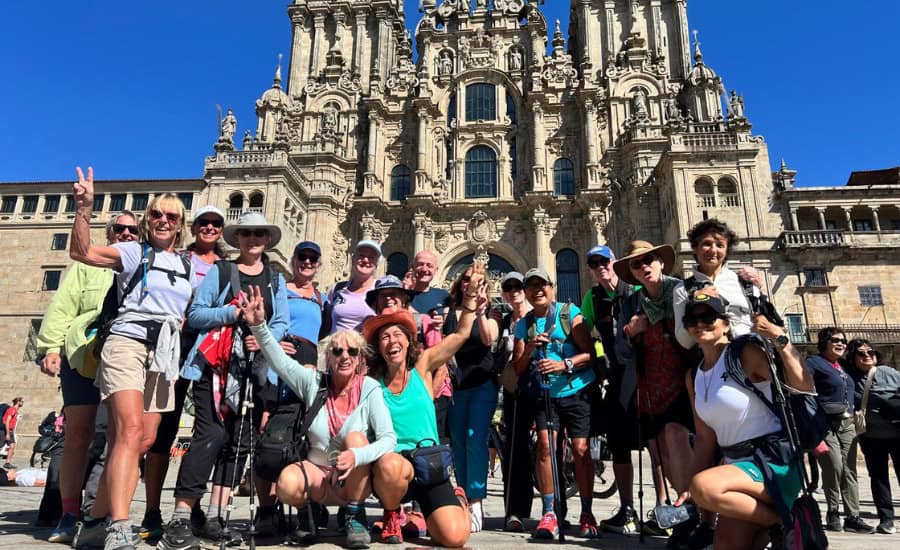
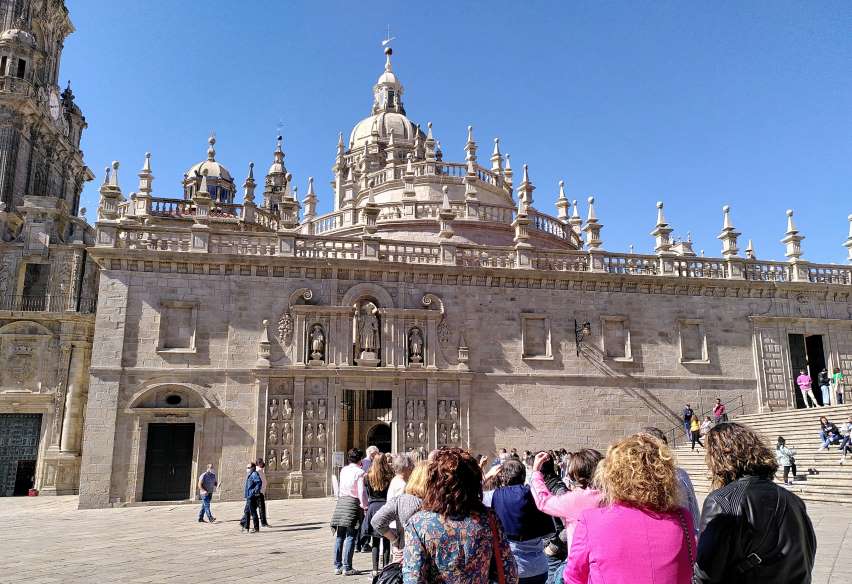
This is the cuisine you encounter at the end of the Camino de Santiago. And it is worth walking 800 kilometres for.
The Camino de Santiago: A Food Journey Across Spain
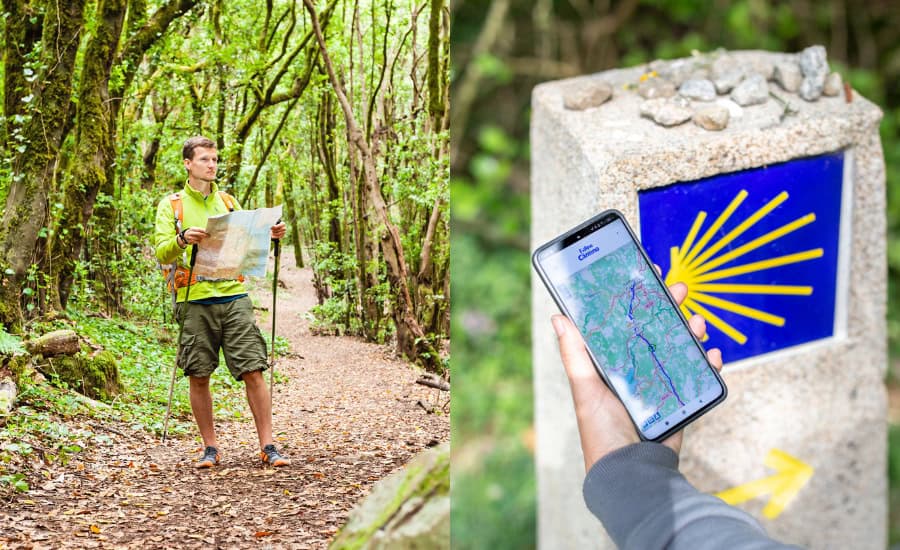
The Camino de Santiago is not just a pilgrimage or a physical challenge. It is one of the great gastronomic journeys in Europe — a route that takes you through four distinct regional cuisines before delivering you to a fifth that makes everything before it feel like a warm-up.
On the Camino Francés, the most popular route, the food changes as dramatically as the landscape:
The Pyrenees and Navarra: You begin in the Basque-Navarran tradition — pintxos, cider, roast lamb with menestra de verduras (braised seasonal vegetables). The cooking here is already exceptional.
La Rioja: Wine country. The table centres on patatas a la riojana (potatoes with chorizo) and chuletillas al sarmiento — tiny lamb chops grilled over vine shoots. The wine costs almost nothing and is extraordinary.
Castile and León — the meseta: The long central plateau, windswept and austere. The food follows: lechazo asado (wood-roasted milk-fed lamb), morcilla de Burgos (rice black pudding, unlike any black pudding you know), judiones de La Granja (giant slow-cooked white beans with pig’s ear and chorizo). This is serious, warming, unglamorous food that will carry you across the meseta on cold mornings.
Galicia — the final stretch: At O Cebreiro, the Camino crosses into Galicia and everything changes. The landscape goes green and misty. The food becomes oceanic, ancient, and extraordinary. From here to Santiago de Compostela, you are walking through one of the great undiscovered food cultures of Europe.
Spain’s Main Dishes on the Camino: What to Eat and Where
Pulpo á Feira — Galicia’s Signature Dish
The single most important dish of the Camino de Santiago, and a serious contender for Spain’s greatest main dish. Octopus is boiled low and slow for hours, cut with scissors onto a wooden board, drizzled with olive oil, sprinkled with coarse sea salt, and dusted with smoked paprika — sweet, hot, or both.
It sounds elemental. It is elemental. And it is perfect.
Where to eat it on the Camino: The town of Melide, 55 kilometres from Santiago de Compostela, is the world capital of pulpo á feira. The pulperías there have served the same recipe for over a century. Do not walk past without sitting down.
Price: €12–18 for a full portion.

Caldo Gallego — The Pilgrim’s Bowl
A slow-cooked broth of white beans, potato, grelos (turnip tops), and cured pork. On a cold, wet November morning after a hard stage, this is not a starter — it is survival. It is also, simply, one of the best soups in Spain.
Where to eat it: Every bar and restaurant in Galicia that serves a menú del peregrino. Or cook Caldo Gallego at home with our recipe!
Price: Included in the pilgrim menu, typically €12–15 for three courses with wine.
Empanada Gallega — Spain’s Greatest Trail Food
A large flat pie with thin bread pastry and a slow-cooked filling — tuna and pepper, salt cod, octopus, or sardines being the classics. Portable, filling, no refrigeration needed for a few hours. Buy a slice from a village bakery at 8am and it’s your lunch at 1pm on the trail.
Where to find the best: Small village panaderías (bakeries), not tourist restaurants. The ones with a hand-written sign and locals queuing.
Price: €2–4 per slice.

Lacón con Grelos — Festive Galician Pork
Salt-cured pork shoulder (lacón) slow-boiled with grelos, chorizo, black pudding, and cachelos (skin-on boiled potatoes). The combination of bitter greens, smoky sausage, and salt-cured meat achieves a balance that is deeply, unfashionably satisfying.
Price: €14–20.
Percebes — The World’s Most Extraordinary Shellfish
Stalked barnacles harvested from the most violently wave-battered rocks of the Galician coast, by percebeiros who risk their lives to collect them. Boiled briefly in salted water. Eaten by cracking the stalk and pulling out the small, intensely oceanic meat inside.
Nothing else tastes like this. Not anywhere.
Where to eat them: Coastal marisquerías in Finisterre or Muxía — the Camino’s end points on the coast. Not inland.
Price: €30–80 per kilo; worth sharing a small portion.
Vieiras — The Scallop of Saint James
The scallop shell is the symbol of the Camino de Santiago. The dish made with it — baked in the shell with onion, jamón, paprika, and breadcrumbs, gratinated golden — is one of Galicia’s finest.
Price: €6–12 per scallop.
Tarta de Santiago — The Finish Line Dessert
A dense, moist almond cake, no wheat flour, decorated with the Cross of Santiago in icing sugar. Naturally gluten-free. Found in every bakery window in Santiago de Compostela. Every shop has its own recipe. Try more than one.
Price: €2–4 per slice.

Albariño — The Wine of the Camino
Galicia’s white wine and one of the finest food wines in Europe. Aromatic, fresh, and saline — peach, white flowers, green apple — with a mineral quality that makes it exceptional alongside seafood. Order it in any bar in Galicia and you will be served something good. Learn more about Albariño Wine in our blog post!
Average price: €3–5 a glass. €10–18 a bottle in a restaurant.

The Pilgrim Menu: The Best-Value Meal in Spain
The menú del peregrino is one of the great unsung institutions of the Camino and, by most measures, the best-value sit-down meal available anywhere in Western Europe.
For €12–15, you receive:
- First course: soup, caldo gallego, salad, pasta…
- Second course: meat, fish, omelette (tortilla)…
- Dessert: tarta de Santiago, flan, fruit…
- Bread: unlimited
- Drink: house wine, water, or soft drink — included
- Coffee: included in many places
Available at lunch (13:00–15:30) in the majority of bars and restaurants along the entire Camino route — not just in Galicia. Use it every day.

Practical Guide: Eating Well on the Camino
Meal Times in Spain
Spanish meal times will require adjustment if you’re coming from the UK, Ireland, the US, Australia, or Canada.
- Breakfast (desayuno): 07:00–10:00
- Lunch — main meal (comida): 14:00–16:00
- Dinner (cena): 21:00–23:00
Trying to eat dinner at 18:00 will find kitchens closed and staff confused. Adjust your rhythm by day two and you will eat far better.
Daily Food Budget
| Eating style | Approximate daily budget |
|---|---|
| Pilgrim menu only + bakery snacks | €15–20 |
| Pilgrim menu + one café treat | €20–28 |
| Pilgrim menu + occasional restaurant dinner | €30–40 |
| Full sit-down meals, wine, seafood treats | €50+ |
Dietary Restrictions
Vegetarian and vegan: Traditional Galician cuisine is meat and seafood-heavy, but options exist everywhere: tortilla española (potato omelette), empanada de verduras, Galician cheeses, tarta de Santiago, salads, and pasta on most pilgrim menus. Cities have solid vegetarian restaurants.
Coeliac / gluten-free: Galicia has notably high coeliac awareness. Naturally gluten-free options include pulpo á feira, grilled or boiled seafood, tarta de Santiago, cachelos, and most Galician cheeses. Ask for “sin gluten” and most restaurants will engage seriously.
Shellfish allergy: Galicia is a serious shellfish region — stocks and shared fryers are common. State your allergy clearly: “Tengo alergia grave al marisco” and ask about shared cooking surfaces.
Useful Phrases
| English | Spanish |
|---|---|
| Do you have the pilgrim menu? | ¿Tiene menú del peregrino? |
| Without meat, please | Sin carne, por favor |
| I’m vegetarian / vegan | Soy vegetariana / vegana |
| I’m coeliac / gluten-free | Soy celíaca / sin gluten |
| I’m allergic to shellfish | Soy alérgica al marisco |
| The bill, please | La cuenta, por favor |
| It’s delicious | Está riquísimo |
Tipping
Not expected the way it is in North America or increasingly in the UK and Australia. Round up to the nearest euro or leave €1–2 after a good meal. A 20% tip is unnecessary and would be unusual.
The Mercado de Abastos: Santiago’s Essential Food Stop
The Mercado de Abastos de Santiago de Compostela is five minutes’ walk from the Cathedral and one of the finest food markets in Spain. Fishmongers, live shellfish, Galician cheese producers, village bakers, and several stalls where you can buy raw seafood and have it cooked on the spot.
Go on your first full morning in Santiago. Buy percebes or mussels, have them cooked at the market bar, drink a glass of cold Albariño, and consider what you have just accomplished.
Hours: Monday–Saturday, approximately 07:30–14:30.

Frequently Asked Questions: Spanish Food
What is Spain’s most famous main dish? Internationally, paella. But paella is a regional dish from Valencia — it is not a national dish any more than fish and chips represents all of British cooking. Spain’s food identity is regional, not national, and every region disputes the others’ claim to the best table.
What do Spanish people actually eat for their main meal? Lunch (la comida, 14:00–16:00) is the main meal of the day — typically two courses, bread, wine, and dessert. Dinner is lighter and later (21:00–22:30). The pilgrim menu is a direct expression of this tradition: a full two-course lunch with all the trimmings for €12–15.
Is Spanish food spicy? Generally no. Spain uses paprika, garlic, and black pepper widely, but the cuisine is not hot-spicy. Pimentón picante (hot smoked paprika) is offered as an option on pulpo á feira — you choose sweet or hot. It is not assumed.
What should I eat on the Camino de Santiago specifically? In Navarra: pintxos and Navarran rosé. In La Rioja: patatas a la riojana and Rioja wine. In Castile: morcilla de Burgos and lechazo asado. In Galicia — from O Cebreiro to Santiago — eat everything: caldo gallego, empanada, pulpo á feira in Melide, Arzúa cheese in Arzúa, and tarta de Santiago when you arrive.
What is the best food region in Spain? An argument with no correct answer and passionate partisans on every side. The Basque Country wins most formal rankings (most Michelin stars per capita in the world). Galicia wins the argument for raw ingredient quality and authenticity. Both are worth the journey.
How much does food cost on the Camino? Much less than in the UK, Ireland, the US, Australia, or Canada. The pilgrim menu (€12–15, three courses with wine) is the benchmark. Coffee is €1.20–2.00. You can eat very well on €25 a day.
Hungry Already?
If you came to this page looking for Spain’s main dish, you now have the full picture: a country of regional cuisines, each extraordinary in its own right, each fiercely defended by the people who grew up eating it.
And if you are walking the Camino de Santiago (or thinking about it) you are about to eat your way through one of the great food journeys in Europe: from the pintxos of Navarra to the roasts of Castile to the octopus and Albariño that are waiting for you in Galicia.
The food is not incidental to the Camino. It is part of why people come back.
Buen provecho.